
Clogged gutters are cheap to prevent and expensive to ignore. With the tree cover we have around Lincolnton, here's how often your gutters really need clearing — and how to tell they're overdue.
Gutters are the part of the house nobody thinks about until water is pouring over the edge in a storm. By then the clog has usually been building for months. In Lincoln County, where mature oaks, pines, and maples shade so many properties, gutters fill faster than most homeowners expect — and the damage from ignoring them adds up quickly.
The Short Answer
For a typical Lincolnton home, twice a year is the baseline: once in late fall after the leaves have finished dropping, and once in spring after the pollen, seed pods, and helicopter samaras have come down. That rhythm catches the two heaviest debris seasons we get.
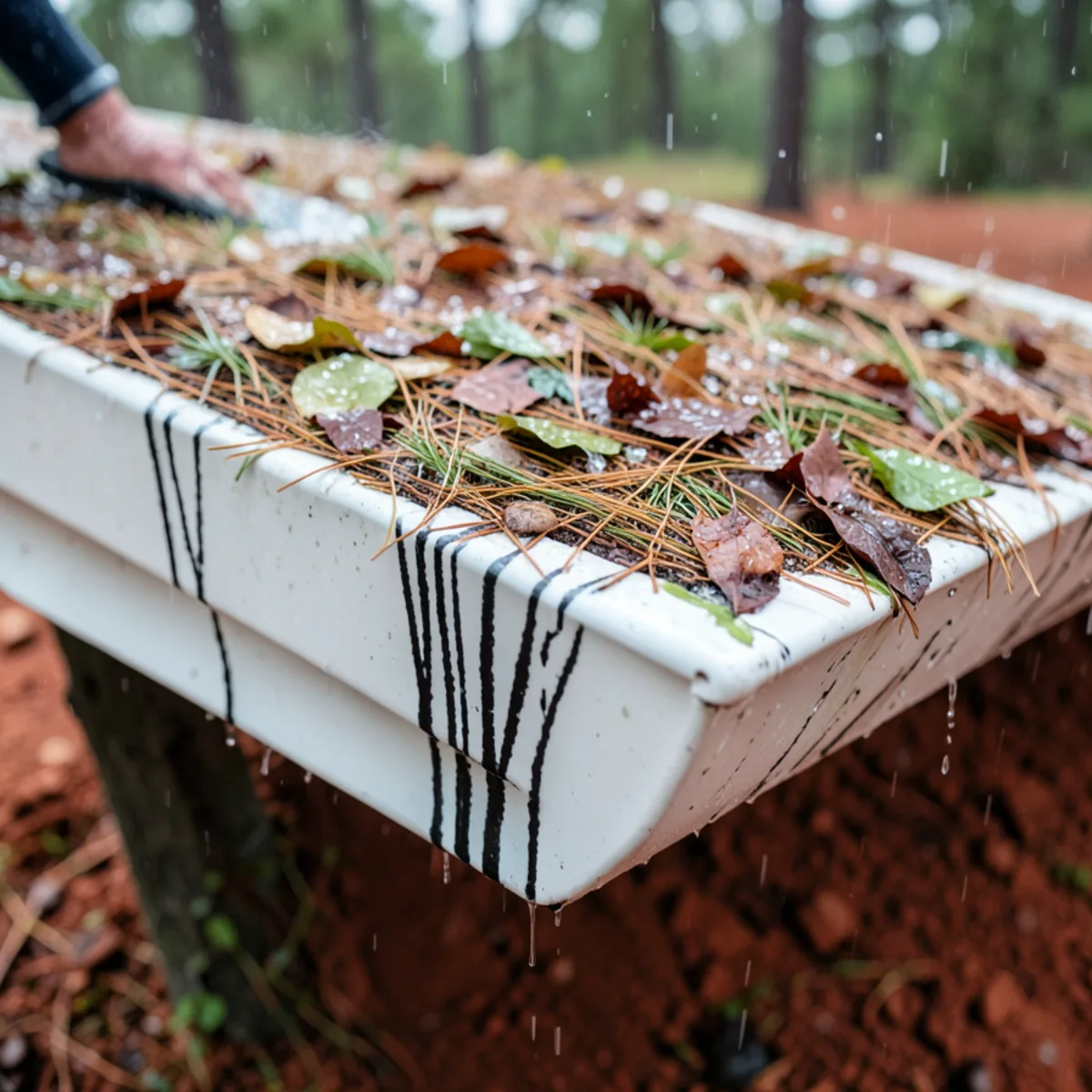
If your home is under heavy tree cover — and plenty of properties around Boger City, Denver, and the wooded lake lots are — plan on three or four times a year. Pine needles are especially sneaky: they weave into a mat that water can't get through but that doesn't look dramatic from the ground.
Gutter Cleaning Schedule by Situation
| Your situation | Recommended frequency |
|---|---|
| Few trees, open lot | Once a year (late fall) |
| Average tree cover | Twice a year (fall + spring) |
| Heavy tree cover / pines nearby | 3–4 times a year |
| Lots of overhanging limbs | Twice a year + after major storms |
Warning Signs Your Gutters Are Overdue
You don't always have to climb a ladder to know. Watch for:
- Water sheeting over the edge during rain instead of running to the downspout.
- Plants or saplings sprouting out of the gutter — a sure sign of a soil-like debris bed.
- "Tiger stripes" — dark vertical streaks on the face of the gutter, caused by overflow carrying grime down the front.
- Sagging or pulling away from the fascia under the weight of wet debris.
- Staining or peeling on the fascia board and soffit behind the gutter.
- Water pooling near the foundation after a storm.
Why Clogged Gutters Cost Real Money
A gutter's whole job is to move roof water away from the house. When it can't, the water goes somewhere worse:
Fascia and soffit rot. Debris holds moisture against the wood trim the gutter is attached to, and wet wood eventually rots — a repair far pricier than a cleaning.
Foundation and basement water. Overflow dumps concentrated water right at the foundation. Over time that means settling, cracks, and water finding its way into crawlspaces and basements.
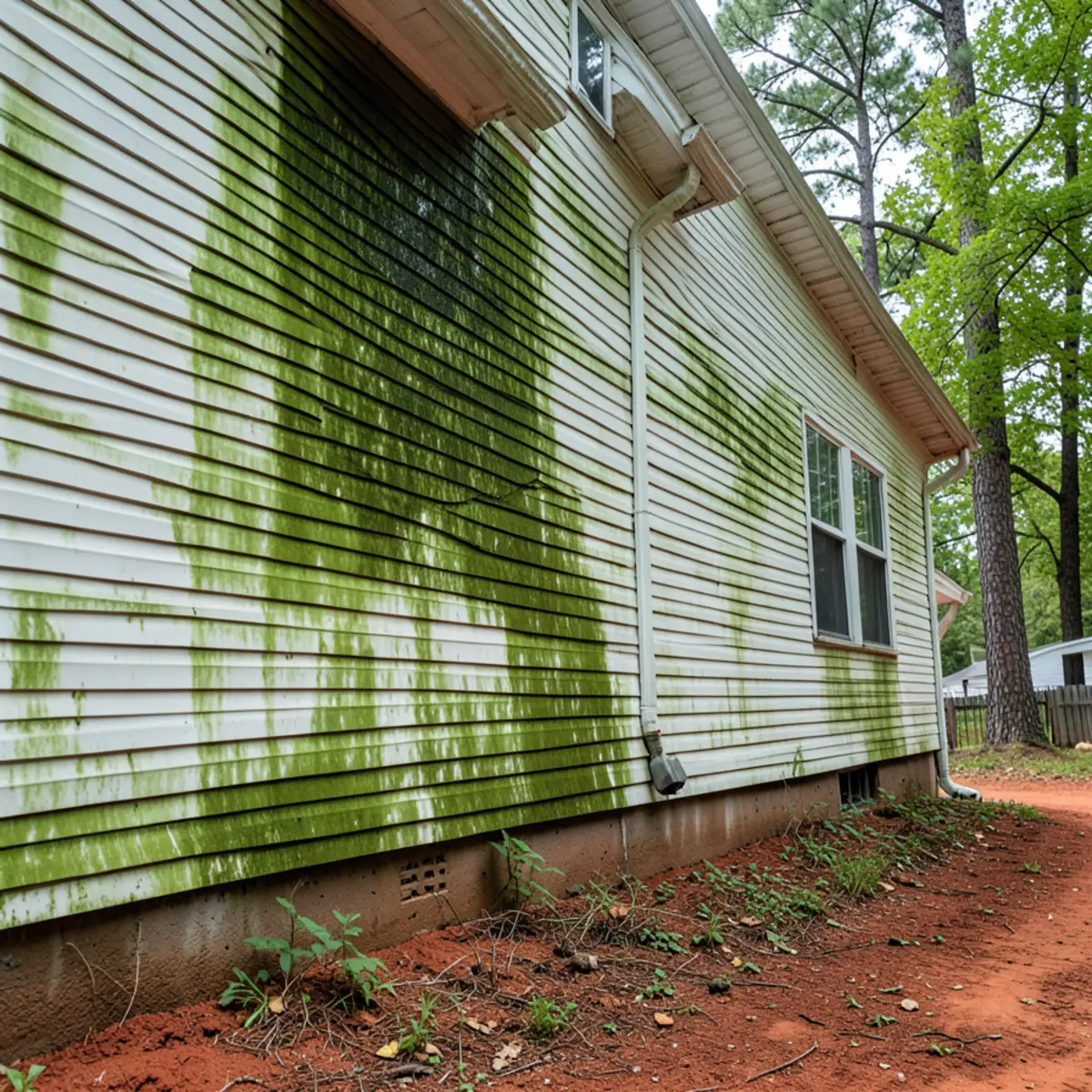
Siding algae. This one surprises people: when gutters overflow, water runs down your exterior walls, keeping them damp and feeding the exact algae and mildew growth that greens up the shaded side of the house. Clean gutters are part of keeping your siding clean.
Pests and mosquitoes. A clogged gutter holds standing water and rotting leaves — a tidy habitat for mosquitoes and nesting pests.
Ice and winter damage. On the rare hard-freeze week, trapped water in a clogged gutter has nowhere to go and can work under the roof edge.
What a Professional Gutter Cleaning Includes
A thorough gutter cleaning is more than scooping leaves. Our crew clears the gutters, flushes the downspouts to confirm they actually drain (a clear gutter with a clogged downspout still overflows), bags the debris, and checks for sagging sections or loose fasteners while we're up there. If the gutter face has those tiger-stripe stains, we can brighten the exterior with a gutter-specific treatment — plain rinsing won't touch that oxidized grime.
The Smart Way to Schedule It
Because most of a small job's cost is the trip out, the best value is to pair gutter cleaning with a house wash. We're already on-site with the equipment, so adding the gutters spreads that fixed cost and knocks two chores off your list in one visit. Spring is the natural time — clear the gutters after the pollen, soft wash the siding and roof, and the whole exterior resets for the season. Our guide on the best time of year to wash your home lines up well with that spring reset.
If you can't remember the last time your gutters were cleared — or you're seeing stripes on the gutter face — it's time. We serve Lincolnton, Boger City, Denver, Iron Station, and all of Lincoln County. Reach out for a free estimate.
Written by the Hydro Jet PW Crew
Led by Caleb, a local Lincoln County firefighter who started Hydro Jet in 2015. We soft wash, protect your property, and treat your home like our own.
Frequently Asked Questions
Watch during the next rain: if water spills over the edge instead of running to the downspouts, they're clogged. Other ground-level clues are plants growing out of the gutter, dark 'tiger stripe' streaks on the gutter face, sagging sections, and water pooling near the foundation.
Once a year works for homes on open lots with few trees. But most Lincoln County properties have enough tree cover that debris builds up in both fall (leaves) and spring (pollen and seed pods), so twice a year prevents the overflow and fascia damage that a single annual cleaning misses. Heavily wooded or pine-heavy lots often need it more.
Yes. When a gutter overflows, it sends water cascading down your exterior walls and keeps them damp — ideal conditions for the algae and mildew that grow on shaded siding. Keeping gutters flowing is one of the simplest ways to slow that growth between washes.
Absolutely, and it's the best-value way to do it. We're already on-site with ladders and equipment for a house wash, so adding gutter cleaning avoids a second trip charge. Spring is the ideal window — gutters, siding, and roof all get reset at once.
Got a stain you can't beat?
Let a local crew handle it. Free estimates, fast scheduling.
Call +1 (351) 242-0666