Your front door is the first handshake your business gives. When the sidewalk is gummed up, the awning's gone green, and black streaks creep down the glass, people notice before they ever walk in. Most folks won't say a word about it. They'll just keep driving to the shop down the block that looks cared for. The good news: a clean storefront is one of the cheapest fixes there is, and our local crew can have your entrance bright, slip-safe, and gum-free before your doors ever open.
First Impressions Start at the Curb in Lincolnton
Curb appeal isn't a soft idea. Roughly seven out of ten first-time visits are shaped by how a place looks from the street, and two-thirds of shoppers admit they've skipped a store because the outside looked rough. That decision happens in seconds, right at the curb.
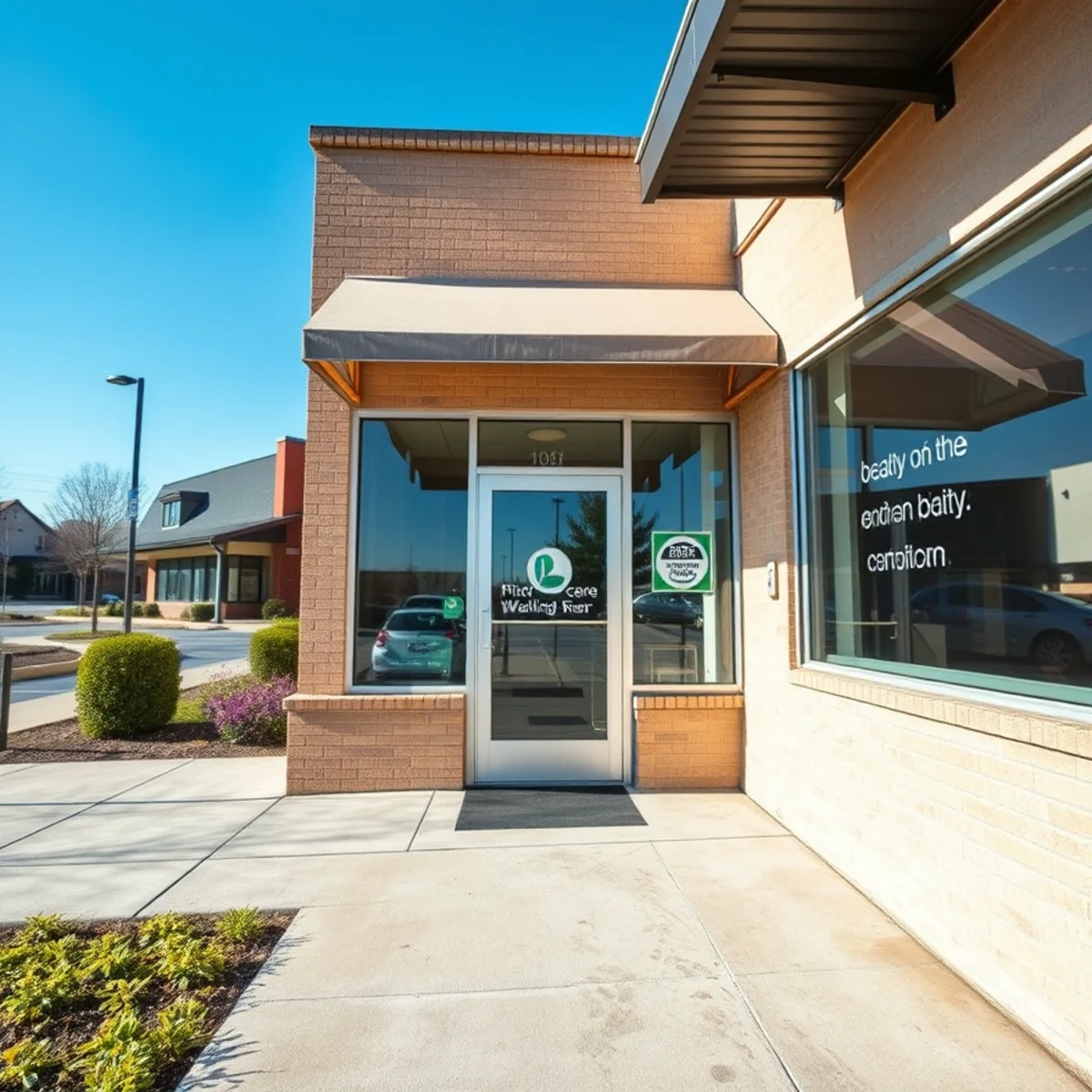
We focus on what we call the zone of first impression: the entry threshold, the sidewalk apron out front, the awning over the door, your signage, and the front glass. That's the customer-facing strip every person walks through on their way in. It's different from interior janitorial work, and it's different from washing a whole building. It's the part your neighbors and customers actually look at.
Around here, that matters more than most. Downtown Lincolnton's East Main Street boutiques, the restaurants near the courthouse square, and the strip-center shops out toward the highway all live and die by walk-in traffic. With the Main Street revitalization pulling more people downtown, a tired-looking entrance stands out for the wrong reasons. We keep yours looking like it belongs.
What a Storefront Cleaning Actually Covers
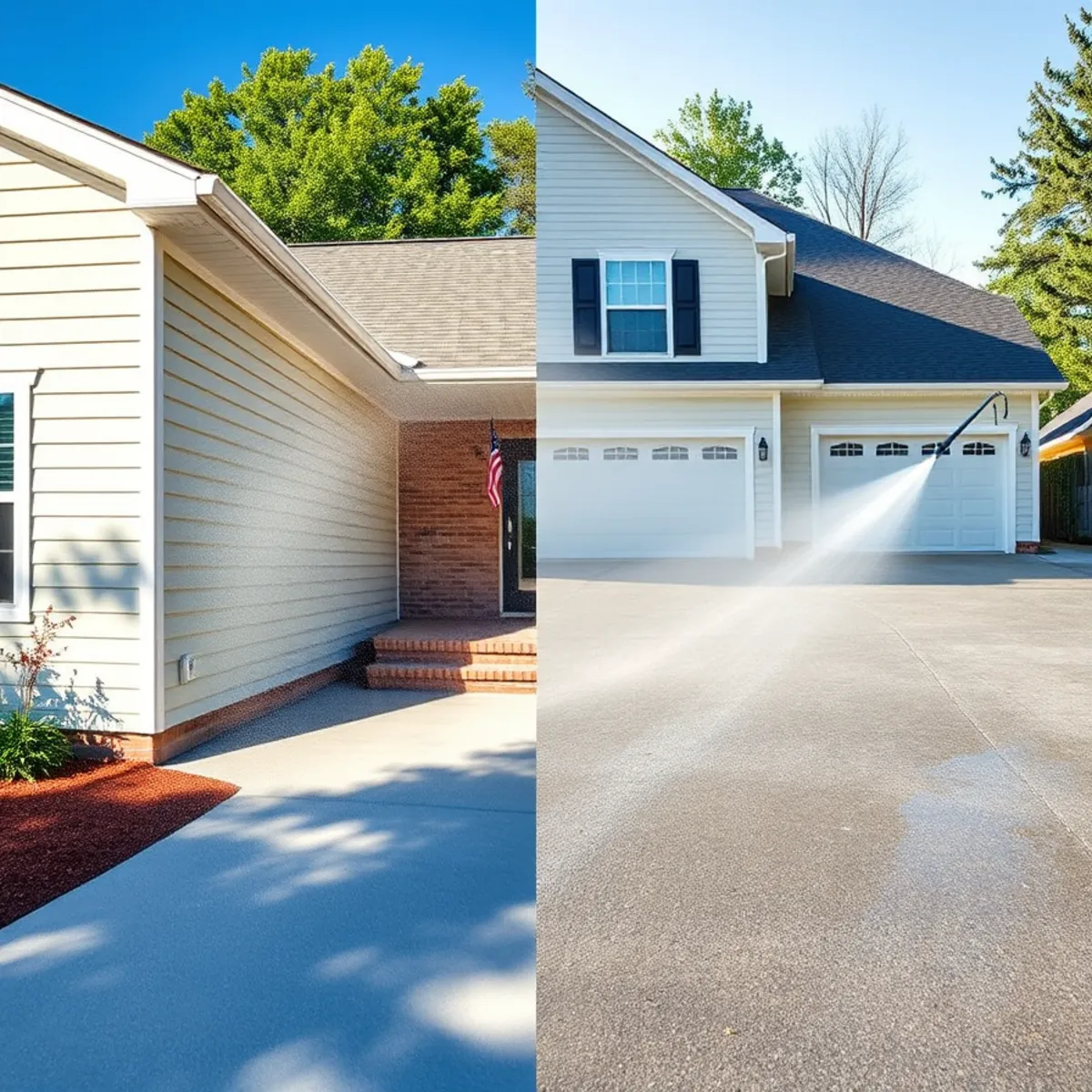
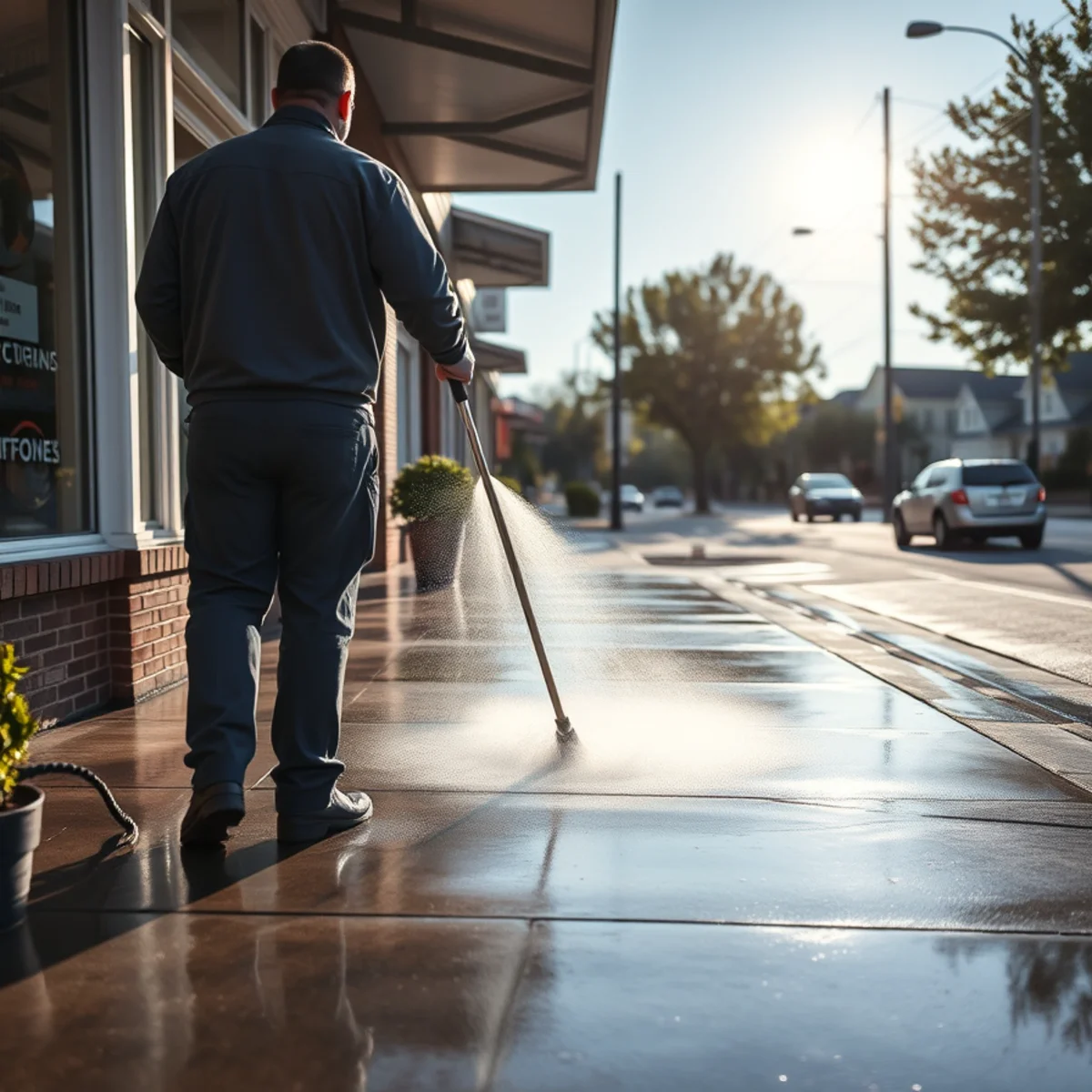
A real storefront wash hits every surface a customer sees on approach. We surface-clean the concrete sidewalk, curbs, and door thresholds, pull up gum and oil spots, and knock down the black mildew streaks that build up on shaded concrete. We soft wash awnings and signage at safe low pressure, then finish the front windows and glass doors streak-free.
From there it's easy to add on the parts that take a beating: the dumpster pad, a drive-thru lane, a shared breezeway, patio concrete, or a loading-zone apron. If it's part of how your customers and your business move through the property, we can clean it.
The Stains We Pull Up, and How We Do It
Not every stain comes off the same way, and using the wrong method is how storefronts get damaged. Here's how we handle the common ones in Lincoln County.
Gum, Oil, and Grease
Chewing gum doesn't budge for a cold consumer pressure washer. It needs heat. We use hot water to thermally soften the gum so it releases from the concrete instead of smearing, then lift it clean. Oil, grease, and diesel drips near the entry or in a drive lane need an alkaline degreaser to break the bond first. We let it dwell, then emulsify it at a controlled 500 to 1,000 PSI so it rinses out without etching or burning a pale halo into your concrete.
Mildew, Algae, and Black Streaks
The green and black growth on north-facing facades and shaded sidewalks is algae and mildew, and it's living. Blasting it just knocks the top off so it grows right back. We soft wash it with biodegradable detergent that kills it at the root, so it stays gone longer. In our Piedmont humidity, that root-level kill is the whole point.
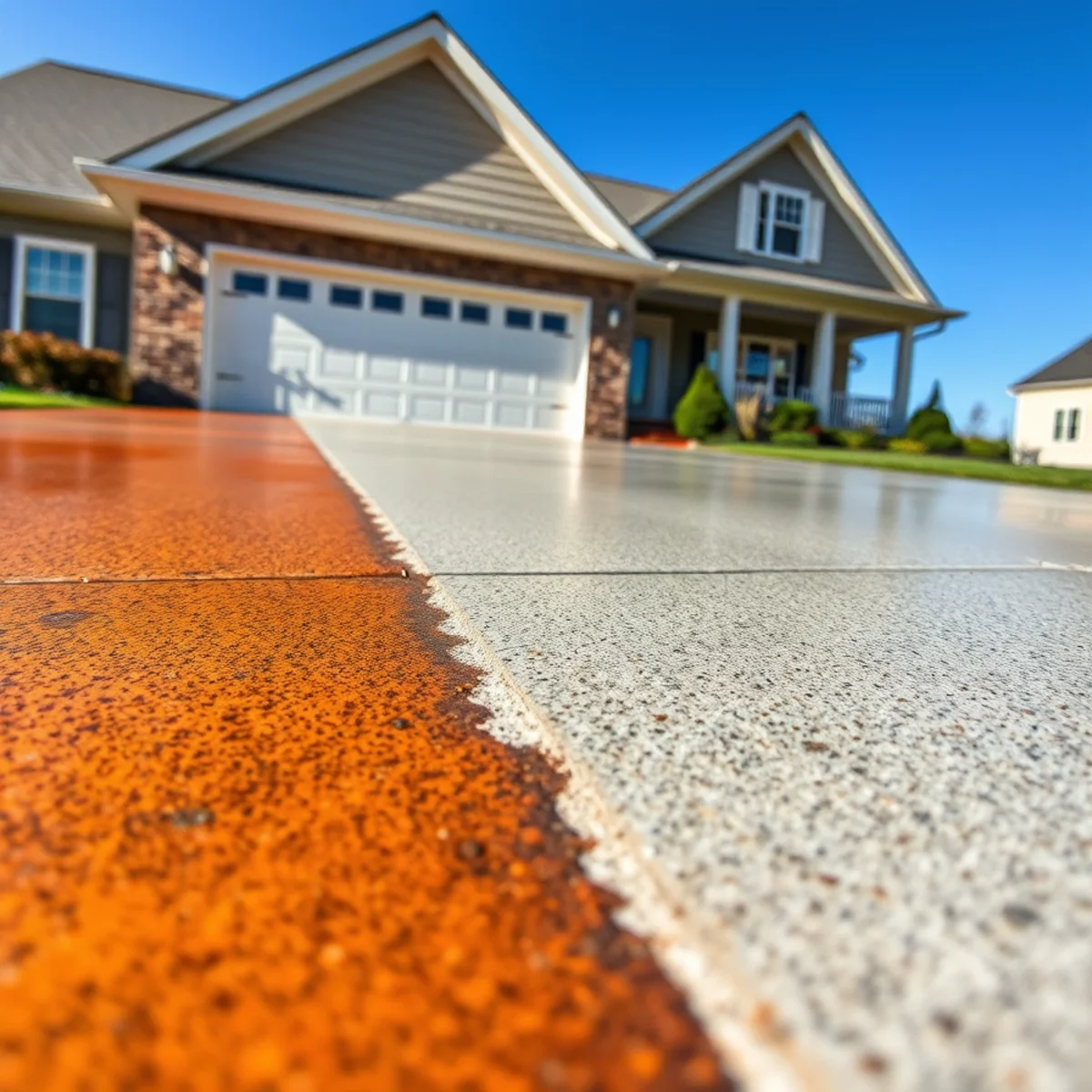
Efflorescence, Rust, and Hard Water
That chalky white bloom on brick and stucco column bases is efflorescence, mineral salt pushing out of the masonry. Pressure alone won't touch it. It takes an acid-side product like an oxalic-acid or F9-type treatment, properly neutralized after. Same story with rust and irrigation-line stains, and with the hard-water spots well water leaves on glass. Those are mineral deposits, not dirt. We treat the minerals directly and rinse the glass with pure water so it dries clear instead of spotty.
Pressure Washing vs. Soft Washing: Matching the Method to the Surface
This is the difference that protects your property, and it's the part most local companies never explain.
High pressure has its place. Durable concrete sidewalks and curbs can take hot water on a surface cleaner running in the 3,000 to 4,000 PSI range. That's what gets you an even, board-clean finish with no zebra striping.
Everything else around your entrance is more delicate, and that's where soft washing comes in: under 500 PSI plus detergent doing the work instead of force. Awnings get cleaned with a wide 45-degree fan tip held back from the fabric. Signage, especially illuminated or painted signs, stays under about 200 PSI so we don't crack a face or force water behind the lens. Brick, stucco, and any painted wood get the same gentle treatment. We keep turbo and rotary tips off concrete that's younger than 12 to 24 months, because fresh concrete hasn't fully cured and scars easily, and we stay mindful of window seals so we don't blow a seal on your glass.
Match the method to the surface and you get a clean storefront with no etched concrete, no scarred vinyl, no faded signs, and no blown seals. That's the whole game.
We Clean Before You Open
For a customer-facing business, timing is everything. Nobody wants cones and a wet sidewalk while customers are trying to come in. So we work around you, early morning, evening, or overnight, so the concrete is dry and the glass is clear before your first customer pulls up.
That means zero disruption to foot traffic, deliveries, your patio furniture, or your window displays. In a shared center or a downtown block, we coordinate with neighboring tenants so we're not soaking someone else's entrance or blocking a delivery door. While we're on site we set out wet-floor signage, cones, and keep a spotter watching for pedestrians, because slip-and-fall liability and a clear, ADA-accessible entrance are part of doing this right. We also manage where the water goes, capturing and directing runoff to stay on the right side of EPA drainage rules instead of letting wash water run into a storm drain.
How Often Should a Storefront Be Cleaned?
It depends on your traffic. A busy retail shop or restaurant downtown usually wants a wash every week or two, because the entry takes constant abuse, gum, spilled coffee and soda, tire dust, and black shoe scuffs. A quieter office or specialty shop often does fine monthly or quarterly.
Glass entries are the exception. They're the literal first thing a customer touches, and fingerprints and smudges show up fast, so they earn the most frequent attention. Then there's our climate. Lincoln County's humid summers and roughly 44 inches of annual rainfall feed mildew and algae growth, heavy Piedmont spring pollen coats every entrance and pane yellow-green for weeks, and red-clay dust gets tracked right onto the threshold. Add storm cleanup and post-event resets, and a recurring schedule just makes sense. Staying ahead of buildup is always cheaper than a heavy deep-clean later, and it protects how long your surfaces last.
What Storefront Cleaning Costs Around Here
We won't quote you a fake number over the phone, but we'll be straight about ranges. Routine storefront cleaning runs somewhere around 5 to 20 cents per square foot, and a heavier deep clean lands closer to 10 to 30 cents. In practice, a lot of Lincolnton storefronts come in around $150 to $300 per visit.
What moves the price is square footage, the surface types involved, how bad the staining is (gum and oil add labor), how often we come out, and any add-ons like a dumpster pad or drive-thru. Recurring visits cost less each time than a one-off, because the buildup never gets a chance to set in. And the real value: a wash is a fraction of what it costs to repave etched concrete or replace an awning somebody scarred with too much pressure. The cleaning protects the asset. The fastest way to a real number is a quick on-site look, and that's free.
Why Go With a Local Lincoln County Crew
We're not an out-of-town chain rolling through. Hydro Jet PW is locally owned right here, run by Caleb, a Lincolnton firefighter who knows this community and shows up for it. That means we know the downtown logistics, the tight shared blocks, and the conditions that make our storefronts dirty in the first place: the red-clay dust, the heavy pollen, the lake-area humidity off Norman and Wylie, and the mildew that loves a shaded north wall.
We're licensed and carry dedicated pressure-washing liability insurance, we handle the slip-and-fall safety and water-reclamation side properly, and we back our work with a written re-clean guarantee. We cover Lincolnton and ZIP 28092 plus nearby Denver, Maiden, Cherryville, Vale, and Gastonia, so wherever your storefront sits in the county, we can get to you fast.
If your entrance is overdue for a wash, let's take a look. Call the crew at +1 (351) 242-0666 for a free, no-pressure estimate, and we'll get your storefront bright, slip-safe, and ready for customers before you ever flip the sign to open.
 Concrete & Driveway Cleaning