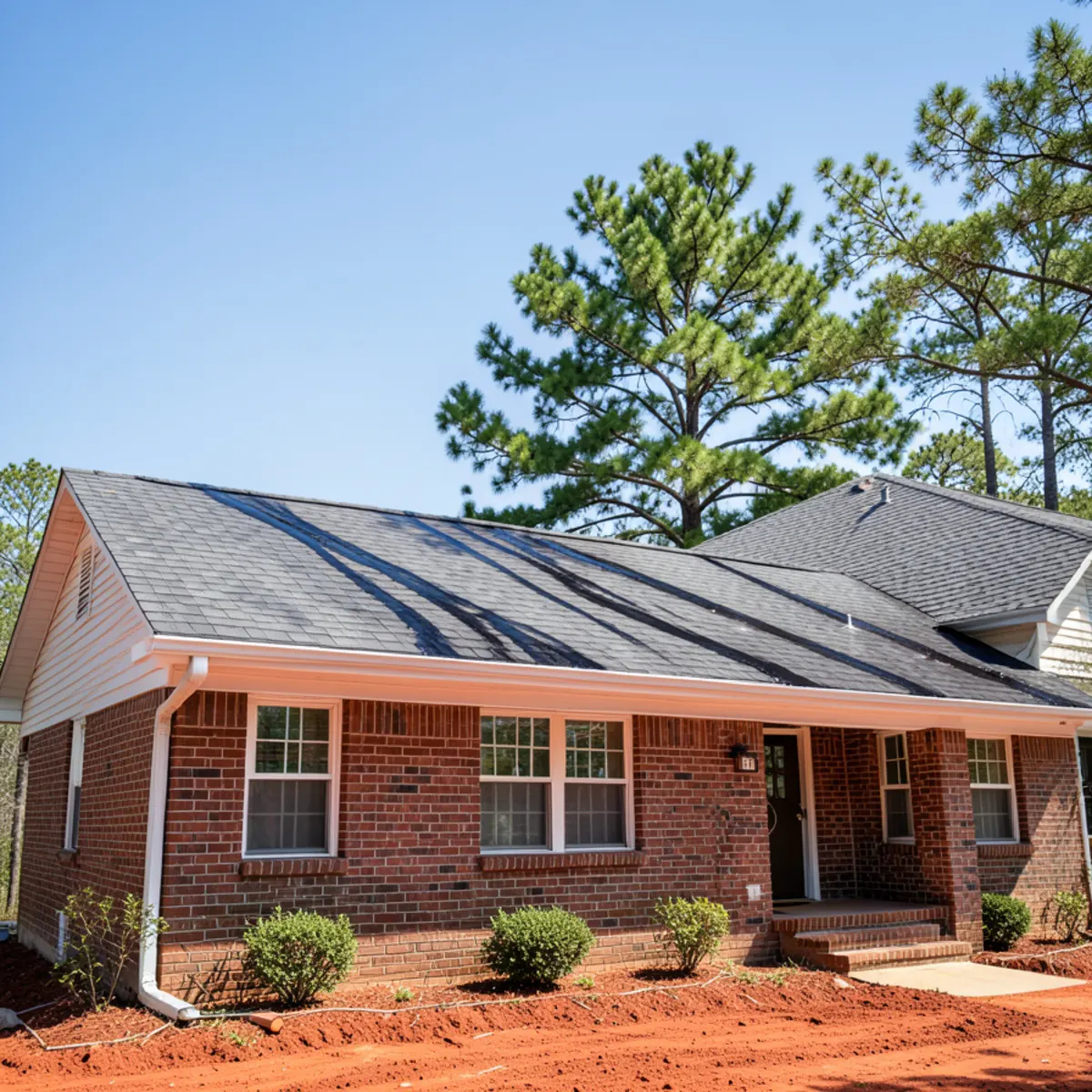
If dark streaks are running down the shady side of your roof, you're not looking at dirt or 'aging shingles.' It's a living organism — and how you remove it determines whether your roof lasts or loses years off its life.
You've seen them on half the houses in Lincoln County: dark vertical streaks running down the roof, almost always worst on the shaded, north-facing slope. Most people assume it's dirt, soot from the chimney, or just a sign the roof is "getting old." It's none of those. It's alive, it's spreading, and the way you deal with it can either add years to your roof or take them away.
What the Black Streaks Actually Are
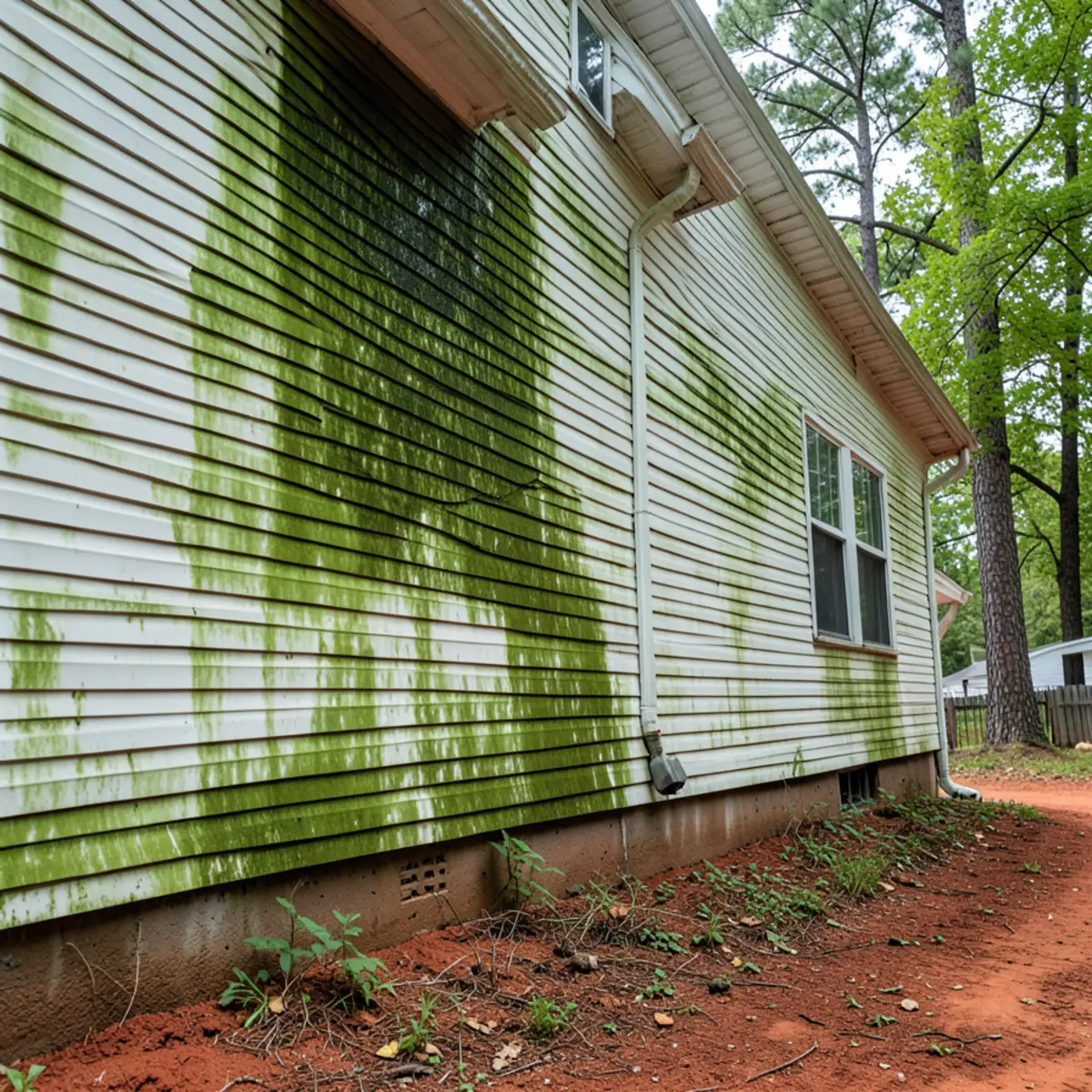
The streaks are a blue-green algae called Gloeocapsa magma. It's airborne, it lands on your roof, and it feeds on the limestone filler used in asphalt shingles. As a colony grows it develops a dark, protective coating to shield itself from UV light — and that coating is the black stain you see.
Gravity explains the streaking pattern: spores and dark pigment wash downward with every rain, so the growth runs in vertical stripes from the ridge down. It takes hold first wherever the roof stays damp longest — which in our area means the shaded side and anywhere under heavy tree cover.
A few things it is not: it isn't dirt (rinsing won't fix it), it isn't your shingles wearing out (they're usually fine underneath), and while people call it "roof mold," it's technically algae. Moss and lichen are different, chunkier growths that often show up alongside it on older or very damp roofs.
Why Lincoln County Roofs Streak So Fast
Three local ingredients make the Piedmont a perfect home for roof algae:
- Humidity. Our long, humid NC summers keep shingles damp enough for algae to thrive for months at a time.
- Tree cover. Lincolnton and the surrounding towns have beautiful mature trees — which also mean shade and a steady drip of organic debris that holds moisture on the roof.
- Warm nights. Algae keeps growing through our mild shoulder seasons, so it rarely gets a hard reset.
If your neighbor's roof looks clean and yours doesn't, it usually comes down to sun exposure and trees, not the age or quality of your shingles.
Why You Must Never Pressure Wash a Roof
This is the part that costs people a new roof. Asphalt shingles are coated in fine mineral granules — that's the sandpaper-like surface you see. Those granules are the shingle's sunscreen and armor; they block UV and protect the asphalt underneath. A pressure washer aimed at a roof blasts those granules straight into the gutter.
Once the granules are gone, the shingle ages fast: it dries out, cracks, and fails years early. On top of that, the force can lift and break the shingle tabs and drive water under them. Most shingle manufacturers explicitly warn against pressure washing, and doing it can void your warranty. If a company offers to "pressure wash" your roof, that's your signal to call someone else.
The Right Way: Soft Washing
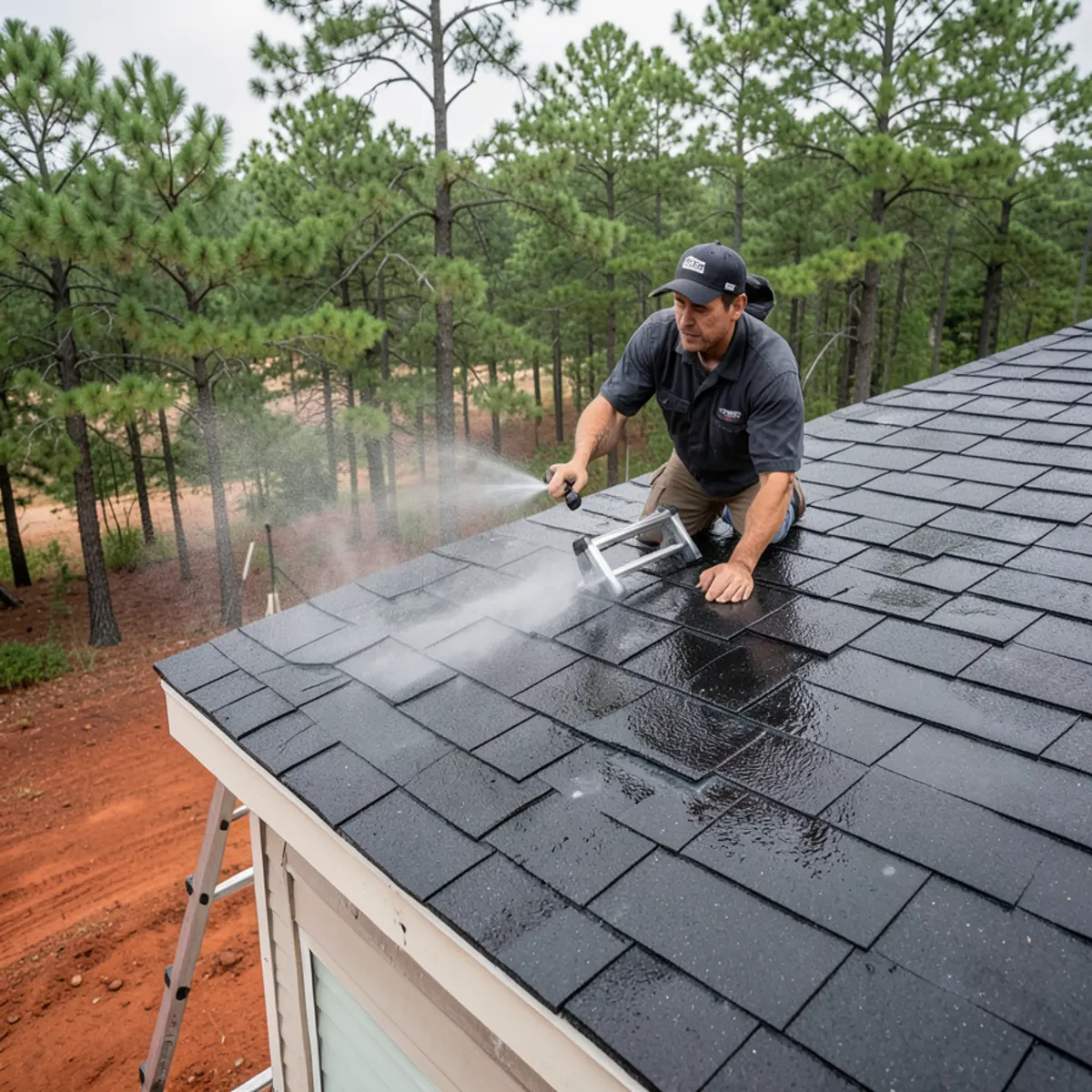
The correct method — and the only one roofing manufacturers endorse — is soft washing. Instead of force, it uses a shingle-safe cleaning solution applied at very low pressure. The treatment kills the algae, moss, and lichen at the root, and then a gentle rinse (and the next few rains) carries the dead growth away. The shingles are never blasted, and the granules stay where they belong.
Here's how we approach a roof soft wash on a Lincoln County home:
- Protect the landscaping. We pre-wet and rinse plants and shrubs below the roofline before, during, and after.
- Apply the treatment. A low-pressure application of a shingle-safe biocide saturates the growth.
- Let the chemistry work. The solution kills the algae and lichen at the root — this is what keeps it from snapping right back.
- Gentle rinse. We rinse without force; remaining residue weathers off over the following weeks.
The result is a roof that looks dramatically better and, more importantly, is protected. Because the treatment kills the organism rather than just knocking off the surface, results last for years, not months.
Soft Washing Isn't Just for Roofs
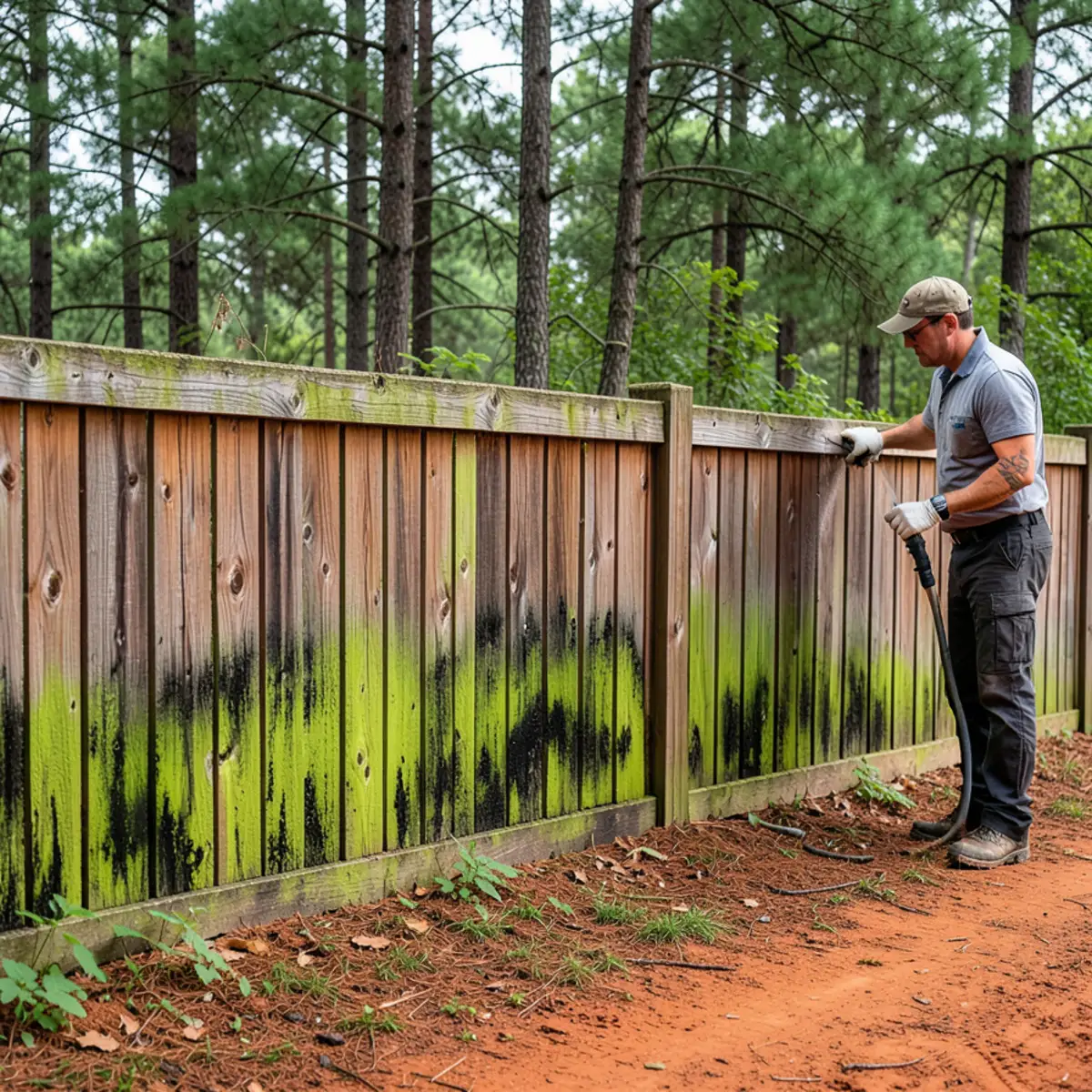
The same low-pressure, solution-first method is what we use on siding, screens, and painted surfaces — anywhere high pressure would do damage. If you're trying to understand when pressure is appropriate and when it isn't, our breakdown of soft washing versus pressure washing walks through the whole decision.
Should You DIY It?
Grabbing a sprayer and a ladder is tempting, but roof work is where DIY goes wrong fastest, for two reasons. First, the safety risk of being on a wet, sloped roof is real. Second, the "roof cleaner" mixes sold at hardware stores are often too weak to kill the algae at the root, so the streaks return within a season — or strong enough to burn your plants and etch surrounding surfaces if misapplied. Getting the chemistry, the dilution, and the rinse right is most of the job.
If your roof is streaking, the best time to treat it is before the growth digs in further and before it spreads to the rest of the slope. We serve Lincolnton, Denver, Iron Station, the Lake Norman area, and the rest of Lincoln County — reach out for a free look and a firm quote.
Written by the Hydro Jet PW Crew
Led by Caleb, a local Lincoln County firefighter who started Hydro Jet in 2015. We soft wash, protect your property, and treat your home like our own.
Frequently Asked Questions
Not for a long time, if it's done right. A soft wash kills the algae at the root rather than just rinsing the surface, so results typically last years. Heavily shaded, tree-covered roofs may eventually re-grow faster, which is why our soft-wash work is backed by a re-treat guarantee if growth returns within the guarantee window.
Yes — it's the method shingle manufacturers actually endorse. Soft washing uses a cleaning solution at very low pressure, so the protective granules stay on the shingle. It's the opposite of pressure washing, which blasts those granules off and can void your warranty.
Please don't. A pressure washer strips the granules that protect asphalt shingles and can crack the tabs and force water underneath — turning a cleaning job into a roof replacement. The safety risk of a wet, sloped roof is serious too. This is one job worth leaving to a crew with the right low-pressure setup.
Both. Beyond the staining, the algae feeds on shingle filler and holds moisture against the roof, and the moss and lichen that often come with it can lift shingle edges. Left alone for years it shortens the roof's life, so treating it protects your investment, not just your curb appeal.
Got a stain you can't beat?
Let a local crew handle it. Free estimates, fast scheduling.
Call +1 (351) 242-0666