If the shady side of your house has gone green, you're not imagining it — and you're not alone. Here's what that growth really is, why it keeps coming back, and the method that actually ends the cycle.
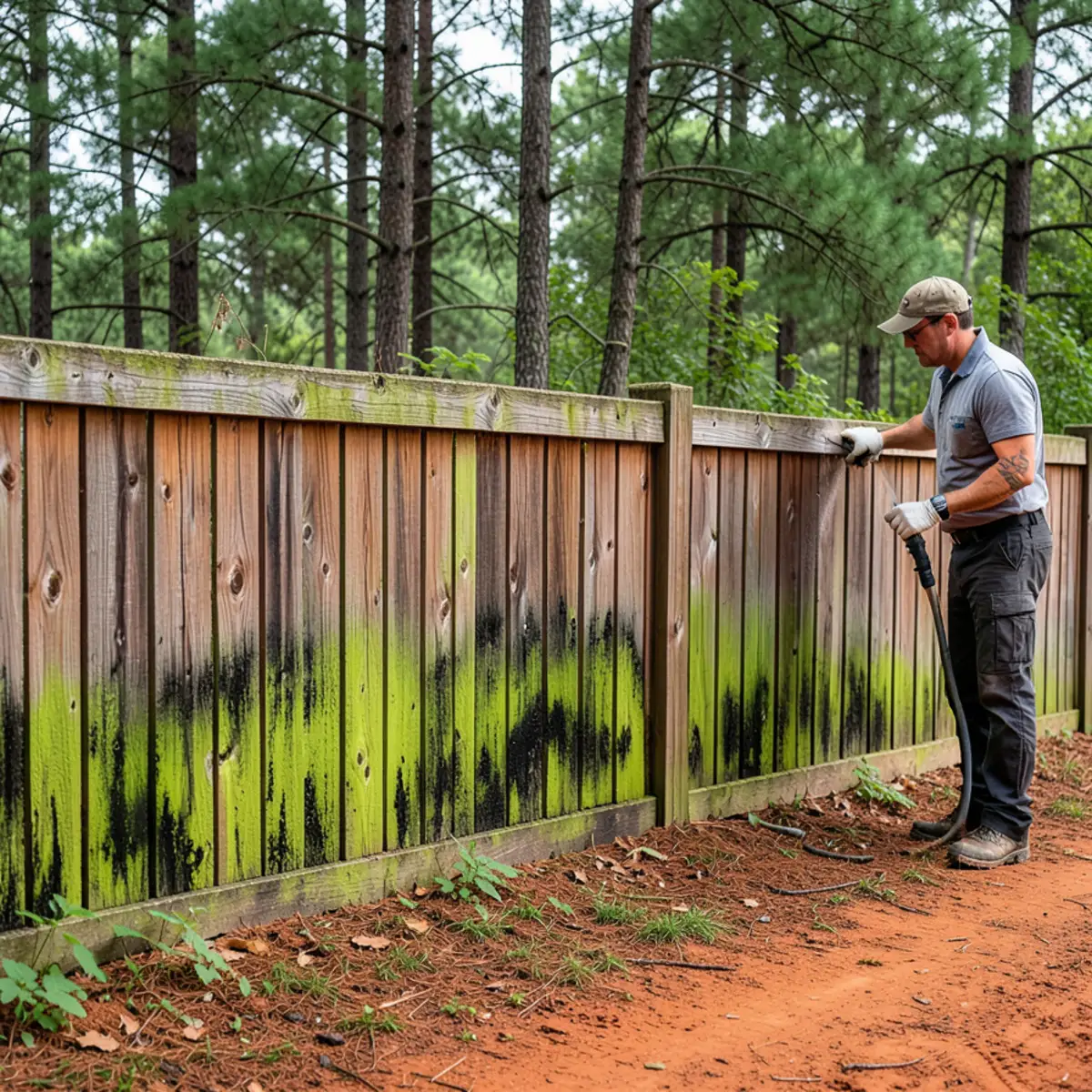
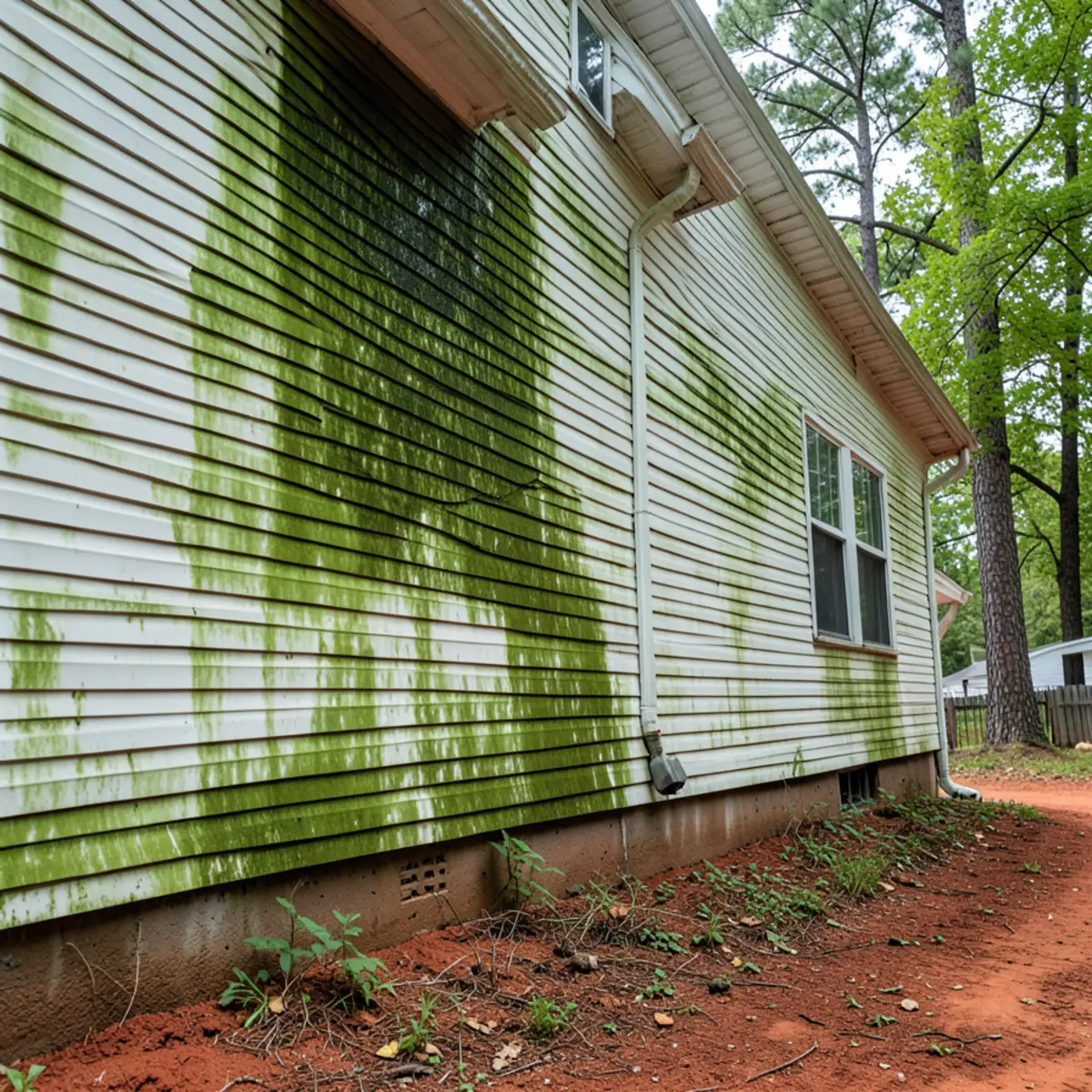
Walk around your house and check the north side, the wall under the big oak, or anywhere the sun rarely hits. If it's gone green — a dusty film, streaks, or a full carpet of growth — that's algae, and it's one of the most common calls we get across Lincoln County. The good news: it comes off. The catch: how you remove it decides whether it stays gone or is back before fall.
What the Green Stuff Really Is
That green coating is mostly algae, often joined by mildew (a surface mold) and sometimes a chalky film from pollen and dust. All of it is organic and all of it is alive. It lands as airborne spores, settles into the slightly rough texture of your siding, and feeds on moisture plus the thin layer of organic grime that collects on any exterior wall.
It isn't a reflection of a dirty house or bad siding. It's a reflection of shade and humidity — which is why the sunny front of your home can look fine while the shaded side looks neglected.
Why Lincoln County Siding Greens Up
Our Piedmont climate is close to ideal for algae for a few months a year:
- Humidity. Long, muggy NC summers keep walls damp, especially where airflow is poor.
- Shade and trees. Mature tree cover is one of the best things about living here — and it keeps walls wet and fed with organic debris.
- North-facing walls. Any surface that doesn't get drying sun stays damp longest and greens first.
- Lake air. Homes near Lake Norman and low-lying, wooded lots deal with even more ambient moisture.
If your home sits in the shade or near water, expect the shaded elevations to need attention more often than a home baking in full sun.
Why Scrubbing and Rinsing Don't Work
Here's the frustrating part homeowners run into: you spend a Saturday with a brush or a garden-hose nozzle, the wall looks better, and a few weeks later the green is back. That's because surface cleaning only removes what you can see. The algae has a foothold in the texture of the siding, and the moment conditions turn humid again, it regrows from what's left behind.
The other DIY trap is reaching for a pressure washer. On vinyl or fiber-cement (Hardie) siding, high pressure can force water up under the laps and into the wall cavity, where it has nowhere to dry — creating the exact moisture problem you were trying to avoid, now hidden inside the wall. It can also crack brittle older vinyl and gouge painted wood.
The Method That Actually Works: Soft Washing
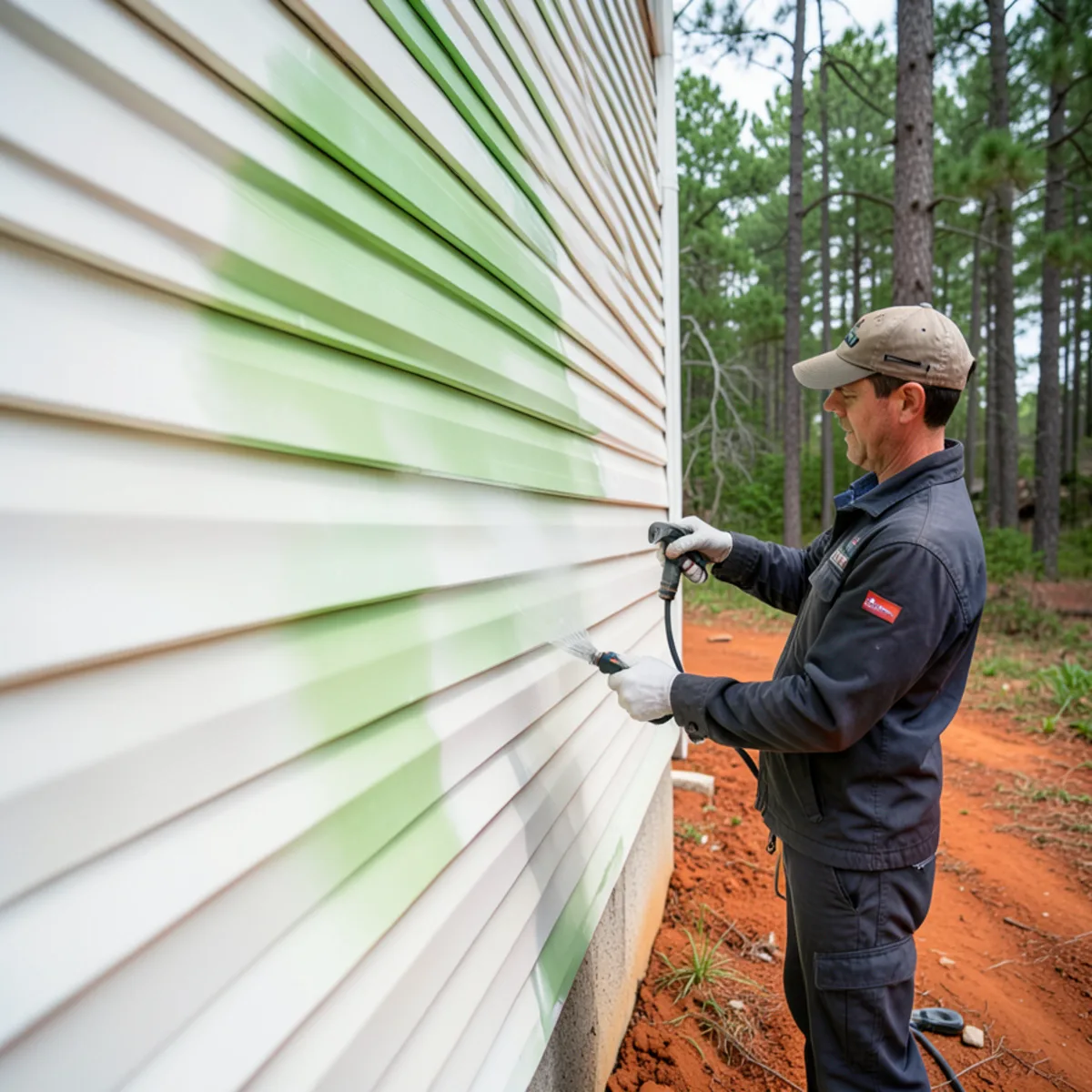
The fix is soft washing: low pressure plus a cleaning solution built to kill algae and mildew at the root. The chemistry does the work, not raw force. A proper soft wash removes the growth you can see and the part you can't, so the wall doesn't just look clean — it stays clean for a year or more.
A typical house wash on a Lincoln County home looks like this:
- Protect the landscaping. Plants, shrubs, and nearby surfaces are pre-wet and covered.
- Apply the solution. A custom-mixed, biodegradable detergent is applied at low pressure across the siding.
- Let it dwell. The solution kills the algae and mildew at the root — this dwell time is what prevents a quick regrowth.
- Gentle rinse. We rinse from the right angle and distance to lift everything away without driving water behind the siding, then re-rinse the landscaping.
The difference in longevity is the whole point. Knocking the green off the surface buys you a few weeks; killing it at the root buys you a season or more. Our soft-wash work is backed by a written guarantee: if growth returns within 30 to 90 days, we come back and re-treat at no charge.
Is It Safe for Plants, Pets, and Paint?
Yes, when it's done carefully — and the care is a big part of what you're paying for. Our detergents are biodegradable, and we pre-rinse and protect landscaping before and after. Plants may drop a few leaves as a natural response and bounce back. Pets should stay inside during the wash; once surfaces dry, the yard is safe. On painted surfaces, the low-pressure method is far safer than a blast of high PSI that can peel or chalk the finish.
Keeping It From Coming Back
Once the wall is clean, a few habits slow the regrowth: trim back branches and shrubs that trap moisture against the house, keep gutters flowing so water isn't spilling down the walls (see gutter cleaning), and plan a maintenance wash before the growth gets established again — usually once a year, or twice for heavily shaded and lake-area homes. Our guide on how often to pressure wash your home breaks down the right schedule by situation.
If the shaded side of your house has gone green, we can get it back to clean — safely — and keep it that way. We serve Lincolnton, Denver, the Lake Norman area, and all of Lincoln County. Reach out for a free estimate.
Written by the Hydro Jet PW Crew
Led by Caleb, a local Lincoln County firefighter who started Hydro Jet in 2015. We soft wash, protect your property, and treat your home like our own.
Frequently Asked Questions
Because brushing or rinsing only removes the surface growth — the roots stay in the texture of the siding and regrow the moment it gets humid again. A soft wash uses a solution that kills the algae and mildew at the root, which is why professional results last a year or more instead of a few weeks.
It's risky. High pressure can force water up under vinyl or Hardie siding and into the wall cavity, where it causes hidden moisture problems, and it can crack older vinyl. Siding should be soft washed — low pressure plus a cleaning solution — not blasted. The cleaning power comes from the chemistry, not the PSI.
It's mostly a cosmetic and maintenance issue, but left for years the constant moisture and organic growth can degrade caulk, paint, and the siding surface, and the same spores spread to other shaded areas. Clearing it protects the exterior and keeps it from becoming a bigger job later.
Most homes do well with a soft wash once a year. Homes that are heavily shaded, under tree cover, or near Lake Norman often benefit from twice a year because the shaded, damp walls green up faster. We'll recommend a schedule based on your specific home when we see it.
Got a stain you can't beat?
Let a local crew handle it. Free estimates, fast scheduling.
Call +1 (351) 242-0666