A grimy dumpster pad, black gum spots down your sidewalk, and an oil-stained parking lot tell a customer one thing before they ever reach your door: nobody's minding the details. In a town like Lincolnton, where folks talk and your reputation travels Court Square fast, a dirty exterior chips away at the brand you've spent years building. Worse, that grease film by the back door is a slip-and-fall claim waiting to happen, a pest magnet, and on a restaurant property, a code problem. Most business owners know they should deal with it, but they're stuck between a cheap residential washer who'll hose grease straight into the storm drain (and leave you holding the liability) and an out-of-county outfit that can't show up when you need them. Hydro Jet PW is the local crew that handles commercial flatwork and building exteriors the right way, on a schedule that fits your hours, with the insurance and compliance to back it up. Here's how we work.
Commercial Pressure Washing Services for Lincolnton Businesses
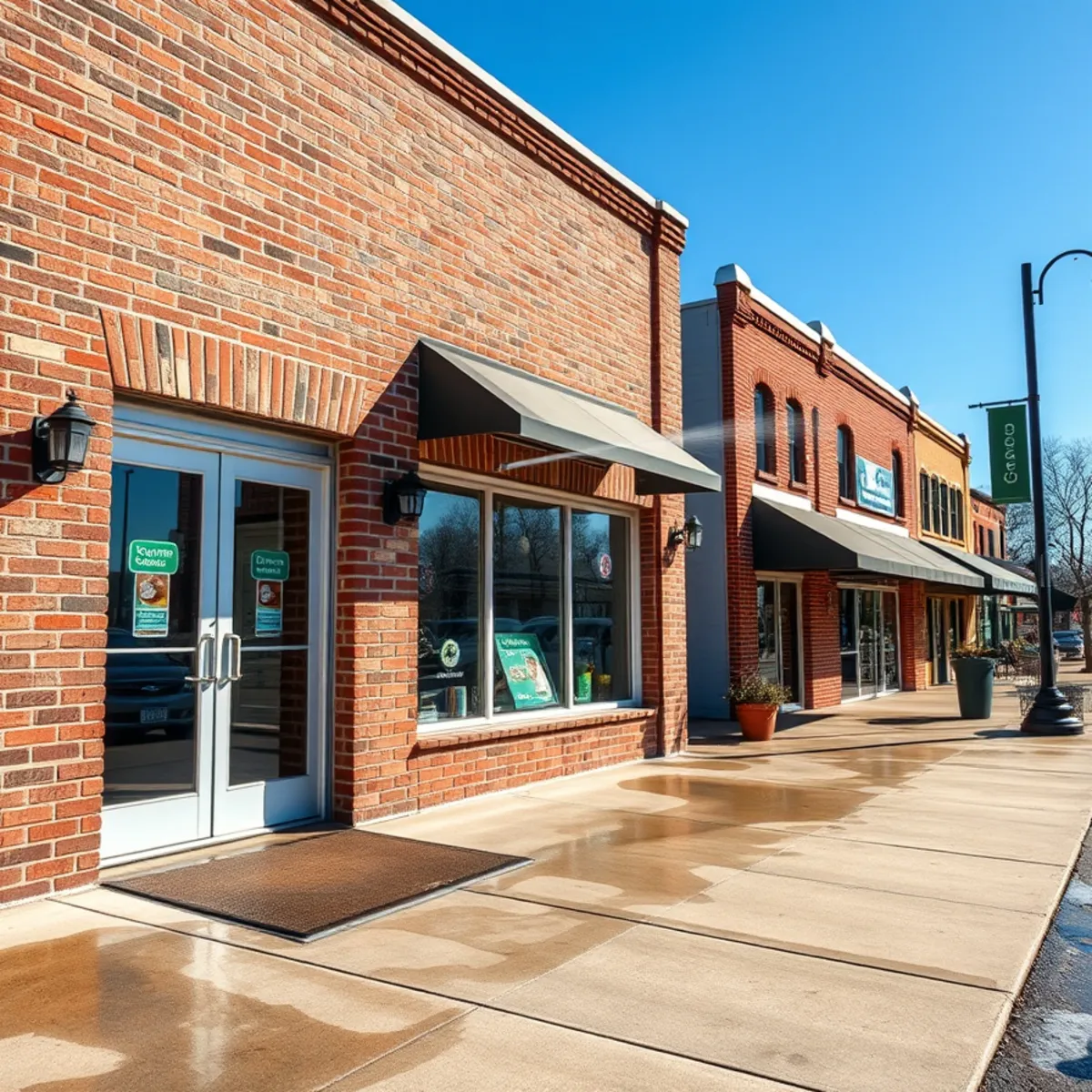
Commercial property gets dirty in ways a house never does. We clean the surfaces that take the most abuse and show the most wear: dumpster pads and corrals, sidewalks and entryways, storefronts and building facades, parking lots and decks, drive-thru lanes, loading docks, curbs, and the high-traffic zones around your front door. The goal is simple — a clean, safe property that protects your brand, keeps people from slipping, and passes inspection without a scramble.
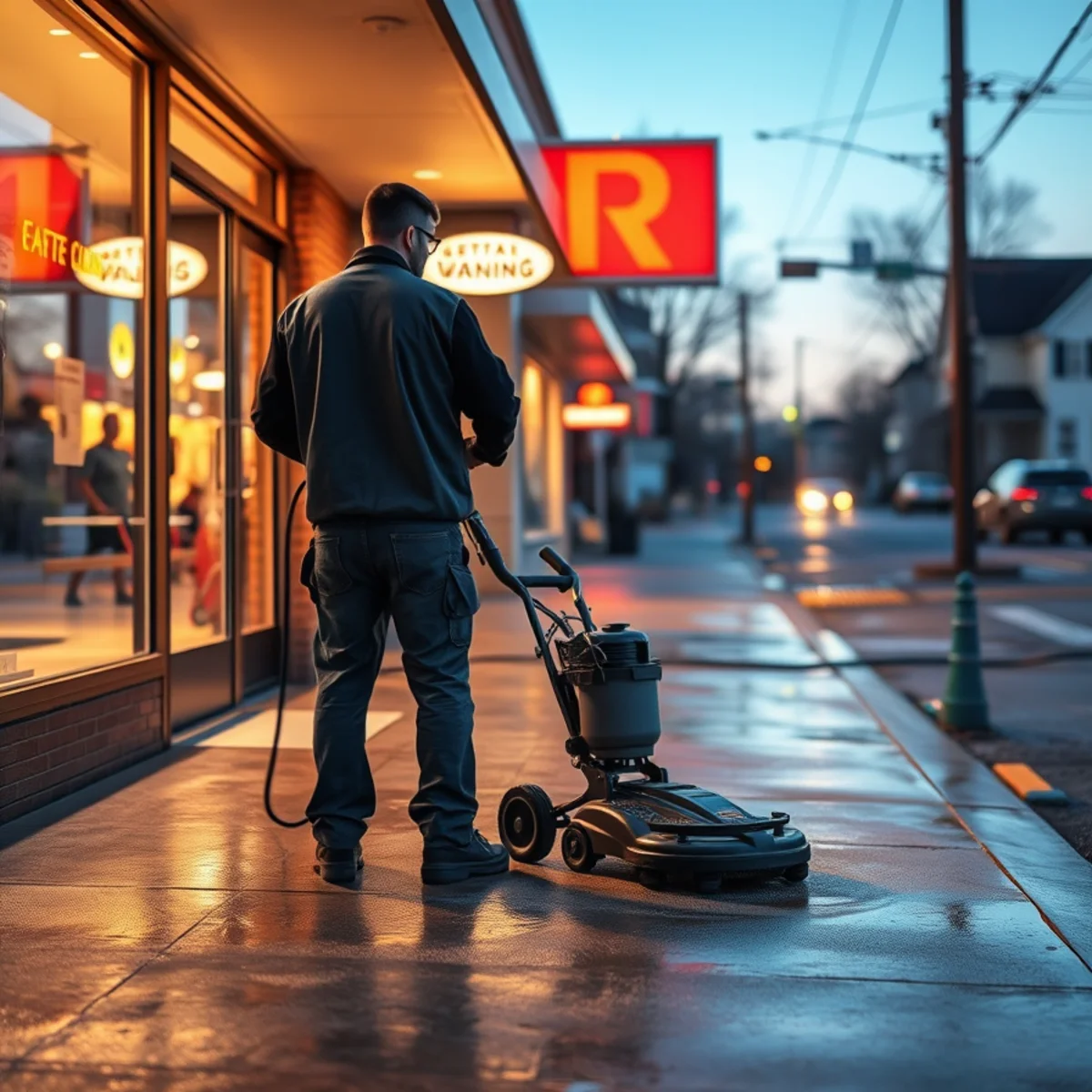
Two different jobs, two different methods, and using the wrong one does damage. Hard surfaces — concrete flatwork, oil, gum, tire marks — get high pressure and a rotary surface cleaner that lays down even pressure so you don't end up with wand stripes carved across your entrance. But your building skin is a different animal. Vinyl and metal siding, EIFS and stucco, awnings, painted wood, and printed signage all get soft washing: low pressure plus a biodegradable detergent that kills algae, mildew, and that Piedmont-humidity grime at the root instead of blasting it (and blasting water behind the panels while it's at it). Around here the algae and mildew never really quit — our humidity and spring pollen keep north-facing walls green year-round — so soft washing is what actually keeps a facade clean instead of just wet.
We work across property types: chef-driven restaurants and fast-food franchises, retail storefronts and boutiques, office and medical buildings, shopping centers, gas stations and convenience stores, apartment and HOA complexes, and the warehouses, distribution sites, and fleet lots out toward Iron Station and the county's industrial corridors. Whether you run one storefront on Main Street or manage a dozen sites, the standard is the same.
Hot Water Degreasing for Restaurants & Drive-Thrus
Cold water does not remove grease. You can blast a baked-on grease stain all day with a cold machine and just smear it around. Heat is what emulsifies fryer oil and food fats so they actually lift off the concrete instead of soaking deeper in. That's why a real commercial job on a kitchen back-door pad or a drive-thru lane needs hot-water pressure washing — the heat breaks the bond, a commercial-grade degreaser and surfactant breaks down the fats, oils, and grease (FOG), and then it rinses clean instead of streaking.
The grease-prone zones are predictable: dumpster corrals, the kitchen back-door pad where the mats and trays get hosed off, the drive-thru lane where idling and spills cook into the surface, and the concrete around the grease-trap. Left alone, those areas don't just look bad — they smell. That sour grease odor draws flies, rodents, and complaints, especially through a Lincolnton summer. Recurring hot-water service is as much about odor and pest control as it is appearance, and for a food-service operator that's the difference between a property that reads clean and one that reads neglected.
Dumpster Pad & Parking Lot Cleaning
Ask any restaurant GM why they finally called for recurring service and the answer is usually the dumpster pad. It collects grease, leachate dripping out of the bin, bacteria, and a smell that gets worse every week. It's the single most-cited reason food-service operators put cleaning on a schedule, and for good reason — it's the spot that fails a health inspector's eye-test fastest.
Parking lots and decks need their own treatment. Oil spots get pre-treated and lifted, not just rinsed. Tire marks, battery-acid etching, and dropped-fluid stains from the cars that sit there all day get worked individually. Pricing on big flatwork is usually bid per square foot, and parking is often handled per space or as a whole-lot bid; a grease-loaded hot-water pad costs more than a plain cold-water sidewalk because it's a tougher, slower job with degreaser and heat involved. Beyond looks, a clean lot is a liability play — it cuts slip-and-fall risk and keeps debris and contaminants out of the storm drains that feed Lincoln County's waterways.
EPA-Compliant Water Recovery & Wastewater Disposal
This is the part the cheap guys skip, and it's the part that lands on you. Under the federal Clean Water Act, it is illegal to let wash water carrying grease, detergent, oil, or other contaminants run into a storm drain. Storm drains aren't treated — they go straight to the creek. When an uninsured washer sends your dumpster-pad runoff down the nearest grate, the violation and the fines attach to the property owner, and those fines can run steep on a per-day basis.
We do it the legal way. On grease and contaminant jobs we use water recovery and reclamation — vacuum-recovering the wash water, separating out the oils and solids, filtering it, and disposing of it properly instead of letting it loose. Containment booms, berms, and drain mats keep your storm drains protected while we work. Commercial discharge in North Carolina also falls under NPDES stormwater rules and local ordinances, and a property tied into a municipal system has obligations a homeowner never thinks about. We use EPA-approved, biodegradable degreasers and surfactants so what we're rinsing is as clean as possible to begin with. This is the line between a licensed, insured contractor and the truck-and-trailer operation that leaves you exposed — and it's exactly the kind of corner-cutting a smart property manager won't risk.
Kitchen Exhaust & Hood Cleaning (NFPA 96)
The grease problem doesn't stop at the back door — it runs up through your hood and ducts, and that's where it turns into a fire-code issue. NFPA 96 is the standard your fire marshal and your insurance carrier enforce, and it sets cleaning frequency by how hard your kitchen cooks:
- Monthly — solid-fuel cooking (wood, charcoal smokers)
- Quarterly — high-volume operations and 24-hour kitchens
- Semi-annual — moderate-volume cooking
- Annual — low-volume operations like seasonal or church kitchens
The systems have to be cleaned to bare metal, and once grease film builds past roughly 0.002 inch (about 50 microns), the code triggers a required cleaning. This isn't paperwork to ignore. Non-compliance can mean a fire-marshal shutdown, a voided fire-insurance policy right when you need it most, and personal liability if a grease fire starts in a duct that should've been cleaned. Carriers want proof. We deliver it — timestamped before-and-after photos, a compliance certificate, and a dated service sticker on the hood for the inspector to find. For a Lincolnton restaurant operator, tying your exterior pad cleaning and your exhaust cleaning to one local crew means one fewer vendor to chase and one consistent record of compliance.
Recurring Maintenance Contracts & After-Hours Scheduling
One-time cleanings have their place, but commercial property does best on a rhythm tuned to its traffic. High-traffic food service usually runs monthly or bi-monthly; busy retail and shopping centers land around bi-monthly to quarterly; lower-traffic office and medical buildings often do fine on a quarterly cycle. The advantage of a standing agreement is that surfaces never get the chance to load up, so each visit is faster and the per-visit cost typically drops below what you'd pay for sporadic emergency cleanings.
Timing matters as much as frequency. We schedule after-hours and overnight so we're not blocking your entrance, fouling a delivery, or shutting down a drive-thru during the lunch rush — you open to a clean property and your customers never see the hose. For franchise operators and property managers running multiple sites around Lincoln County and over toward Denver, Maiden, Cherryville, and Vale, we'll cover every location on one program and one consolidated invoice instead of a stack of separate bills.
Why Choose an Insured, Local Lincolnton Contractor
Hydro Jet PW is licensed and insured, carrying general liability that protects you from on-site damage and from runoff liability — the coverage a residential washer with a borrowed machine simply doesn't have. Owner Caleb is a Lincoln County firefighter who's been at this since 2015, which means we understand the fire-code and grease side of a restaurant property in a way most washers don't.
Being local is the practical edge. We're already in the county, so you get an on-site quote this week, not whenever a Charlotte- or Gaston-based vendor decides Lincolnton is worth the drive. We give you a free, documented commercial estimate — real square footage, a defined scope, and a frequency recommendation based on your traffic and surfaces, not a number guessed over the phone. And we back our work with a written re-clean guarantee, the same standard we hold on every job, plus the verified reviews and commercial references to prove it.
Commercial Pressure Washing Cost in Lincolnton
Every commercial property is different, so the honest answer is that an on-site walk is the only way to get an accurate number — but here's the framing so you're not flying blind. Standard concrete flatwork on larger areas commonly bids in the range of $0.15–$0.50 per square foot, with smaller or more detailed jobs running higher per foot because the setup-to-surface ratio is worse. Grease-loaded, hot-water dumpster pads carry a premium over plain cold-water concrete because of the heat, degreaser, and slower pace. Parking lots are often quoted per space, frequently somewhere around $8–$20 a space depending on how much oil removal and equipment time is involved.
What moves the final price is concrete: total square footage, how heavy the soil and grease are, site access, whether you need after-hours timing, and whether the job requires water recovery and legal disposal. A clean retail sidewalk and a grease-caked dumpster corral are not the same job, and a fair bid reflects that. That's why we walk the property first — so the price matches the work and there are no surprises on the invoice.
Ready for a clean, safe property that protects your brand and passes inspection? Call Hydro Jet PW at +1 (351) 242-0666 for a free on-site commercial estimate here in Lincolnton.
 Concrete & Driveway Cleaning