A dirty sidewalk costs you more than looks. Black algae and slick mildew turn a damp walkway into a slip-and-fall waiting to happen, gum and rust stains tell customers you stopped paying attention, and that grimy storefront entry is the first thing anyone sees before they ever reach your door. Here in Lincolnton the Piedmont humidity makes it worse fast — but the right wash brings the concrete back, makes it safe to walk, and protects you on the liability side too.
Professional Sidewalk Cleaning in Lincolnton, NC
Hydro Jet PW cleans concrete sidewalks and walkways across Lincolnton and all of Lincoln County. We handle storefront entryways, ADA accessible routes, church and office walks, HOA common paths, apartment and rental walkways, and plain old residential front walks. If people walk on it, we can clean it — from a downtown Main Street entry to a long shaded path on a rural lot off well water.
The reason a sidewalk gets dingy here isn't dirt so much as biology. Our humid summers — 85-degree highs and humidity sitting in the 80 to 97 percent range — feed black algae and mildew on any concrete that stays shaded or damp. North-facing walks and the strips under tree cover go green and then black, and they regrow quickly once the heat and moisture set in. A real wash doesn't just rinse the surface; it kills that growth at the root so it stays clean longer.
Owner Caleb is a local firefighter, and Hydro Jet PW has been washing in this county since 2015. We're licensed and insured with dedicated pressure-washing liability coverage, we use biodegradable detergents, and the estimate is always free and done on site. We serve Lincolnton's 28092 and the surrounding towns. You get brighter, slip-safe, gum-free concrete that lifts your curb appeal and lowers your risk.
What We Pull Off Your Concrete
Most sidewalk grime falls into a few stubborn categories, and each one needs the right chemistry instead of brute force. The big one in our climate is black algae and gloeocapsa magma, plus mildew and moss — that's the slick green-to-black film that makes wet walkways dangerous. We treat it with a soft-wash detergent (a sodium-hypochlorite-and-surfactant blend) that kills the organism instead of just knocking the top layer off, so it doesn't bounce back in a few weeks.
Chewing gum is its own problem, and it piles up fast at restaurant entries, bus stops, and anywhere foot traffic bunches up. Cold water won't budge it. We use hot-water pressure washing — steam in the 180 to 200°F range — to soften the gum and lift it clean off the concrete without gouging the surface.
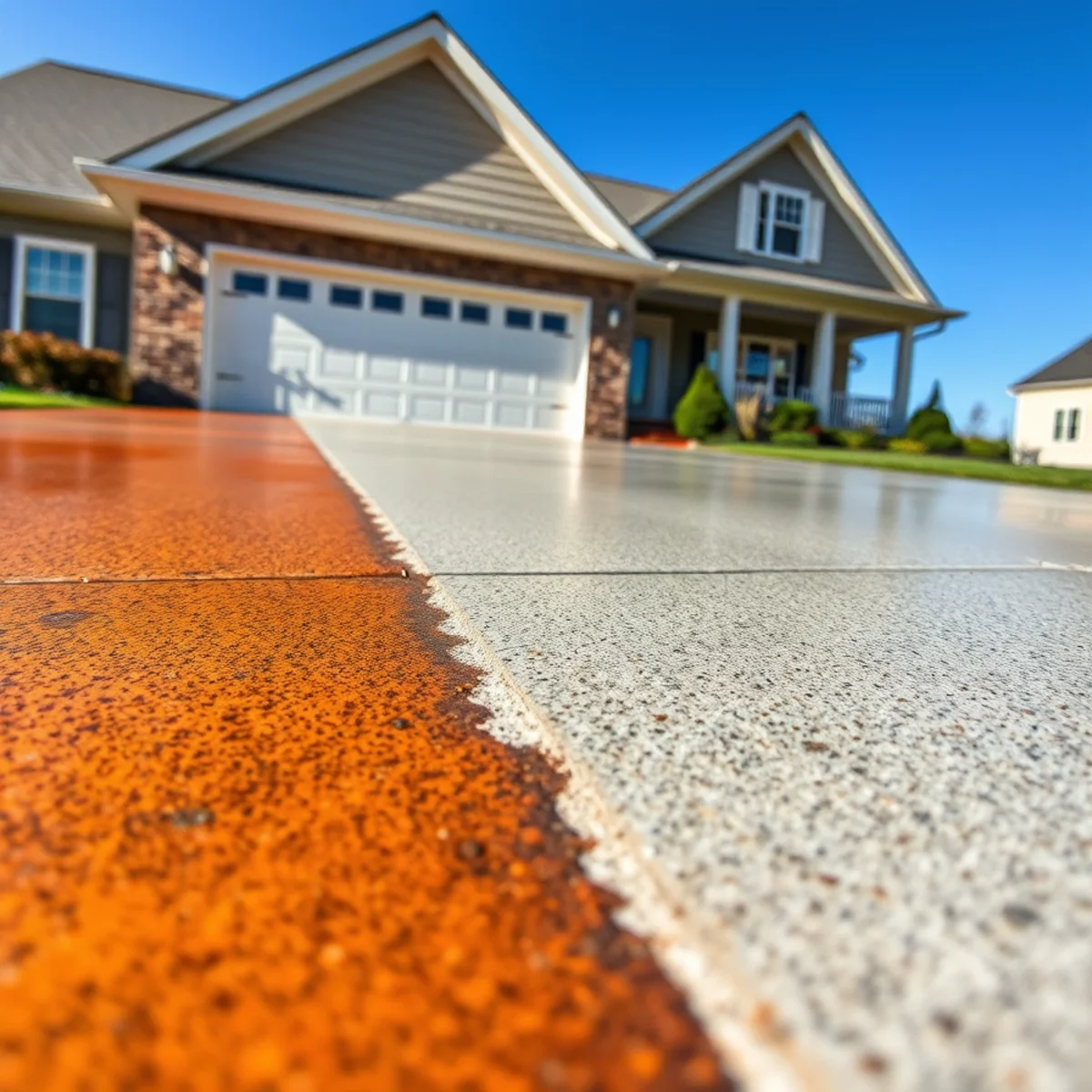
Then there's the stain that's unique to us: North Carolina red clay. That iron-oxide in our Piedmont soil chemically bonds to concrete and leaves an orange-rust stain that ordinary washing will not touch. The same goes for rust from fertilizer, metal furniture, and the iron and manganese in rural well water. Those need an oxalic-acid treatment — the right acid pulls the iron staining out of the pores instead of just lightening it. We also handle oil, grease, tire marks, drink spills, battery-acid burns, and the chalky white efflorescence (mineral salt) that hazes over older concrete. Different stain, different approach — that's the whole job.
Pressure Washing vs. Soft Washing for Concrete
People ask which is "better." Neither — they do different jobs, and a good crew uses both on the same sidewalk.
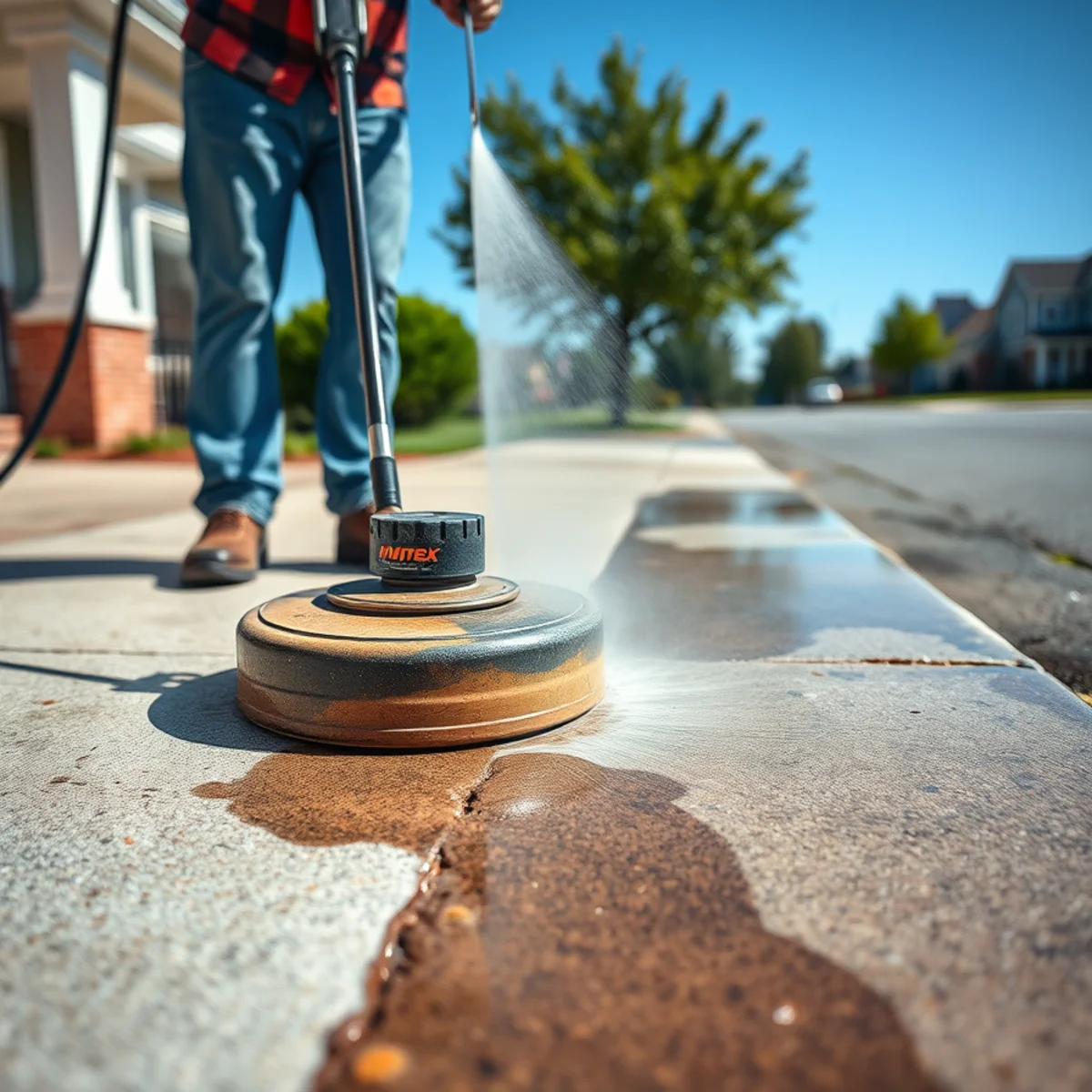
Pressure washing with a flat-surface cleaner is how we handle the mechanical stuff: ground-in dirt, oil, tire marks, and general traffic film. The surface cleaner is a flat tool that rides over the concrete and spins two nozzles under a hood, so you get an even, streak-free finish across a big walkway instead of the zebra-stripe wand marks a beginner leaves behind. We run controlled PSI and GPM — enough to clean, not enough to chew up the surface.
Soft washing is low pressure plus chemistry. This is what kills the algae, mold, and mildew at the source. Because the detergent does the work instead of raw force, the results last a lot longer — you're removing the living organism, not just the stain it left.
How We Pick the Method
We choose based on the concrete's age, condition, and what's actually staining it. Newer, sound concrete can take a confident pressure wash with the surface cleaner. Older concrete that's already spalling, pitting, or flaking gets gentler settings and leans more on chemistry, because blasting deteriorated concrete only makes the damage worse. Pavers, stamped or brushed-finish concrete, and the expansion joints between slabs all get extra care — too much pressure pops jointing sand, etches the stamped pattern, and tears up soft joint material. Matching the method to the surface is the difference between a clean sidewalk and a damaged one.
Is Pressure Washing Safe for My Sidewalk?
Yes — when it's done right. Concrete handles cleaning fine at the correct PSI (commonly 1,500 to 3,000 for flatwork), with a wide-fan nozzle and the wand held at a sensible distance. The surface cleaner spreads that force out so no single spot takes a hit.
The damage you've seen on other people's concrete almost always comes from DIY mistakes. A zero-degree "pencil" tip held an inch off the slab will etch lines, leave wand marks, and start spalling in seconds — and once you've striped a sidewalk that way, it's permanent. We also stay off the things that should never get blasted: open cracks, already-deteriorated areas, and fresh concrete poured in the last 12 to 24 months, which hasn't fully cured and scars easily.
Before we open up on a stain, we run a test spot in an inconspicuous area to dial in the pressure and dwell time for your specific concrete. We pick surface-appropriate, biodegradable detergents, and we're mindful about where the rinse water goes — keeping wash water and detergent out of storm drains the way EPA runoff guidance expects. The point is to clean your investment, not gamble with it.
ADA Compliance, Slip Hazards, and Liability for Businesses
If you own a business in Lincolnton, this section is the one that matters most. The ADA requires accessible routes to be stable, firm, and slip-resistant. A walk coated in algae slime and moss isn't slip-resistant — it's the opposite — and that's an accessibility problem before it's anything else.
It's also your biggest premises-liability exposure. A slick storefront entry is one of the most common slip-and-fall scenarios there is, and when someone goes down on your walk, the question becomes whether you kept it reasonably safe. Regular cleaning takes that hazard off the table, protects your customers and staff, and lowers your odds of an injury claim or lawsuit. While we're cleaning we'll also flag trip hazards we spot — a raised slab edge or a vertical joint offset where two sections have heaved apart — so you know about them. We don't repair concrete, but pointing it out lets you handle it before someone trips. And because scheduled, documented cleaning shows up on a maintenance record, it helps demonstrate you were actively keeping the property safe — which is exactly what an insurer or attorney wants to see.
Curb Appeal for Storefronts and Commercial Walkways
Downtown Lincolnton runs on foot traffic — the Main Street shops, the eateries and breweries, the galleries, the farmers-market crowd. Every one of those visitors reads your entryway before they read your sign. Bright, gum-free concrete says a place is run well and worth walking into; a stained, sticky entry says the opposite no matter how good things look inside.
Sidewalk cleaning pairs naturally with storefront window and building washing for a full exterior refresh, so the whole front presents as one clean package. The before-and-after on downtown retail, restaurants, and offices is dramatic, and that brightened concrete photographs well — which matters when those photos end up on your Google Business Profile, your listings, and your marketing.
How Often, and What It Costs in Lincolnton
Sidewalk cleaning generally runs in the range of $0.10 to $0.40 per square foot, and the per-foot price drops on bigger jobs. What moves the number is total square footage, how bad the staining is, how much gum is baked in, and how easy the area is to access. The honest answer is that an on-site look gives you a real figure instead of a guess — and our estimate is free.
On frequency, most walkways do well on a quarterly to twice-a-year schedule. High-traffic restaurant and retail entries — the ones collecting gum and grease all day — usually want more frequent attention. A recurring maintenance plan almost always costs less than waiting for an emergency cleaning, because you're never letting the algae, gum, and rust set in to the point where they're hard and expensive to pull off. Our four-season swing here — spring pollen, summer algae, winter grime — is exactly why a scheduled wash beats a once-a-year scramble.
Service Area: Lincolnton and Lincoln County
We're based right here and we know these surfaces. Our primary area is Lincolnton (28092), including historic downtown and the Main Street business district. We also serve the surrounding towns — Denver, Maiden, Cherryville, Vale, and communities throughout Lincoln County — and we reach into the Lake Norman area and toward the Iredell, Catawba, and Gaston borders.
One thing worth clarifying: the City of Lincolnton maintains public streets and the sidewalks along them, but the walkways on your own property — your storefront entry, your private walks, your residential front path — are your responsibility. That's the concrete we handle. Being local means we already understand what's staining your sidewalk: the iron-oxide red clay, the humidity-driven mold on shaded slabs, the seasonal pollen, the well-water rust on rural lots. We're not learning your conditions on the job; we wash in them every week.
Ready to get your walkways bright, safe, and gum-free? Call Hydro Jet PW at +1 (351) 242-0666 for a free on-site estimate, and we'll send a local crew that knows Lincoln County concrete to take a look and give you a straight number.
 Concrete & Driveway Cleaning