That green and black film crawling up your fence is Lincoln County humidity doing what it does best. A fence sits in the shade, catches red clay splash-back off the yard, and stays damp longer than any other surface on your property, so it goes green fast and stays that way. Left alone the growth digs in, the wood grays out, the vinyl chalks, and the whole line that's supposed to frame your yard starts dragging down the look of the place. The good news is that a slick, mildewed fence almost always cleans up beautifully when it's washed the right way.
Fence Cleaning We Handle Around Lincolnton
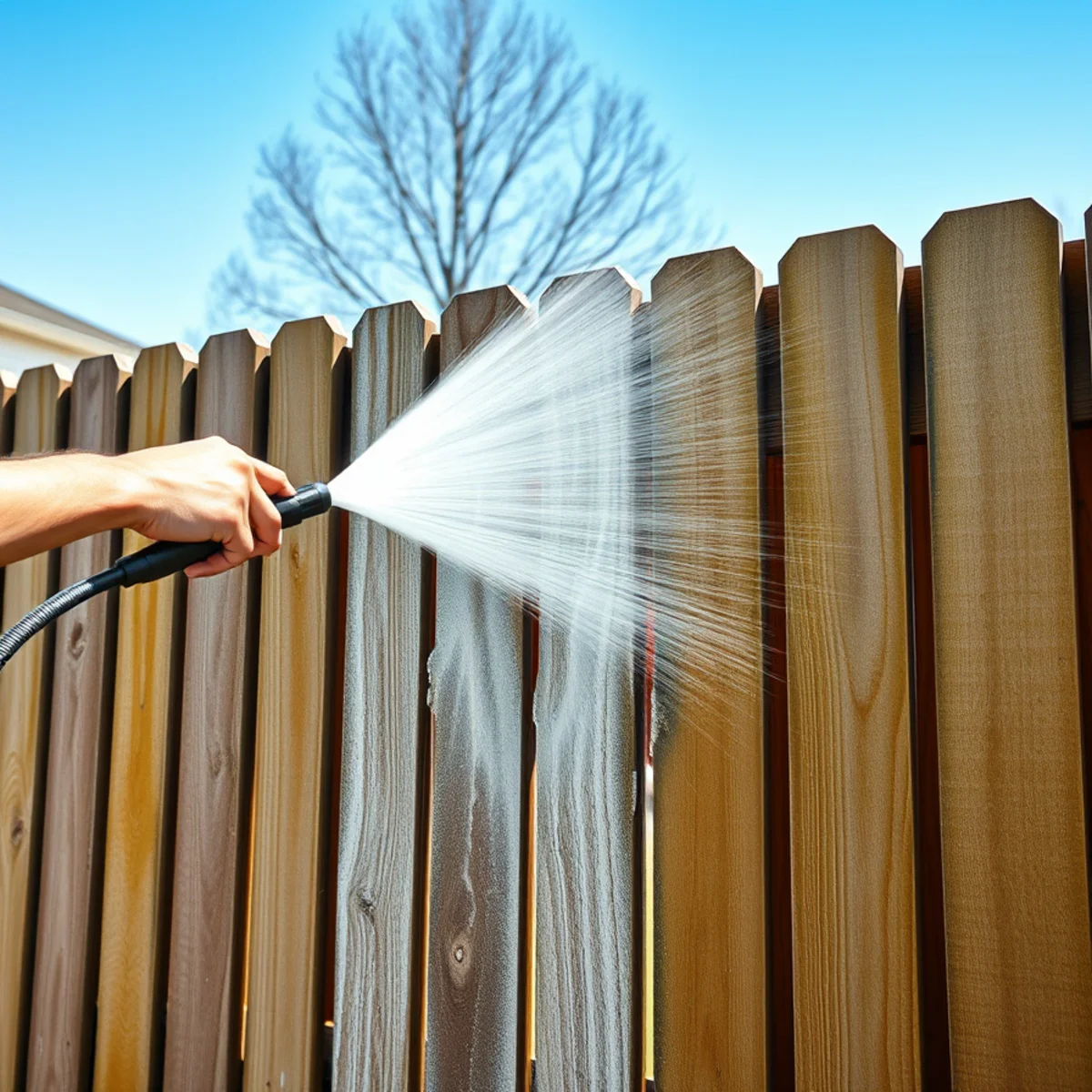
We clean fences the way they're meant to be cleaned: with a low-pressure soft wash that kills the growth at the root instead of just blasting the top layer off. That covers wood privacy fences, shadow-box panels, vinyl, aluminum and wrought-iron, and chain-link. We strip off the green algae and gloeocapsa magma, clear the black mildew and mold spores, and pull the gray, weathered cast off tired wood so the natural color comes back. On a privacy or shadow-box fence we wash both sides, because algae clings just as hard to the face you don't look at every day. And once a wood fence is clean and dry, it's the perfect moment to add a stain or seal, so we offer that as a follow-up.
The thing that sets a real fence cleaning apart is attention to where the growth actually hides. Algae loves the grooves between pickets, the underside of rails, and the post caps where moisture pools. A quick rinse misses all of that. We work the solution into those spots so the fence comes out clean everywhere, not just on the flat faces.
Why Fences in Lincoln County Turn Green and Black
Our Piedmont climate is basically a greenhouse for the stuff that stains a fence. Warm, humid air plus a heavy tree canopy keeps fence boards damp for days at a time, and algae, mildew, and lichen feed on that organic film and shade. Gloeocapsa magma, the same organism behind the black streaks on roofs, settles onto fence panels and spreads. North-facing runs and any fence near a creek or the Lake Norman shoreline stay wet the longest, so those grow the heaviest and the fastest.
Then there's what our ground throws at it. Red Piedmont clay is full of iron oxide, and when rain kicks it up off the yard it splashes the bottom of your fence and leaves a rusty stain that bonds to the surface. Spring pollen coats the whole county yellow and bakes into a film that holds moisture against the wood. On rural lots, well water heavy with iron and manganese can leave its own streaks where a sprinkler or runoff hits the boards. Untreated wood and chalking vinyl both hold that moisture and those spores, which is exactly why an un-maintained fence around here greens up again so quickly.
Soft Wash, Not High-Pressure Blasting
Here's the part that matters most, and the part most folks get wrong: a fence should be soft washed, not blasted. We apply a custom-mixed cleaner — a surfactant-rich house-wash detergent with a properly diluted dose of sodium hypochlorite — at low pressure, and we let it dwell ten to fifteen minutes so it can lift the growth and kill the spores. We keep the solution from drying out on the boards while it works. On bare or older wood we often reach for sodium percarbonate, an oxygen bleach that's gentler on the grain, and finish with a sodium metasilicate brightener to even out the tone. Then we rinse at a pressure that's correct for the material.
The reason we don't lean on raw pressure is simple. A DIY pressure washer running 2,000 to 3,000 PSI tears into soft wood, raises the grain, gouges the boards, and forces water behind privacy panels where it can't dry. It scars vinyl and drives moisture into joints. It also doesn't actually kill anything — it knocks the green off for a few weeks, then the roots that are still alive bring it right back. Soft washing kills the growth, so the fence stays clean far longer.
We protect your yard the whole time. Before we start, we pre-wet the grass, shrubs, and beds along the fence line, and we rinse them again after, so the landscaping is shielded from the cleaning solution. Pets stay safe too — we just ask that they're kept inside while we work. The detergents we use are biodegradable, and applied and rinsed correctly they won't hurt an established lawn.
Cleaning by Material: Wood vs. Vinyl vs. Aluminum
Every fence material wants a different touch, and matching the method to the material is what keeps a cleaning from turning into damage.
Wood
Wood is the most delicate, and the right pressure depends on the species. Soft cedar and pine pickets clean at roughly 500 to 800 PSI; denser pressure-treated and hardwoods can take closer to 1,200 to 1,500. Push past that and you fur the grain, splinter the surface, and leave permanent marks. Wood also brings tannin bleed and rust stains from old fasteners, which a brightener and a wood-safe approach can pull back. Cedar, pine, and pressure-treated pine all respond well once you respect the grain.
Vinyl
Vinyl handles a bit more pressure, but the real enemy is chalking — that powdery oxidation that dulls the surface. We use low pressure plus an oxygen-bleach or vinyl-safe cleaner to cut the chalk and the algae without scarring the panels. Done right, the shine comes back without scuffs.
Aluminum and Wrought-Iron
Aluminum and wrought-iron clean gently, and the one rule we never break is no acidic or vinegar-based cleaners — those corrode the metal and the coating. We use a mild wash to clear oxidation and rust streaks without etching anything. Composite and chain-link each get their own adjusted method, since composite scratches and chain-link needs the solution worked through the weave.
Bringing Gray, Weathered Wood Back to Life
A wood fence that's gone silver-gray isn't necessarily worn out — it's usually just oxidized on the surface from UV and weather. Wood brighteners built around sodium metasilicate restore the natural luster and even out the tone without over-bleaching the boards into a washed-out look. When we're working with a wood brightener we'll often follow with an oxalic-acid neutralizer to settle the wood back to a natural pH and lock in that fresh color.
A freshly cleaned fence is also the ideal moment to stain or seal, and the timing matters. Washing opens the wood's pores so a stain or sealer penetrates deep instead of sitting on top. The rule we follow is to wait at least 48 hours after cleaning so the wood is fully dry before any finish goes on — sealing wet wood traps moisture and leads to peeling. For a fence we steer folks toward a penetrating stain rather than a film-forming finish, because penetrating stains soak in and wear gracefully instead of cracking and flaking. Plan to reseal every two to three years to slow algae regrowth and keep moisture from cracking the boards.
How Often a Fence Should Be Cleaned Here
In our humid climate, a professional fence cleaning every 12 to 18 months keeps things looking right and stops permanent staining before it sets in. Shaded runs, north-facing panels, and lakeside fences green up faster and may want service on the shorter end of that. The signs it's time are easy to read: a green or black film, a surface that feels slick to the touch, a musty smell when you're near it, and a dull, lifeless color where it used to look fresh. Staying on a routine doesn't just look better — it extends the life of the fence, because the algae and moisture that you keep stripping off are the same things that rot wood and break down vinyl over the years. For HOA properties and folks who'd rather not think about it, we set up recurring maintenance so the fence never gets bad in the first place.
Serving Lincolnton and the Surrounding Towns
We're local to Lincolnton (28092) and cover all of Lincoln County, plus the nearby communities — Denver, Iron Station, Vale, Crouse, Maiden, and Stanley. The Lake Norman-area neighborhoods get hit hardest by humidity, so those fences see us most. We also handle HOA and neighborhood-perimeter fences to keep them up to community appearance standards, which around here is usually what gets the call started. Being a local, licensed and insured crew — not an out-of-town franchise or a fence installer who dabbles in cleaning — means we know our soil, our algae, and our weather, and we wash accordingly.
If your fence has gone green, gray, or grimy, let's take a look at it. Call Hydro Jet PW at +1 (351) 242-0666 for a free, no-obligation on-site estimate, and we'll tell you straight what it'll take to get your fence looking like new again.

 Concrete & Driveway Cleaning