Vinyl siding can be cleaned safely, but high-pressure washing is the wrong tool. Here's the safe PSI, why soft washing wins, and how to vet a contractor.
It's the question we hear most often on first calls around Lincolnton: "If you blast my siding with a pressure washer, are you going to wreck it?" Fair worry. The honest answer is that vinyl siding can be cleaned without a scratch, but a high-pressure washer in the wrong hands is one of the fastest ways to crack a panel or drive water into a wall where it doesn't belong. Let me walk you through exactly what's safe, what isn't, and how to tell a careful pro from a guy who's going to leave you with a moisture problem.
Is Pressure Washing Safe for Vinyl Siding? The Short Answer
Vinyl siding can be cleaned safely. But standard high-pressure washing, the kind that runs 2,000 to 3,300 PSI, is the wrong tool for the job and a real risk to your home. The method professionals and the manufacturers themselves prefer is soft washing: low pressure paired with a cleaning solution that does the actual work.
Here's the part most people get wrong. The damage we see almost never comes from a homeowner not trying hard enough. It comes from too much pressure, a bad spray angle, and getting the tip too close to the panel. The effort isn't the problem; the force is. A soft-wash approach lets the chemistry kill the algae and lift the grime while the water just rinses it away, so nothing gets blasted, cracked, or shoved behind the siding.
Below I'll cover how high pressure actually damages vinyl, why soft wash is the right call, the safe PSI and nozzle numbers if you do touch a machine, the warranty angle nobody talks about, and a copy-ready list of questions to vet whoever you hire.
How High Pressure Actually Damages Vinyl Siding
Most articles toss out a PSI number and move on. They never explain why high pressure hurts vinyl, which is the exact thing keeping you up at night. So here's the mechanism, plain and simple.
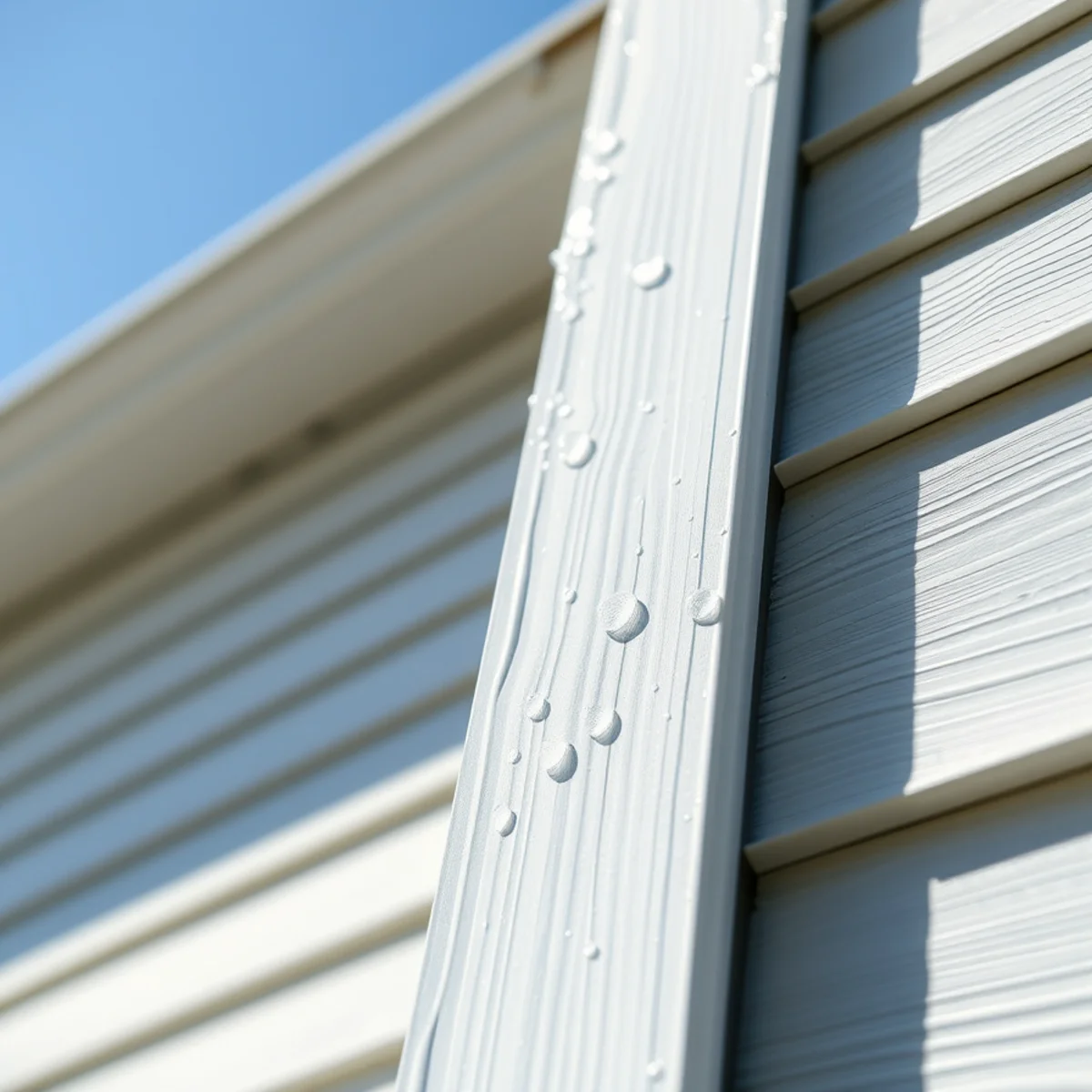
Vinyl siding isn't a solid wall. It's a series of panels that overlap, with laps and seams designed to shed rain that runs down the wall. At the bottom edge of each panel there are small weep holes (drainage holes) that let condensation escape. The whole system assumes water moves downward and out. High pressure breaks that assumption.
- Water forced behind the laps. When you spray upward into those overlap seams, you push water under the panels where it can't drain or dry. That's the single biggest cause of behind-siding moisture problems.
- Pressurized water through the weep holes. Those little drainage holes at the bottom of each panel will happily let a pressurized stream pass straight into the wall cavity, past your house wrap and vapor barrier.
- Trapped moisture turns into rot. Once water is in the wall and can't dry, you get mold and mildew growing inside, and over time the OSB or plywood sheathing, trim, and framing start to rot. In our humid Piedmont summers that moisture has no incentive to leave.
- Physical damage to the panels. A tight, high-pressure stream can crack, chip, dent, or warp vinyl, and it can pop panels loose from their nails.
- Stripping the surface. Blasting erodes the thin protective layer on the vinyl, which speeds up oxidation, chalking, and fading. Ironically, an aggressive "deep clean" can leave your siding looking older.
- Secondary hazards. High pressure forces water into outlets, light fixtures, vents, dryer exhausts, and behind window flashing, which is both a damage and a safety issue.
So when people ask, "Can pressure washing force water behind vinyl siding?" the answer is absolutely yes, and that's the real danger, more than the cosmetic cracks.
Soft Washing vs. Pressure Washing: Why Soft Wash Is the Right Method
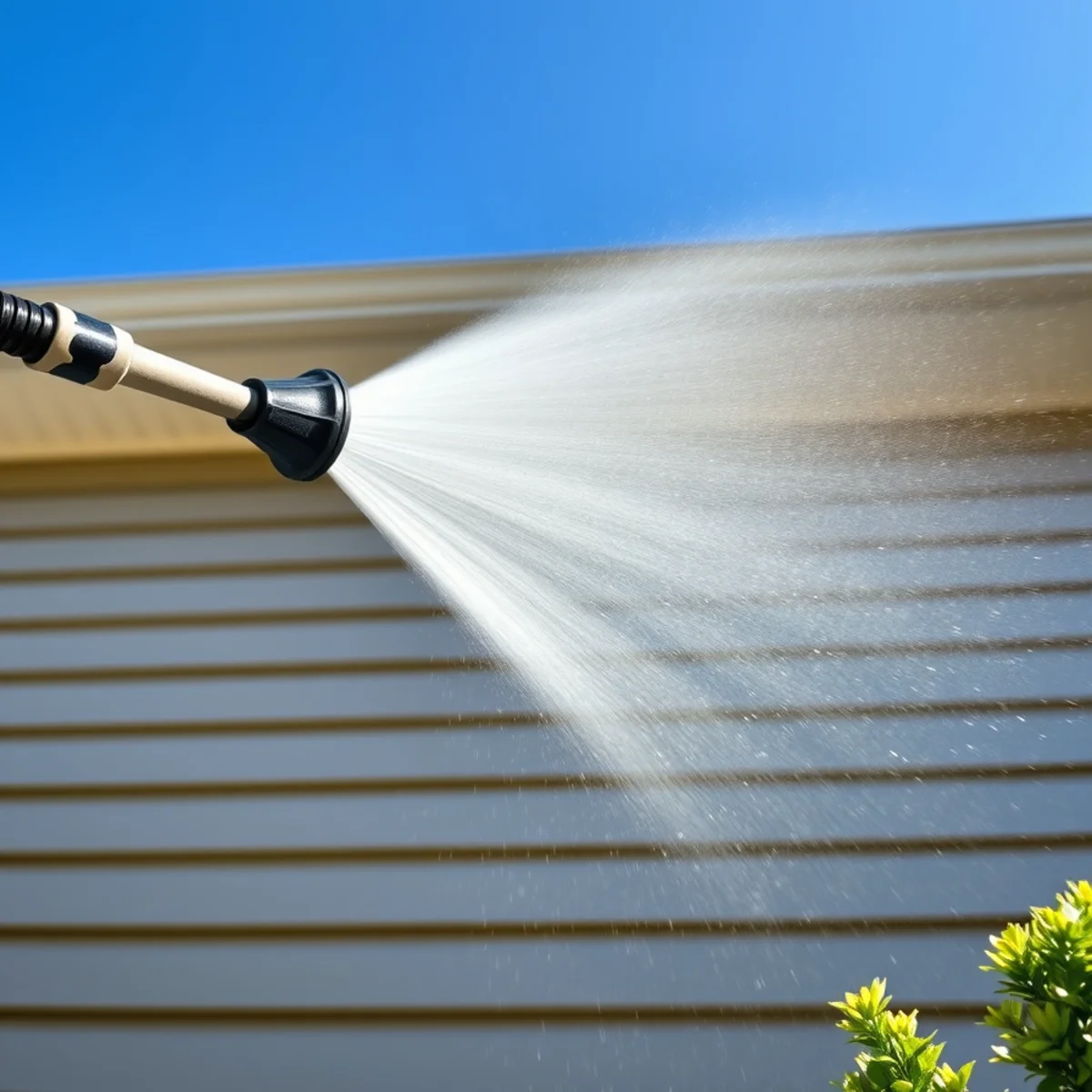
Soft washing applies detergents, algaecides, and surfactants at low pressure so the chemistry does the cleaning, not brute force. Think of it as treating the cause instead of sandblasting the symptom.
Here's why that distinction matters in Lincoln County specifically. Our shade, lake humidity, and long muggy stretches grow algae like crazy, including the black-streak roof algae Gloeocapsa magma and the green film that creeps across north-facing walls. If you just blast that off with plain water under high pressure, you're knocking down the visible growth but leaving the living roots in the surface texture. It comes back in weeks. Soft washing kills it at the root, so a proper clean lasts far longer.
A few more reasons soft wash wins on vinyl:
- It works with the material, not against it. Vinyl was never engineered to withstand mechanical blasting. Low pressure plus the right solution respects what the siding can take.
- It reaches where pressure can't, safely. The solution gets under laps and into the textured grain without driving water into the wall cavity.
- It's longer-lasting. Because the algae and mildew are killed rather than just displaced, regrowth is slow instead of immediate.
When is light pressure rinsing okay? A gentle rinse with a wide tip to knock down spring pollen or loose Piedmont red-clay dust is fine. But anything involving algae, mildew, or stuck-on grime calls for soft wash. If there's organic growth, force alone is the wrong answer.
Safe PSI, Nozzle, Distance, and Angle for Vinyl Siding
If you're going to clean siding yourself, the numbers below keep you out of trouble. People search "What PSI is safe for vinyl siding?" and "How close can you pressure wash vinyl siding?" so let's be specific.
- Soft wash target pressure: roughly 60 to 150 PSI at the surface. With a downstream injector that's often around 250 to 300 PSI at the pump. This is the gold standard for vinyl.
- If you use a pressure washer at all: stay at or below about 1,300 to 1,600 PSI, and never exceed 1,500 PSI. Don't crank it. Also pay attention to GPM (gallons per minute) — a higher flow rate at low pressure rinses better than a tight, high-pressure jet.
- Nozzle choice: use a wide fan tip, a 25-degree green or a 40-degree white. Never use a 0-degree red tip or a turbo nozzle on vinyl. Those concentrate all the force into a point and will gouge it.
- Distance: keep the tip 1 to 3 feet from the surface. Test an inconspicuous spot first, like a side wall behind a bush.
- Angle: spray at a slight downward or 45-degree angle, and work top to bottom. Never aim upward into the seams. That upward angle is exactly how water gets behind the laps.
- Avoid: windows, light fixtures, soffit vents, electrical, and dryer or utility penetrations. Steer clear of these entirely.
If you only remember one rule, make it this: don't spray up. Gravity built this siding to shed water downward. Honor that.
Will Pressure Washing Void Your Vinyl Siding Warranty?
This is the angle most contractor blogs completely skip, and it's a big one. Vinyl siding often carries a 50-year to lifetime manufacturer warranty, and those warranties almost always include specific approved-cleaning language. Use the wrong pressure, the wrong chemicals, or the wrong tools, and you can void that warranty right when you'd want to use it.
Some manufacturers explicitly advise against power washing altogether, or restrict it to low-pressure rinsing only. The Vinyl Siding Institute (VSI) — the industry body — recommends cleaning with a soft cloth or a soft-bristle, non-metal brush, a garden hose, and approved cleaners. Their guidance is clear that if a pressure washer is used, you should hold it at eye level and never angle the stream upward, because of the water-intrusion risk we covered above.
The practical action step: before anyone cleans your siding, check your specific brand's care guide. Brands like CertainTeed, Mastic, and Royal each publish cleaning instructions, and following them protects both your siding and your coverage. A pro who knows vinyl will already work within those limits, which is one more reason the soft-wash method matters — it's the method that keeps your warranty intact.
DIY vs. Hiring a Pro for Vinyl Siding Cleaning
Plenty of single-story siding can be handled DIY with the garden-hose-and-soft-brush method. But there are real pitfalls worth knowing before you rent a machine.
Where DIY goes wrong:
- Renting a high-PSI machine "to get it really clean" and overpowering the vinyl.
- The ladder-and-upward-spray combination — standing on a ladder and angling water up under the laps. On a two-story home this is the number-one cause of behind-siding water damage for homeowners, and it's a genuine fall risk too.
- Mishandling chemicals — wrong dilution, killing landscaping, or leaving streaks.
Where DIY is reasonable: a single-story house with light dirt or pollen, using a garden hose, a soft-bristle brush, and an approved cleaner. That's a perfectly good Saturday project.
Where you should call a pro: two-story homes, anything up under the eaves, heavy algae or mildew, or well-water iron staining that needs the right treatment. Pros bring soft-wash systems, correct dilution of detergents and algaecides, and surface protection for your plants, furniture, and fixtures.
On cost, here are honest 2026 benchmarks so you know what's fair. Soft-washing siding tends to run roughly $0.20 to $0.55 per square foot. Whole-home flat rates commonly land between $250 and $750, and many 2,000-square-foot homes fall around $500 to $900 depending on stories, access, and how much growth there is. Your actual number depends on your home, which is why a free on-site estimate beats any online guess.
Questions to Ask a Pressure Washing Contractor Before You Hire
Here's the copy-ready checklist. Save it, and ask these before you let anyone touch your siding. The right answers separate a careful crew from a risky one.
- Do you soft wash vinyl siding, and at what PSI and nozzles? You want to hear "soft wash, low pressure," not "we crank it up to blast it off."
- Are you licensed, and do you carry liability insurance and workers' compensation? Ask for proof. If someone gets hurt on your property uninsured, that can become your problem.
- What cleaning solutions do you use, and are they safe for my siding, plants, and pets? Good crews use sodium hypochlorite and surfactants at proper dilution and protect your landscaping.
- How do you keep water from getting behind the siding and into the wall cavity? They should mention spray angle and not spraying upward into the laps.
- Will your method void my manufacturer warranty? A pro should know the VSI and brand guidance.
- Do you protect landscaping, furniture, electrical, and manage the runoff? This should be a confident yes.
- Do you offer a satisfaction guarantee and re-treat if algae comes back? Can you share reviews or references? A standing guarantee tells you they trust their own work.
If a contractor gets cagey on insurance or can't explain how they avoid water intrusion, that's your sign to keep looking.
How to Safely Clean Vinyl Siding (Step-by-Step) and How Often
For the DIYers, here's the safe sequence, and a note on frequency.
- Pre-rinse and pre-treat. Wet down the area and pre-treat heavy mildew or algae spots with an approved cleaner so the chemistry can start working.
- Apply the solution bottom-to-top. Working upward from the bottom prevents streaking on the dry siding below.
- Let it dwell, then rinse top-to-bottom. Give the cleaner time to do its job, then rinse downward with low pressure or a garden hose.
- Use a soft-bristle brush by hand for stubborn spots. Don't reach for more pressure — reach for a brush. Never a metal-bristle brush.
- Protect plants and fixtures. Rinse your landscaping before and after, and keep cleaner off windows and light fixtures.
How often should you clean vinyl siding? Typically once a year is the right rhythm. But here in Lincoln County, north-facing walls, shaded sides under tree cover, and anything near the lake's humidity grow algae faster and may need attention more often. If you're seeing green film or black streaks creeping back, that's your home telling you it's due.
One more common question: can you pressure wash painted vinyl siding? Treat it even gentler — painted or coated vinyl is more prone to having the finish stripped, so soft wash only, low pressure, and test a hidden spot first.
When you'd rather not climb a ladder or guess at chemical dilutions, that's exactly what we're here for. Hydro Jet PW soft washes vinyl siding all over Lincolnton and Lincoln County the right way — low pressure, the correct detergents, your plants and warranty protected, and a written re-clean guarantee if growth comes back. Caleb and the crew are licensed, insured, and local, and the estimate is always free. Give us a call at +1 (351) 242-0666 and we'll take a look at your siding and tell you straight what it needs.
Written by the Hydro Jet PW Crew
Led by Caleb, a local Lincoln County firefighter who started Hydro Jet in 2015. We soft wash, protect your property, and treat your home like our own.
Frequently Asked Questions
It can. Many vinyl siding manufacturers warn against high-pressure washing because it can force water behind the panels and damage the wall. Some warranties exclude pressure-washing damage entirely. A low-pressure soft wash stays within manufacturer guidelines and won't put your siding at risk.
For most homes here, once a year keeps algae, mildew, pollen, and red-clay haze under control. North-facing and heavily shaded walls near the lakes may green up faster and benefit from a check each spring. Because a proper soft wash kills the growth at the root, your siding stays clean a lot longer than a quick blast-and-rinse.
You can get some results, but the cleaning solution has to be mixed correctly, applied at the right strength, and rinsed carefully around windows, vents, and trim, while protecting your landscaping. Get the mix wrong and you can streak the siding or harm your plants. It's usually safer and cheaper in the long run to have a licensed, insured crew handle it. We offer free estimates.
Got a stain you can't beat?
Let a local crew handle it. Free estimates, fast scheduling.
Call +1 (351) 242-0666