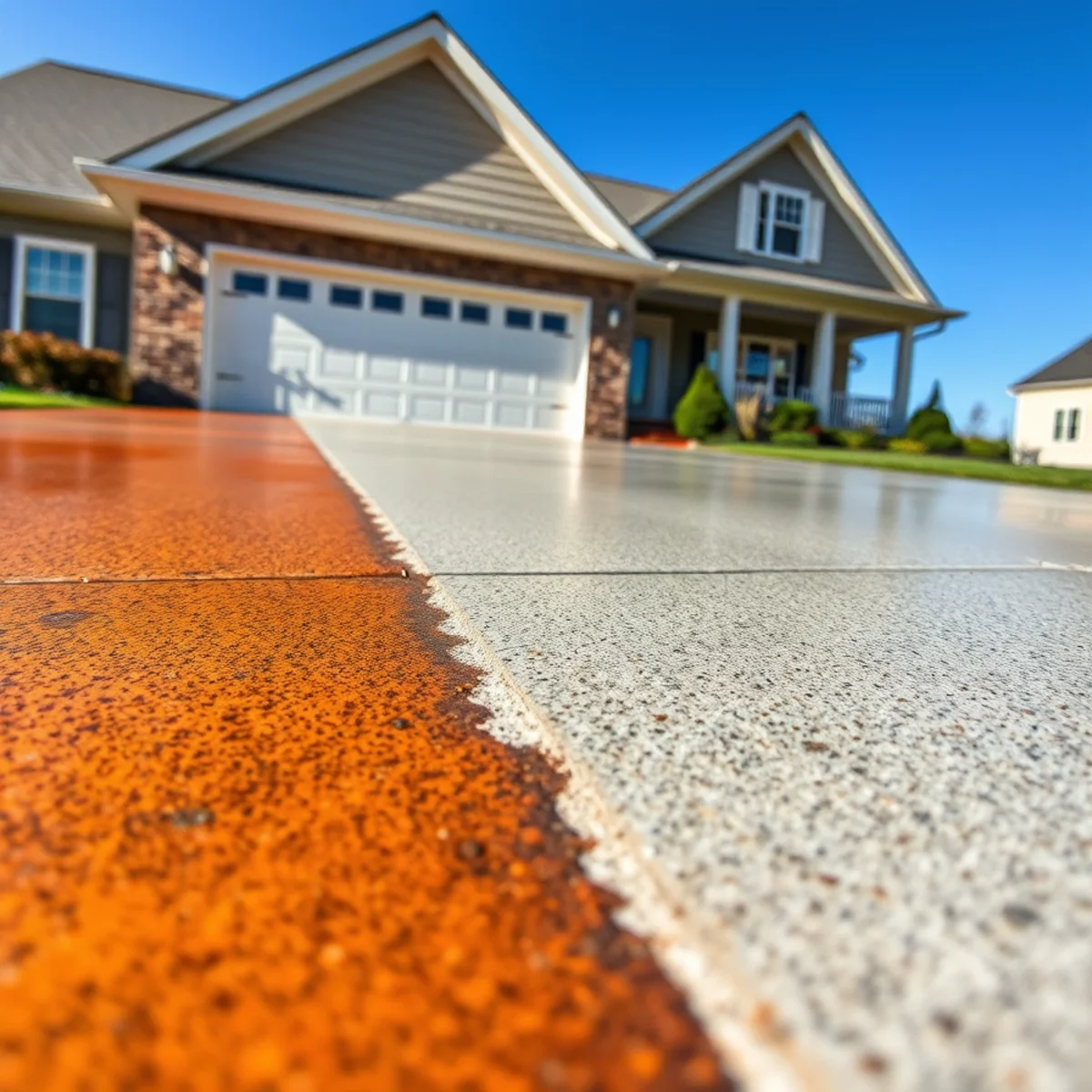
Piedmont red clay leaves rust-colored stains that pressure and bleach won't touch. Here's the iron-oxide chemistry behind it and how to actually get concrete clean.
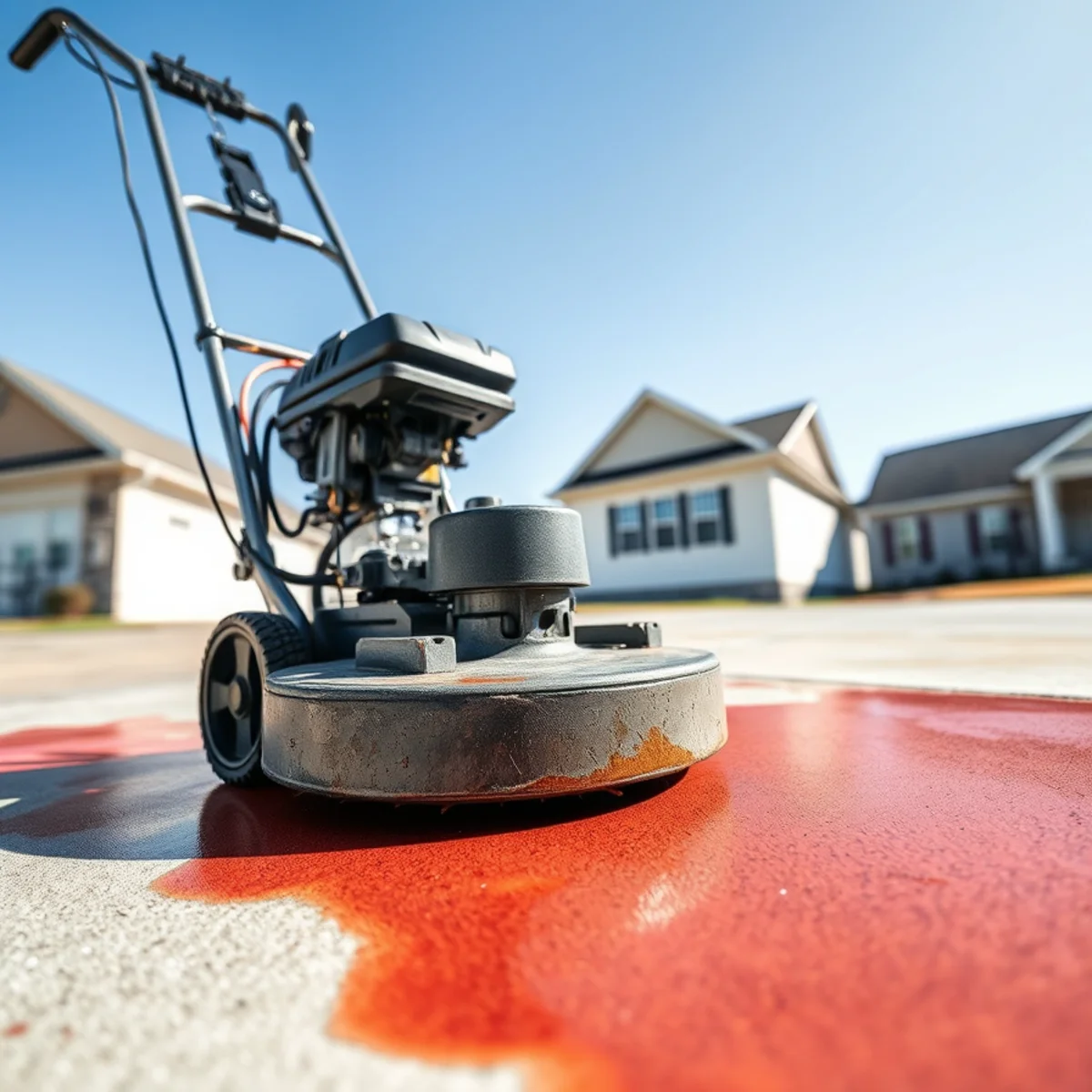
If you live anywhere around Lincolnton and your driveway has gone from gray to a rusty orange-red, you already know two things: it showed up after a hard rain, and a power washer didn't fix it. You blasted it, maybe poured on some bleach, and it just sat there laughing at you. That's not a cleaning problem. It's a chemistry problem, and once you understand what's actually happening inside that concrete, the right fix makes sense.
Here's the short version of what's going on and how the pros in Lincoln County actually get it out.
Why Red Clay Stains Concrete in Lincoln County (The Iron Oxide Problem)
Lincoln County sits squarely in the Piedmont, and our soil is a red, iron-heavy clay — a type geologists classify as an Ultisol. That signature red color isn't a coincidence. It comes from iron oxide, chemical formula Fe2O3. If that compound sounds familiar, it should: iron oxide is rust. So when red clay stains your concrete, it is staining it with essentially the same stuff that forms on an old wrench left out in the rain.
The trouble is how it gets in. Concrete looks solid, but it's full of microscopic pores and capillaries — a sponge made of stone. When rain, irrigation runoff, or muddy boot traffic carries fine iron-rich clay particles onto the slab, that water wicks down into the pore network. Then the water evaporates and leaves the iron oxide behind, precipitated and bonded deep inside the pores. It stops sitting on the surface and starts acting like a dye that has soaked into fabric.
A few things make Lincoln County concrete especially vulnerable:
- Concrete is alkaline and highly porous, which makes it grab and hold iron staining
- New construction and freshly graded lots expose huge amounts of bare clay that washes onto driveways with every storm
- Sloped driveways and walkways funnel runoff straight across the flatwork
- Eroding clay at driveway edges and downspout outlets feeds a fresh dose of iron after each heavy rain
That last point is why a brand-new home on a raw lot can have an ugly stained apron within its first wet season. It's not bad concrete. It's geography.
Why Pressure Washing and DIY Methods Fail (or Make It Worse)
This is the part that frustrates people most, so let's be blunt about it.
Pressure alone can't win. No amount of PSI breaks a chemical bond. The iron oxide is chemically locked into the pore structure, and water — even at 3,000 PSI — can't undo that. Worse, high pressure aimed at a stain often drives the clay particles deeper into the capillaries, setting them further in and leaving you worse off than when you started.
Bleach does nothing here. Bleach kills organic growth — algae, mildew, the green and black stuff. Red clay isn't alive. It's a mineral, iron oxide, and bleach has no chemistry to grab it. You can soak the slab all day and watch nothing happen.
Vinegar and baking soda are too weak. Folks reach for these because they're handy, but household vinegar is far too mild and dries out far too fast to dissolve embedded iron oxide. The bond outlasts the dwell time every time.
Plain water and degreasers rinse the dust, not the dye. A degreaser pulls oil and surface grime. It leaves the bonded iron exactly where it is.
And there's a cosmetic trap waiting for the determined DIYer: pressure-only cleaning on flatwork leaves zebra striping — those telltale clean-and-dirty bands from the wand passing at uneven height and speed. So even when you do remove surface dirt, you can end up with a blotchy, streaked driveway that looks worse than the honest stain did.
The Chemistry That Actually Works: Oxalic Acid and Chelation
Here's the fix, and here's why it works — which most articles skip.
The hero is oxalic acid. When it hits the iron oxide stain, it releases oxalate ions that are drawn to the positively charged iron. Through a double-displacement reaction, the insoluble iron oxide gets converted into iron oxalate — and the magic is that iron oxalate is water-soluble. The stain that water couldn't budge becomes something water can simply rinse away.
The mechanism behind that is chelation. A chelating agent like oxalate (or EDTA, which works the same way) wraps around the iron ion like a cage, neutralizes it, and pulls it into solution. Think of it as molecular tweezers reaching into the pore, grabbing the iron, and lifting it out. That's the difference between dissolving a stain and just scrubbing at it.
A typical oxalic-acid approach looks like this:
- Pre-wet the surface so the cleaner doesn't flash-dry and so runoff is diluted
- Apply an oxalic-based cleaner — roughly a cup of oxalic acid per gallon of warm water (warm water speeds the reaction)
- Let it dwell 15 to 30 minutes so the chelation has time to break the bond
- Lightly agitate, then rinse thoroughly
Buffered, specialized iron-stain cleaners do the same job while keeping etching risk low — they're formulated to break the iron bond without chewing up the concrete surface. That balance matters, which brings us to the tool a lot of people wrongly reach for first.
Why Muriatic Acid Is the Wrong Tool
Walk into any hardware store and someone will point you at muriatic (hydrochloric) acid for "tough stains." For red clay, that's bad advice.
- It doesn't target iron. Muriatic acid isn't selective for iron oxide. It won't reliably remove deep clay staining the way a chelating acid does, because it isn't grabbing the iron — it's just attacking everything.
- It etches unpredictably. Muriatic acid eats the cement paste and opens the surface unevenly. You can end up with an over-etched, blotchy, lighter-than-the-rest patch that looks worse than the stain you were chasing.
- It can create new stains. Consumer-grade muriatic acid can carry metal impurities that leave their own discoloration behind.
- It's genuinely dangerous. Toxic fumes, skin and eye burns, plant kill, and acidic runoff that doesn't belong in your yard or the storm drain.
Oxalic acid and buffered iron removers are safer, more targeted, and flat-out more effective on red clay. There's no good reason to reach for hydrochloric acid on a Lincoln County driveway.
The Professional Process: Oxalic Pre-Treatment Plus Rotary Surface Cleaner
Removing the stain is step one. Getting an even result is step two, and that's where the right equipment earns its keep. Here's the process we run.
Step 1 — Protect. Pre-wet the surrounding grass, beds, and shrubs so any runoff is diluted before it ever reaches them. A few minutes here saves your landscaping.
Step 2 — Pre-treat. Down a chelating, oxalic-based iron-stain cleaner across the slab and give it real dwell time. This is the chemistry doing the heavy lifting — breaking the iron bond before any cleaning happens.
Step 3 — Clean evenly with a rotary surface cleaner. This is the flat, round attachment that rides on the concrete with multiple nozzles spinning at a fixed height. Because every inch gets the same pressure from the same distance, it wipes out the zebra striping and operator error you get from a handheld wand. No stripes, no blotches — one consistent finish.
For that to work, the machine needs volume, not just pressure. A surface cleaner wants roughly 4 GPM and 2,500+ PSI to feed all those nozzles. And here's the part people get backward: for even flatwork, GPM matters more than PSI. Gallons-per-minute is what flushes the lifted iron up and out of the pores; high pressure with low flow just streaks. A consumer big-box washer simply can't push enough water through a surface cleaner to do this right.
Step 4 — Detail, neutralize, rinse. Wand the edges and corners the surface cleaner can't reach, post-treat or neutralize as needed, and rinse it all down. Heavy, set-in stains often take a second pass — and that's normal, not a failure.
Realistic Expectations: Deep, Old, and Set-In Stains
Honest talk, because nobody likes a surprise on their own driveway.
- Fresh stains usually come up close to 100%. Catch it in the first season and you'll likely get the slab back to near-original.
- Old, deeply absorbed stains may lighten dramatically rather than vanish. Years of iron soaked deep into the pores is a different animal. We can pull most of it and make a big visible difference, but expecting a decades-old stain to disappear entirely isn't realistic.
- Rough-broom and textured concrete holds iron deeper. All those little ridges and valleys give the iron more places to hide, so textured flatwork often needs multiple passes.
- Wrong DIY acid can make it permanent. Over-aggressive acid can etch or discolor the concrete in a way that's worse — and more permanent — than the original stain.
- A test spot tells the truth. A good crew treats a small area first to confirm the cleaner works and won't damage the surface, then sets honest expectations before starting the whole job.
Some deep discoloration may simply be permanent. The right pro tells you that up front instead of overpromising.
Sealing and Preventing Red Clay Stains From Coming Back
Getting it clean is only half the battle in red-clay country. Keeping it clean is the other half.
Once the concrete is fully cleaned and dry, apply a penetrating silane-siloxane sealer. Unlike a film that sits on top, this type reacts inside the pores and lines them to repel water and contaminants. Sealed concrete resists clay and rust absorption, and when it does get dirty, future cleaning is far easier. Plan to reseal roughly every 5 to 7 years.
One rule that's non-negotiable: never seal over a stain. Sealer only works on a fully cleaned, dry surface. Seal a stain in place and you've locked it in permanently.
Sealing handles the concrete. Site fixes handle the source:
- Regrade to divert runoff away from the driveway and walkways
- Establish sod, mulch, or gravel over any bare clay
- Control erosion at driveway edges and downspout outlets where clay washes loose
Fix the runoff and seal the slab, and you break the cycle instead of cleaning the same stain every spring.
Well-Water and Irrigation Rust Stains (A Separate Iron Source)
A lot of homes around Lincoln County are on well water, and that opens up a second iron problem that looks exactly like the clay one.
Well water often carries dissolved iron. Underground it's in the ferrous (Fe2+) form, clear and invisible. The moment it sprays out of a sprinkler and hits the air, it oxidizes to the ferric (Fe3+) form — rust — and stains everything it lands on. Once iron in irrigation water climbs above about 0.3 ppm, you'll see visible rust staining on concrete edges, walls, and fences. (That's the same threshold flagged by Penn State Extension and Rutgers NJAES for irrigation iron.)
Here's the catch most homeowners miss: irrigation lines often bypass the home's iron filter. Your drinking water might be perfectly clear while your sprinklers throw untreated, iron-loaded water straight onto the hardscape.
Prevention options:
- Adjust or relocate sprinkler heads so they spray turf, not concrete and siding
- Inject a polyphosphate rust inhibitor into the irrigation line to keep iron in solution
- Filter the irrigation line, not just the household supply
The good news: it's the same iron-oxide story, so the same oxalic-acid chelation chemistry removes well-water rust and red-clay staining alike. One fix, two sources.
---
Red clay is part of life in the Piedmont, and so is the staining it leaves behind. The difference between a driveway you're embarrassed by and one you're proud of isn't more pressure or more bleach — it's the right chemistry, the right equipment, and an honest read on what your particular slab will do. If your Lincoln County concrete has gone rusty red and you want it handled right the first time, call Hydro Jet PW at +1 (351) 242-0666 for a free estimate. We'll take a look, set straight expectations, and get it done.
Written by the Hydro Jet PW Crew
Led by Caleb, a local Lincoln County firefighter who started Hydro Jet in 2015. We soft wash, protect your property, and treat your home like our own.
Frequently Asked Questions
Usually not. Red clay leaves an iron-oxide stain that bonds chemically down inside the pores of the concrete, so plain water and pressure barely touch it. Cranking the pressure way up tends to etch and damage the surface instead of lifting the stain. The fix is a chelating pre-treatment that breaks the iron bond first, followed by a rotary surface cleaner at controlled pressure.
Most come out beautifully, and your concrete looks years younger. Very old stains that have soaked in over many seasons may lighten dramatically rather than disappear completely, and concrete that's already been etched by past high-pressure scrubbing or acid won't return to brand new. We'll look at your actual slab during a free estimate and tell you honestly what to expect before we start.
We'd steer you away from it. Acid can lighten an iron stain, but it also eats into the concrete, often leaves a blotchy burned look, kills grass and plants on contact, and is genuinely dangerous to handle. We've been called to fix driveways where acid left a worse mess than the original stain. A proper chelating treatment lifts the iron without that risk to your slab or landscaping.
Got a stain you can't beat?
Let a local crew handle it. Free estimates, fast scheduling.
Call +1 (351) 242-0666