A straight-talking Lincolnton guide to pressure washing vs soft washing, including which method is safe for your siding, roof, brick, and deck, plus what it really costs.
If you've ever stood in your Lincolnton driveway staring at green streaks creeping up the siding or those ugly black runs on the roof, you've probably wondered whether you should rent a pressure washer or call somebody. Here's the thing most folks don't know until it's too late: blasting the wrong surface with high pressure is one of the fastest ways to turn a cheap cleaning into an expensive repair. The right method depends entirely on what you're cleaning, and getting it wrong can mean rotted walls, a stripped roof, or a voided warranty.
This guide breaks down pressure washing vs soft washing the way I'd explain it standing on your porch, so you can make a smart call before anybody points a wand at your house.
Pressure Washing vs Soft Washing: The Core Difference in One Minute
These two methods sound similar, but they work in completely opposite ways.
Pressure washing uses mechanical force. High-pressure water, often 1,300 to 4,000 PSI or more, physically blasts dirt, grime, and growth off a hard surface. It's force-led. Think of it like a power tool for cleaning concrete.
Soft washing is chemistry-led. It runs at very low pressure, usually under 500 PSI and often no harder than a garden hose, paired with a cleaning solution that actually kills algae, mold, and mildew at the root. The chemistry does the work; the water just rinses.
Here's the part people miss: soft washing is not just pressure washing turned down. It's a fundamentally different process. You can't fix a soft-wash job by adding pressure, and you can't fix a pressure-wash job by adding soap. They solve different problems.
A simple rule of thumb: hard and inert surfaces get pressure; porous, painted, or anything with living growth gets soft wash.
And in Lincoln County, living growth is the whole ballgame. Our Piedmont humidity, all those oak trees dropping pollen every spring, and the shade from tree-lined and lakeside lots create a year-round buffet for algae and black streaks. That's why so many homes here look dingy again within a year of a quick rinse, the growth was never actually killed.
PSI and GPM Explained: How Much Force Each Method Really Uses
PSI gets all the attention, but it's only half the story.
PSI (pounds per square inch) is the force of the water. Pressure washing typically runs 1,300 to 4,000+ PSI. Soft washing keeps it under 500 PSI at the surface, sometimes way under.
GPM (gallons per minute) is the flow, how much water moves through. This matters as much as PSI. In soft washing, high GPM at low pressure is what does the heavy lifting: it floods the surface with solution and rinses it clean without ever hammering it.
Then there's the gear that changes everything:
- Nozzle tips: A 25 or 40-degree tip spreads the force out across a wide fan. A 0-degree tip concentrates it into a pinpoint jet that can carve a line straight into wood or concrete. A dedicated soft-wash nozzle drops pressure and widens the spray on purpose.
- Distance (standoff): Holding the tip 12 to 24 inches off the surface dramatically lowers the force that actually lands. Get within a few inches and you're cutting, not cleaning.
- Angle: Spraying downward and slightly across keeps water from being driven up and behind your siding.
This is the big thing competitors skip: the number on the machine is not the number at the surface. A 3,000 PSI washer held two feet back through a 40-degree tip delivers a fraction of that force where it touches your house. Effective PSI is a combination of machine pressure, tip, fan angle, and distance. A pro is constantly managing all four. A weekend renter usually isn't, which is exactly how driveways get striped and siding gets gouged.
The Chemistry Behind Soft Washing: Why It Cleans Deeper
Soft washing wins on the stuff that's actually alive on your house, and that's down to the chemistry.
The core mix is straightforward:
- Sodium hypochlorite (3% to 12.5% depending on the job) — this is the biocide. It kills algae, mildew, mold, and lichen at the cellular level, not just on the surface.
- A surfactant — this helps the solution cling and dwell instead of sheeting off your wall. More dwell means more killing power.
- Water — to dilute everything to the right strength for the surface.
The magic is dwell time. After application, the solution sits and works for roughly 10 to 20 minutes, breaking the growth down before any rinsing happens. That's the opposite of pressure washing, where you knock the surface layer off and leave the roots behind.
Many proper soft-wash mixes also include a mold inhibitor / biocide that slows regrowth after the job. This is the real reason a soft wash stays clean so much longer than a blast-and-go, you're not just cleaning what you see, you're killing what's underneath and discouraging it from coming back.
One more thing that separates a real soft wash from a sloppy one: plant, pet, and landscaping safety. A proper crew pre-wets your shrubs and grass before applying solution and rinses everything down afterward so the detergent never has a chance to sit on your landscaping. Around here, where folks have put real money into beds, lawns, and lakeside plantings, that step isn't optional.
Which Surface Gets Which Method: A Lincolnton Home Walkthrough
Let me walk your house the way I would in person. Here's the surface-by-surface cheat sheet, screenshot it before you book anybody.
Surfaces that get SOFT WASH
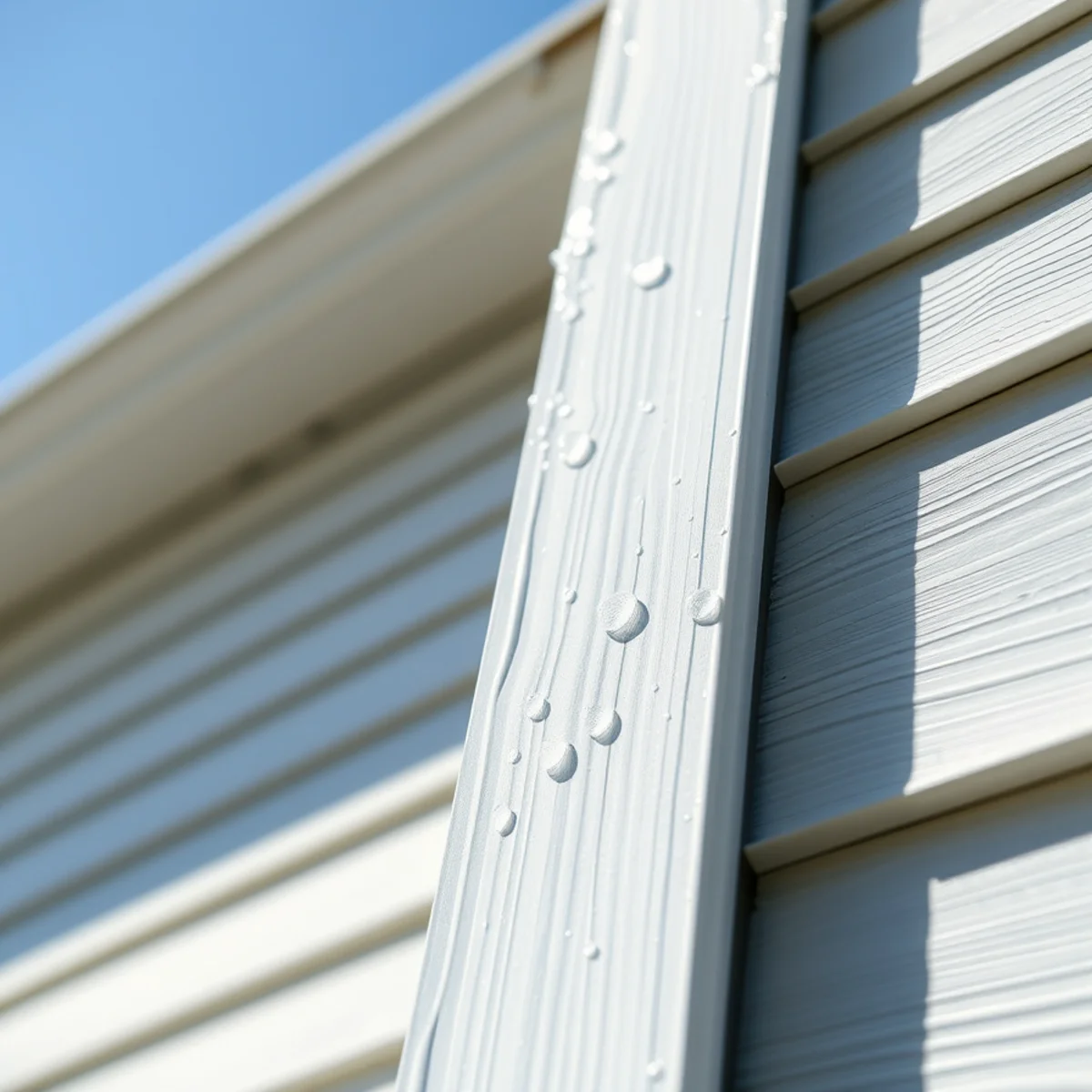
- Vinyl siding — low pressure only; high pressure forces water behind the panels
- Fiber cement / HardiePlank siding — chemistry-led to protect the finish
- Stucco and EIFS — porous and fragile; pressure cracks and chips it
- Asphalt shingle roofs — always soft wash, never pressure (more on this below)
- Wood decks and fences — pressure splinters and gouges wood fast
- Painted surfaces, screens, and windows — gentle by necessity
Surfaces that get PRESSURE WASH
- Concrete driveways and sidewalks — hard, inert, and built for it (a rotary surface cleaner gives an even finish)
- Brick — yes, but with care around the mortar
- Stone patios and pavers — durable enough for controlled pressure
- Metal railings and fencing — handle force well
The single most important rule: a roof is always a soft wash. Never pressure. I'll die on this hill, and so will every shingle manufacturer.
Brick caution: Too much pressure blows out the mortar and grout joints between bricks. Once that mortar is gone, you've got a repointing bill and water finding its way into the wall.
Wood caution: Pressure splinters wood, etches "furry" lines into the grain, and drives water deep into the fibers, which invites rot. A deck or fence almost always wants a gentler, chemistry-first approach.
Why It Matters: The Real Damage Wrong-Method Washing Causes
This is the part I wish more homeowners heard before they rented a machine. Here's what wrong-method washing actually does:
- Water intrusion behind siding. Spray up under vinyl or get too close, and you force water behind the panels. That trapped moisture leads to rot, mold inside the wall cavity, and damage you won't see until it's a big problem.
- Etching and striping. High pressure leaves visible lines, gouges, and "zebra stripes" on siding, wood, and soft stone. Once it's etched, it's permanent.
- Roof granule loss. Pressure strips the protective granules right off asphalt shingles. Those granules are your shingles' sunscreen, lose them and you accelerate UV damage and premature failure.
- Stripped paint, blown mortar, cracked vinyl. Oxidation and chalking on older siding can be cleaned gently, but pressure can strip paint, crack brittle vinyl panels, and warp trim.
Here's the hidden cost. A cleaning that should've run a few hundred dollars can turn into thousands in siding replacement, wall repair, or a new roof section. The cheap fix becomes the expensive lesson. Doing it right the first time isn't an upsell, it's insurance.
Your Roof and Your Warranty: The ARMA Standard
If you remember one section, make it this one.
The Asphalt Roofing Manufacturers Association (ARMA) names soft washing as the recommended method for cleaning algae off asphalt shingles. Their guidance is specific: apply a gentle chemical solution (their reference point is a roughly 50:50 mix of chlorine bleach and water), let it dwell for 15 to 20 minutes, then rinse with low pressure. No scrubbing, no brushing, no high pressure. ARMA explicitly warns against ever using a power washer on a shingle roof.
Why does this matter for your wallet? Pressure washing a shingle roof can void your manufacturer warranty. The big names, GAF, Owens Corning, and others, build their warranties around proper care. Blast that roof and you may have just thrown away the coverage you paid for.
Now, about those black streaks. They aren't dirt and they aren't stains, they're alive. That growth is Gloeocapsa magma, a blue-green cyanobacteria that feeds on the limestone (calcium carbonate) filler baked into asphalt shingles. It spreads by airborne spores, which is why one streaky roof in the neighborhood tends to become several. Soft washing kills it at the cellular level. Pressure washing only knocks the surface colony off while leaving it alive to feed and regrow, and strips your granules in the process. That's the answer to "why does it keep coming back?", because a rinse never killed it.
This is also why DIY roof cleaning is the single riskiest job a homeowner can take on: you've got ladder height, a slick treated surface, strong chemistry, and a warranty on the line all at once.
Cost and Longevity: Which Method Is the Better Investment
Let's talk money honestly, no fake prices, just the ranges and the math that actually matters.
By surface area, pressure washing tends to run lower per square foot than soft washing, because soft washing uses more chemistry and more labor time. Soft washing is more time-intensive, you're mixing solution, applying it, waiting on dwell time, and rinsing carefully around landscaping. So yes, a soft wash usually costs a bit more per job.
But per-job price is the wrong way to measure this. Longevity is where soft washing wins, and it isn't close.
- A soft-washed surface stays clean far longer, often 4 to 6 times longer, because the growth was killed at the root, not just rinsed off the top.
- A soft-washed roof commonly stays clean for 3 to 5+ years.
- A pressure-only rinse in our humid NC climate can start regrowing within a single year.
That's the total cost of ownership picture. When you add up fewer repeat cleanings plus the repair and replacement bills you avoid by not damaging anything, soft washing usually pays for itself. Paying a little more once beats paying a little less every single year, especially when the cheaper method risks the very surface you're trying to protect.
A few things that legitimately move your price up or down:
- Home size and number of stories (more square footage, more reach)
- Roof pitch (steeper is slower and more involved)
- Surface material (delicate surfaces need more care)
- Severity of growth (a heavily streaked, long-neglected roof takes more solution and time)
For a real number on your specific home, a free estimate beats any online calculator.
How to Choose a Lincolnton Pro (and Questions to Ask Before Booking)
Not every washing outfit works the same way, and the difference shows up on your house. Before you book anyone, ask these:
- "Which method will you use on each surface?" A good pro soft washes siding and roofs by default and reserves pressure for concrete, brick, and pavers. If they pressure wash everything, walk away.
- "Do you carry insurance?" Get a yes, and ideally proof. No insurance is a hard no.
- "Do you use ARMA-approved soft washing on roofs?" They should know exactly what that means and never high-pressure a shingle.
- "How do you protect my plants and landscaping?" Listen for pre-wetting, controlled dwell time, and a final rinse.
- "Do you use a mold-inhibitor treatment?" This is what makes results last.
Red flags: a quote that pressure washes every surface, no mention of chemistry or dwell time, no insurance, or a price that seems too good because they're cutting the steps that protect your home.
A local note worth knowing: shaded, tree-lined Lincolnton and Lincoln County lots, plus all that lake humidity and spring oak pollen, drive algae back faster than the national averages you'll read online. Many homes here do best on a 6 to 9 month cleaning cadence rather than once a year. A crew that actually works these neighborhoods will tell you that straight, because we see the regrowth firsthand.
At Hydro Jet PW, we're a licensed and insured local crew, owner Caleb is a Lincolnton firefighter, and we've been cleaning homes around here since 2015. We soft wash what needs soft washing, pressure wash what can take it, use biodegradable detergents, and back the work with a written 30 to 90 day re-clean guarantee. If your siding's greening up or your roof's got those black streaks, call us at +1 (351) 242-0666 for a free, no-pressure estimate, and we'll match the right method to every surface on your home.
Written by the Hydro Jet PW Crew
Led by Caleb, a local Lincoln County firefighter who started Hydro Jet in 2015. We soft wash, protect your property, and treat your home like our own.
Frequently Asked Questions
It can. Vinyl is thinner than most people expect, and a high-pressure stream can crack it, warp it, or blow it loose. The bigger danger is forcing water up under the siding laps and into your wall, which leads to rot and mold. That is why we soft wash all vinyl siding with low pressure and let the cleaning solution do the work instead of brute force.
Because plain pressure washing only knocks the green off the surface. It does not kill the spores and roots, so it grows right back, often within weeks. Our humidity and shade make that fast. Soft washing applies a chemical that kills the algae, mildew, and roof streaking at the root, so the clean actually lasts.
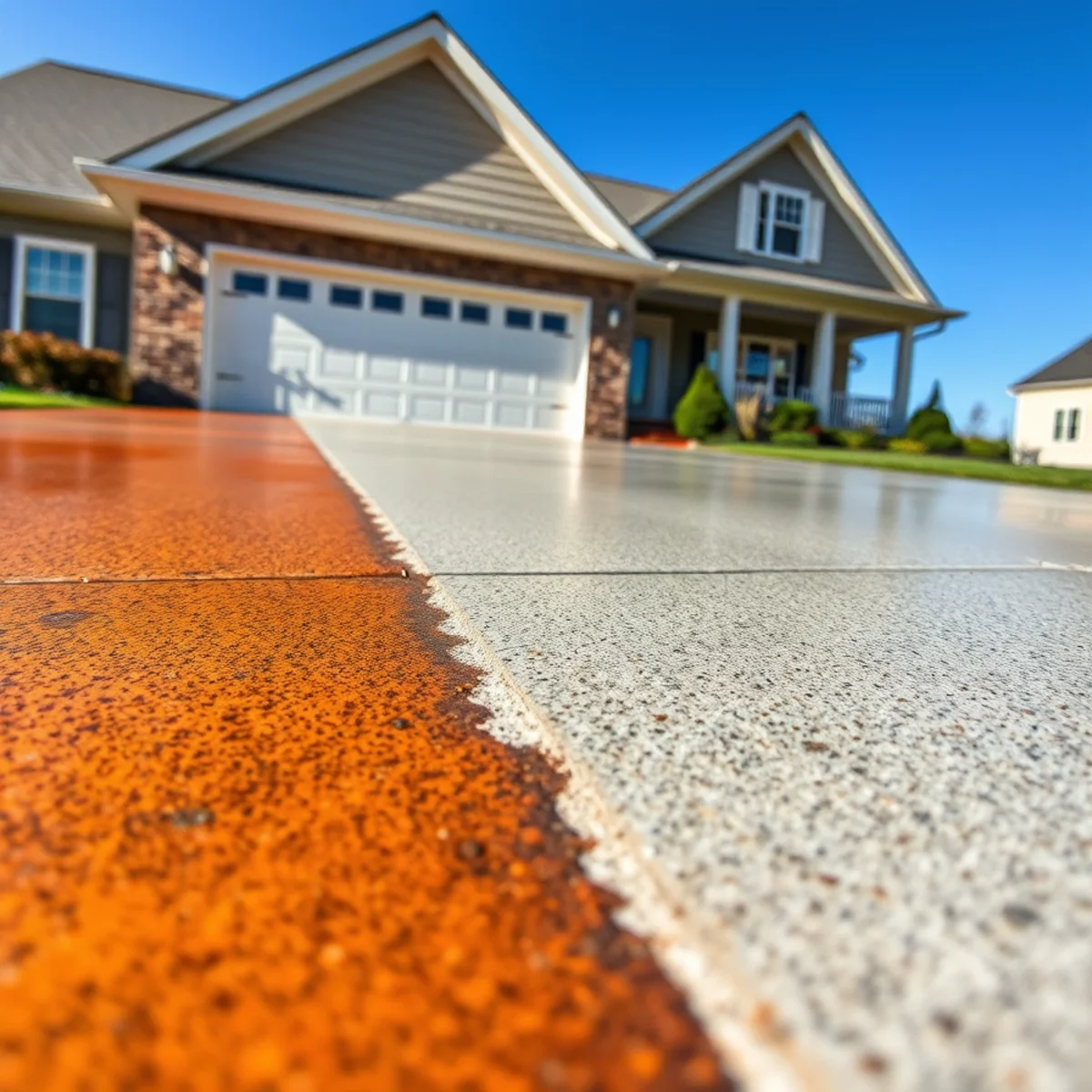
Yes. Lincoln County red clay is iron oxide that chemically bonds to concrete, so a plain rinse will not touch it. We pre-treat it with a chelating agent that breaks that bond first, then pressure wash with a surface cleaner. The same approach works for well-water rust and iron staining on rural lots.
Got a stain you can't beat?
Let a local crew handle it. Free estimates, fast scheduling.
Call +1 (351) 242-0666