A fence takes the same weather as your house but gets none of the care. Here's how to get the green and black growth off wood, vinyl, and aluminum fencing without tearing it up.
Your fence takes the same rain, pollen, and humidity your house does, but it almost never gets cleaned. So it is usually the first thing on a property to turn green, gray, or black. If one side of your fence looks fine and the other looks filthy, you are not imagining it — the shaded, damp side simply fouls faster.
Here is what that growth actually is, why blasting it with a pressure washer tends to make things worse, and how a soft wash gets a fence genuinely clean without chewing up the boards.
What the Green and Black Growth on Your Fence Really Is
Three different things show up on fences around Lincoln County, and they are not the same problem:
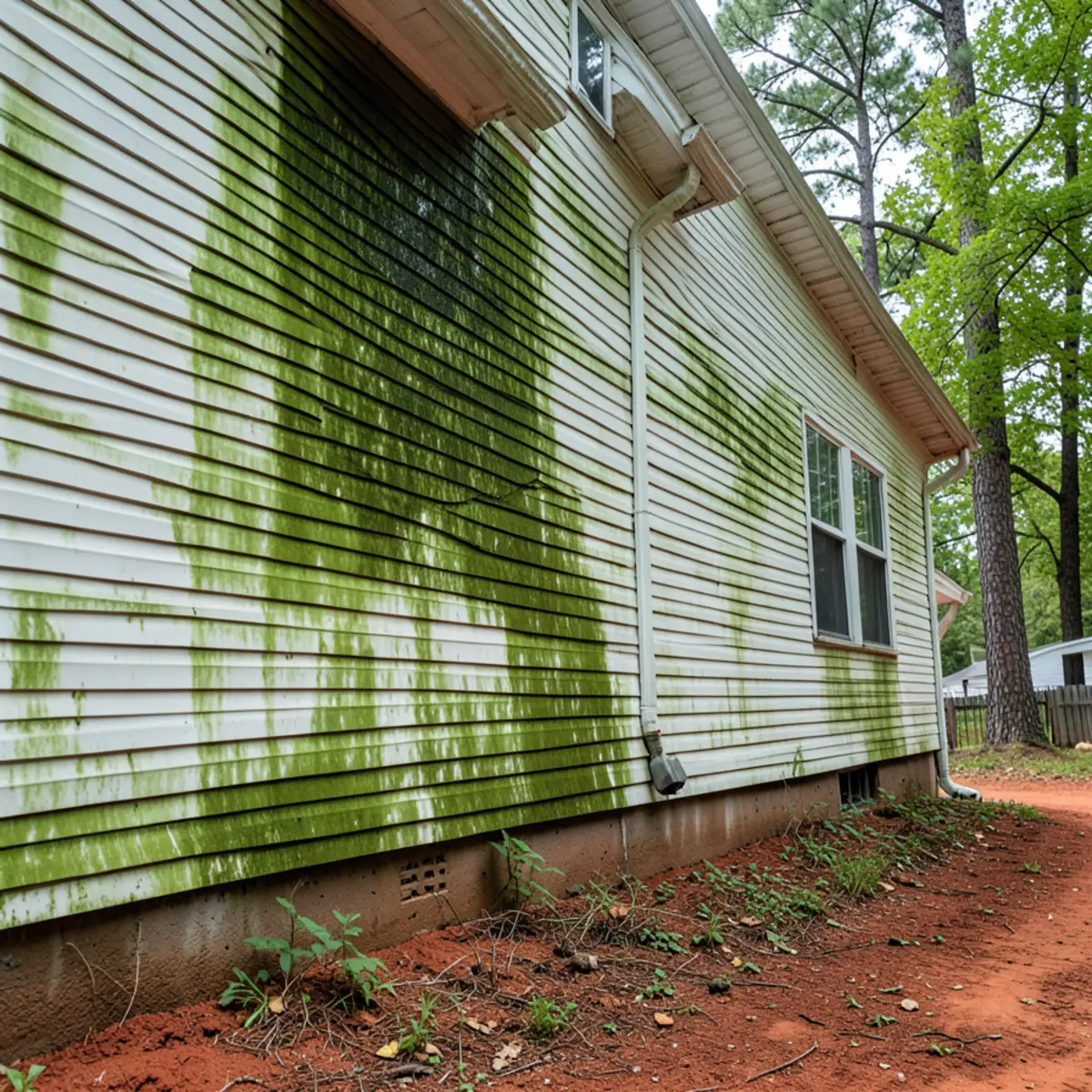
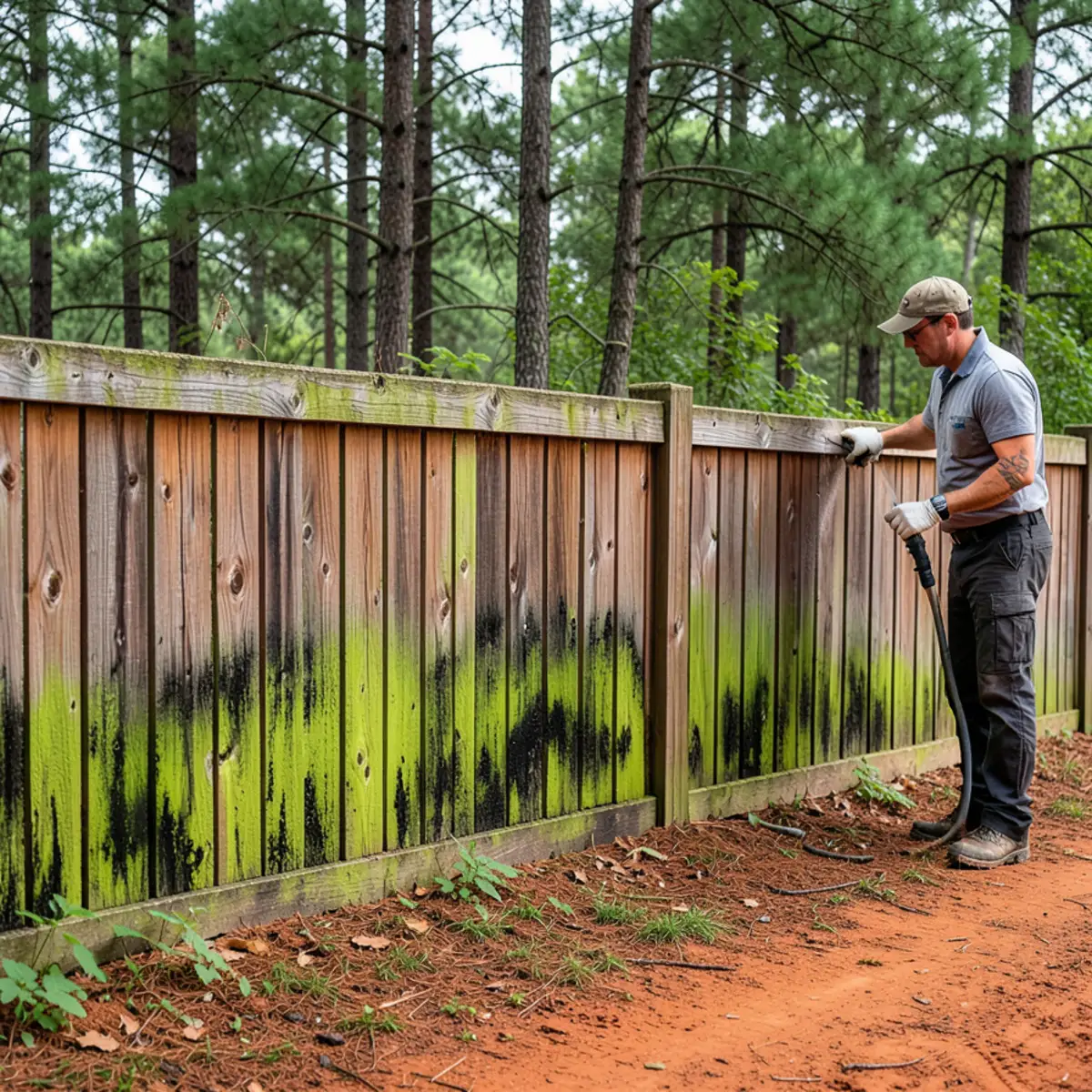
- Green film is algae. It feeds on moisture, pollen, and dust, and it loves a surface that stays damp. This is the most common thing we see on fences in Boger City, Iron Station, and anywhere with tree cover.
- Black and gray staining is mildew and mold — a fungal growth that digs into the surface and leaves dark blotches or streaks.
- Crusty green-gray patches on older wood are lichen, which bonds hard to the surface and takes the longest to remove.
All three need the same thing to grow: moisture and shade. That is why the north-facing side of a fence, the run along your treeline, and any panel that catches the sprinkler are always the worst. Our humid Piedmont summers keep those surfaces damp for most of the day.
Why Pressure Washing a Fence Usually Makes It Worse
It is tempting to point a pressure washer at a dirty fence and pull the trigger. The problem is that a fence is not a driveway. Too much pressure does real damage, and it does not even solve the problem:
- On wood, high pressure tears up the soft grain, raising a fuzzy, splintered texture called furring. Once wood is furred, it soaks up water faster and fouls again sooner — the opposite of what you wanted.
- On vinyl, concentrated pressure can crack panels and drive water up behind them, where it sits and feeds more mildew.
- On any surface, blasting only removes what is on top. Algae and mildew have a biological root structure. Knock off the surface layer and leave the roots, and the green is back within a few weeks.
| Fence type | Safe method | What to avoid |
|---|---|---|
| Wood (pine, cedar) | Soft wash, low pressure, then rinse | High PSI, close-range tips, which splinter the grain |
| Vinyl / PVC | Soft wash and gentle rinse | Direct high pressure at seams and caps |
| Aluminum / metal | Soft wash, protect the finish | Abrasive pads that scratch the coating |
The Soft Wash Approach That Actually Kills It
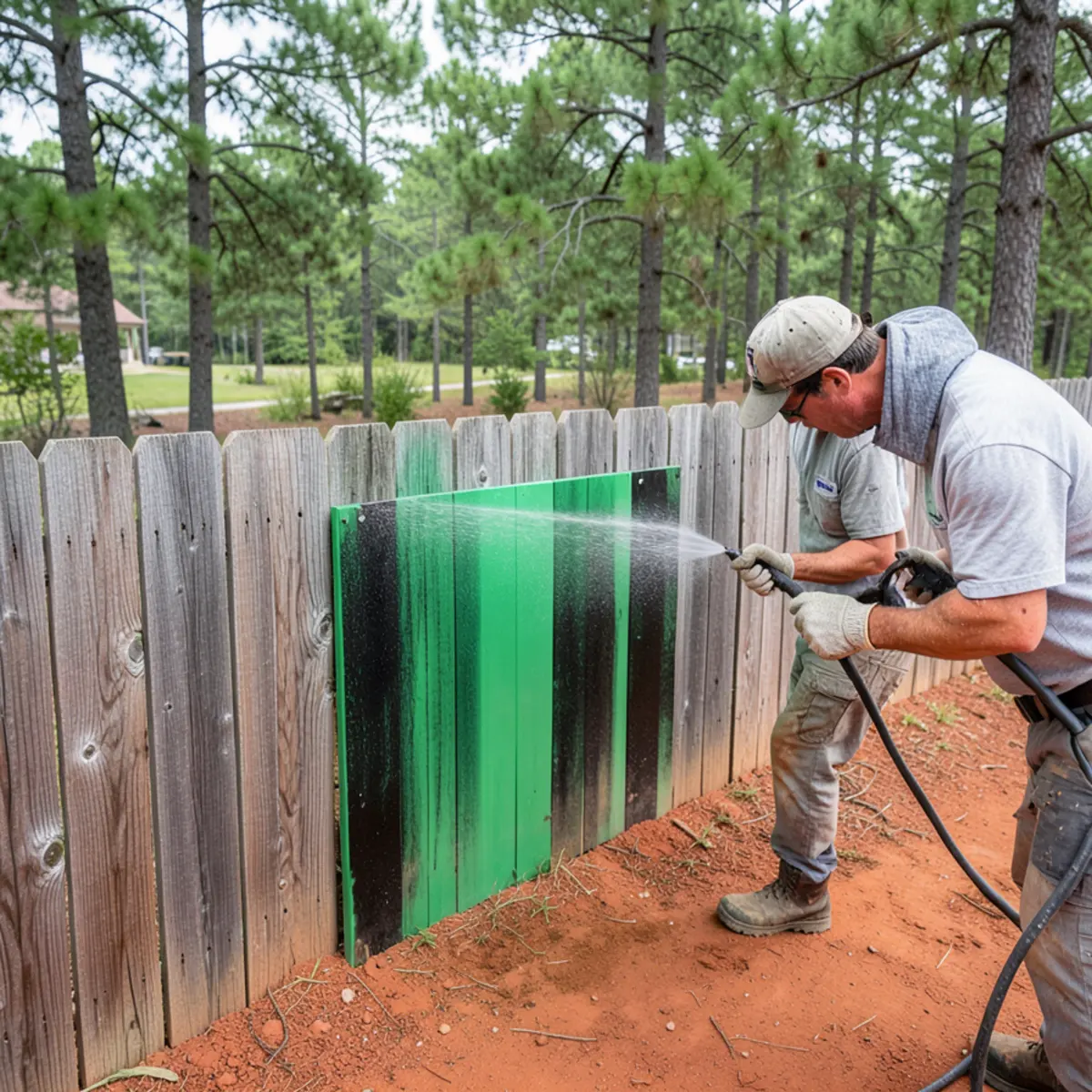
The fix is soft washing — the same low-pressure, cleaning-solution method used on roofs and siding. Instead of relying on force, it relies on the right cleaner to kill the algae and mildew at the root, then rinses everything away at a pressure that will not hurt the material.
Done properly, a soft wash leaves the fence evenly clean rather than striped, and because the growth is killed rather than just knocked back, it stays clean far longer. If you want the full breakdown of why method matters more than muscle, our guide on soft washing versus pressure washing walks through it. For fence-specific work, our fence cleaning service covers wood, vinyl, and aluminum.
Wood Fences vs Vinyl Fences: What Changes
Wood is porous, so growth gets a deeper grip and the cleaning has to be gentle enough to protect the grain. Wood also needs to dry fully afterward, which matters if you plan to stain. A grayed, weathered wood fence often looks dramatically better after a wash because you are removing years of surface fouling and oxidation.
Vinyl is non-porous, so the growth sits more on the surface — but vinyl shows green algae and black mildew clearly against a white or tan panel, and the textured grain of faux-wood vinyl traps spores in every groove. A soft wash lifts it out of the texture without the cracking risk that comes with high pressure.
How Often Lincoln County Fences Need Cleaning
Most fences here do well with a wash once a year. Push it to twice a year if your fence runs along a wood line, sits in heavy shade, or catches irrigation — those conditions keep the surface damp and feed faster regrowth. A fence in full sun on an open lot can often go longer. The same seasonal timing that works for the rest of your exterior applies here; our note on the best time of year to pressure wash in North Carolina covers the why.
Clean First If You Plan to Stain or Seal
Stain and sealer only bond to a clean, dry surface. Lay them over algae or mildew and you seal the growth in — it keeps spreading under the finish and the coating fails early. Always wash first, then let wood dry for the span the stain manufacturer specifies before you coat it. It is the same rule we cover for decks in our guide on cleaning a deck before staining, and it applies just as much to fencing. If your deck and fence both need attention, our deck cleaning service handles them together.
Written by the Hydro Jet PW Crew
Led by Caleb, a local Lincoln County firefighter who started Hydro Jet in 2015. We soft wash, protect your property, and treat your home like our own.
Frequently Asked Questions
It can. Too much pressure raises a splintered, fuzzy texture on wood called furring, which actually makes the fence soak up water and foul again faster. A low-pressure soft wash cleans the wood without tearing up the grain, which is why we use it on fences instead of a high-PSI tip.
Because blasting only removes the surface layer. Algae and mildew have a root structure that a plain water rinse leaves behind, so it regrows within weeks. A soft wash uses a cleaner that kills the growth at the root, so it stays clean much longer.
Yes. Vinyl is non-porous, so the growth sits near the surface and lifts off easily with a soft wash and gentle rinse. We keep high pressure off the seams and caps, which is where vinyl cracks and where water can get driven up behind the panels.
Always. Stain and sealer only bond to a clean, dry surface. If you coat over algae or mildew you trap the growth underneath and the finish fails early. Wash first, let the wood dry for the time your stain calls for, then coat it.
Got a stain you can't beat?
Let a local crew handle it. Free estimates, fast scheduling.
Call +1 (351) 242-0666