Pavers hide dirt, weeds, and slippery algae in every joint. Here's how a paver patio or pool deck should be cleaned around Lincoln County, and when resanding and sealing pays off.
A paver patio or pool deck is one of the best features a Lincoln County home can have — and one of the trickiest to keep clean. Unlike a poured concrete slab, pavers are made of dozens or hundreds of individual units with a joint between every one. Those joints are exactly where sand, dirt, weed seeds, and algae collect. Clean pavers wrong and you can do more harm than the dirt ever did.
Here is how a paver surface should be cleaned, why a pool deck in particular needs attention, and when it pays to resand and seal.
Why Pavers Are Harder to Clean Than a Concrete Slab
On a poured concrete patio, the surface is continuous — there is nowhere for debris to hide. Pavers are the opposite. Every joint is a little trench that holds:
- Joint sand that keeps the pavers locked together
- Organic debris — pollen, leaf litter, and dust that rots into a dark film
- Weed and moss seeds that sprout in the damp, shaded joints
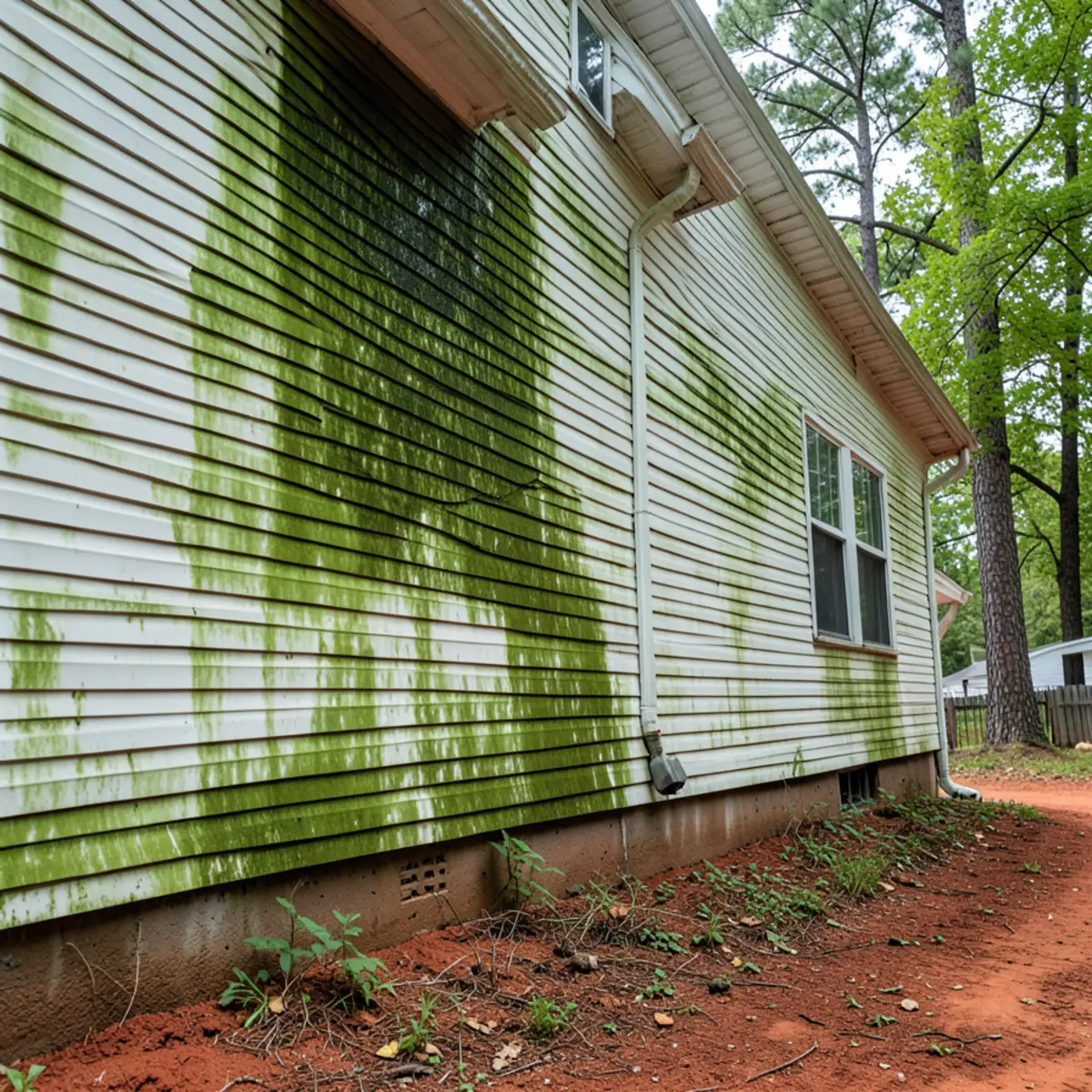
- Algae that spreads across the surface and makes it slick
That is why a paver surface can look dirty again fast if it is only rinsed. The growth in the joints is the engine; clean the tops and ignore the joints and it comes right back.
The Pool Deck Problem: Slick Is Not Just Ugly
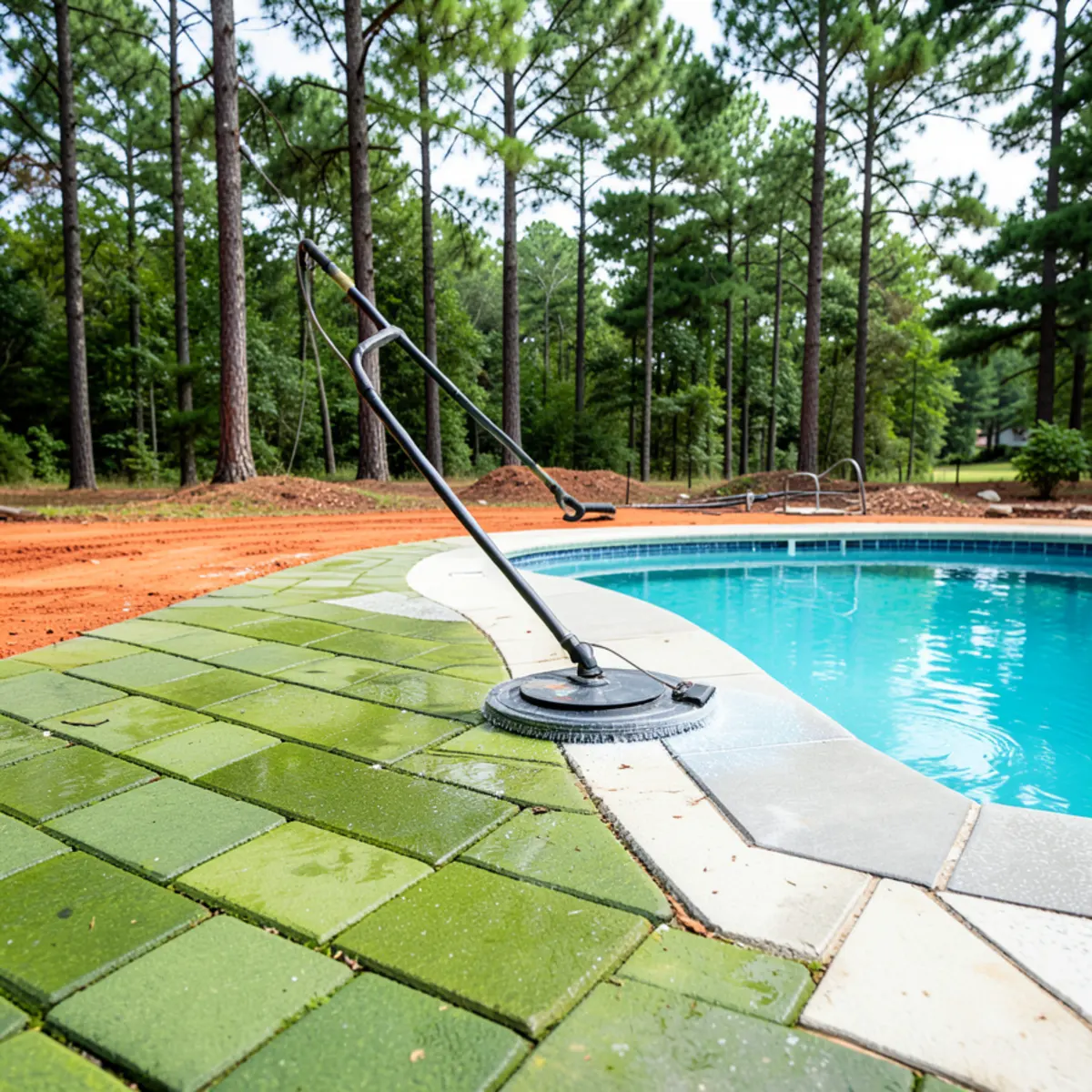
A pool deck has every paver challenge plus constant moisture. Splash-out, wet feet, and shade from the house or treeline keep it damp for hours, and damp plus our Piedmont humidity grows algae quickly. On a pool deck that algae is not only a stain — it is a slip hazard right where people walk barefoot.
The same is true of a shaded patio or a sidewalk that stays green between cleanings. Getting the algae off restores traction, which on a pool deck matters as much as the look.
How Pavers Should Actually Be Cleaned
The wrong way is to grab a narrow, high-pressure tip and blast down each joint. That strips the joint sand right out, loosens the pavers, and carves uneven channels into softer stone. Do it once and you have traded a dirty patio for a wobbly one.
The right way uses a flat surface cleaner — a rotating tool that spreads the cleaning across a wide path at controlled pressure, so the grime lifts evenly and the joint sand stays put. Paired with a cleaner that kills the algae and moss in the joints, it gets the surface genuinely clean without destabilizing it. Heavy organic staining gets a soft-wash pretreatment first, the same approach we cover in soft washing versus pressure washing.
Resanding and Sealing: When It Is Worth It
Cleaning is step one. Once the pavers are clean and dry, two finishing steps make the result last:
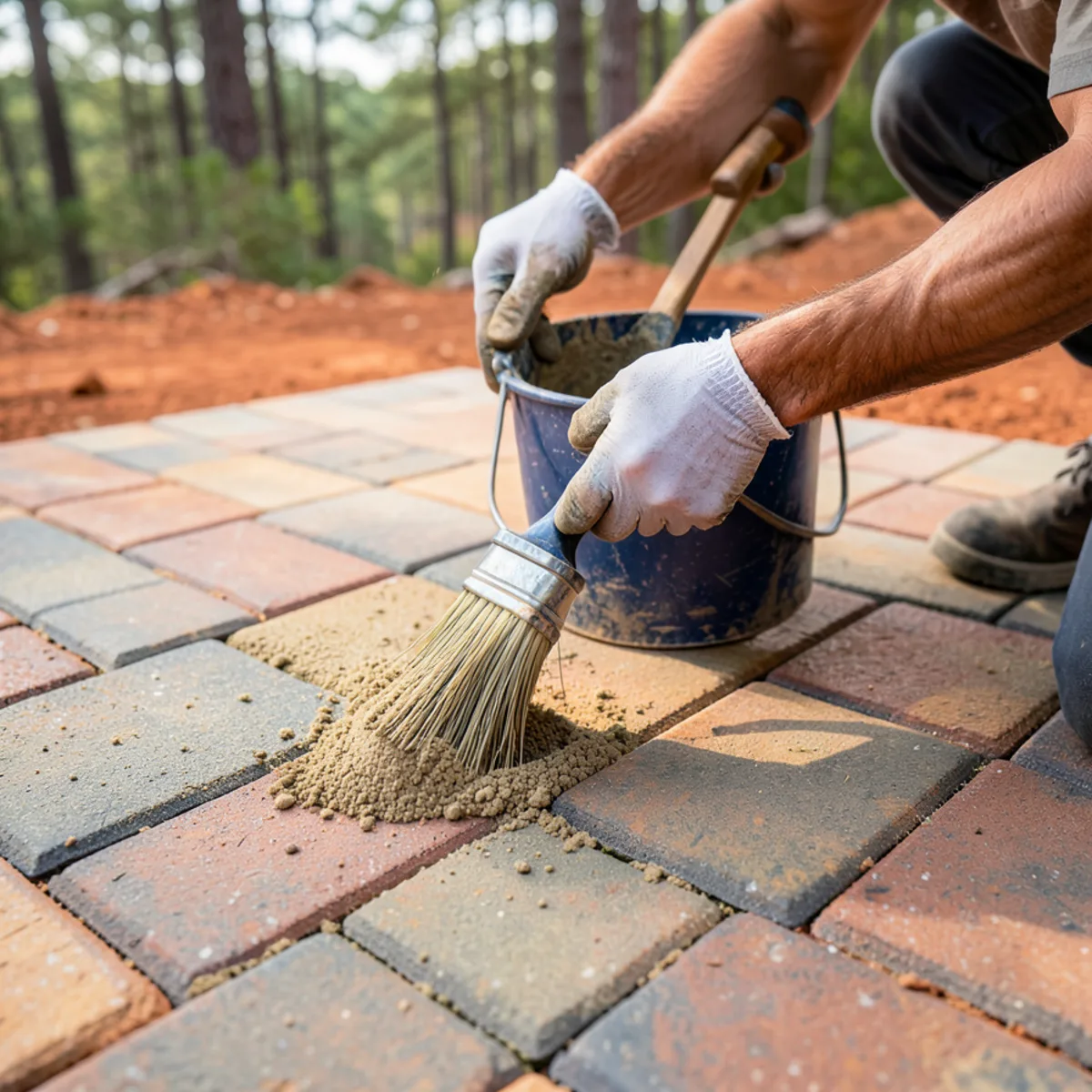
- Resanding the joints replaces sand lost over the years (and any that cleaning removed). Polymeric joint sand hardens slightly when set, which locks the pavers together and makes it much harder for weeds and moss to take hold.
- Sealing adds a protective layer that slows algae regrowth, resists stains from leaves and spills, and deepens the color so the pavers look richer and more uniform.
Sealing is not mandatory, but on a pool deck or a high-use patio it stretches the time between cleanings and protects the investment. If your pavers are shaded, near the pool, or already sprouting weeds in the joints, it is usually worth it.
How Often a Paver Surface Needs Cleaning Here
Most paver patios and pool decks in Lincoln County do well with a cleaning once a year. Move to twice a year if the surface sits in shade, catches pool splash, or runs along a treeline — those stay damp and foul fastest. A sealed surface in sun can often go longer. For a sense of where this fits with the rest of your property, our note on how often to pressure wash your home lays out a simple schedule.
Written by the Hydro Jet PW Crew
Led by Caleb, a local Lincoln County firefighter who started Hydro Jet in 2015. We soft wash, protect your property, and treat your home like our own.
Frequently Asked Questions
Yes, with the right tool. We use a flat surface cleaner that spreads controlled pressure across a wide path, so the grime lifts evenly and the joint sand stays in place. The damage happens when someone runs a narrow, high-pressure tip straight down each joint, which strips the sand and loosens the pavers.
Algae. A pool deck stays damp from splash-out and shade, and our humidity grows algae fast on any surface that will not dry. That growth is slick underfoot, which is a real hazard on a pool deck. Cleaning it off restores traction, and sealing slows how fast it comes back.
It is optional but often worth it, especially on a pool deck or a high-use patio. Sealing slows algae regrowth, resists stains, and deepens the color. Resanding the joints first locks the pavers together and keeps weeds from sprouting. Both steps stretch the time between cleanings.
About once a year for most patios, or twice a year if the surface is shaded, catches pool splash, or sits near a treeline, since those stay damp and grow algae fastest. A sealed patio in full sun can often go longer between cleanings.
Got a stain you can't beat?
Let a local crew handle it. Free estimates, fast scheduling.
Call +1 (351) 242-0666