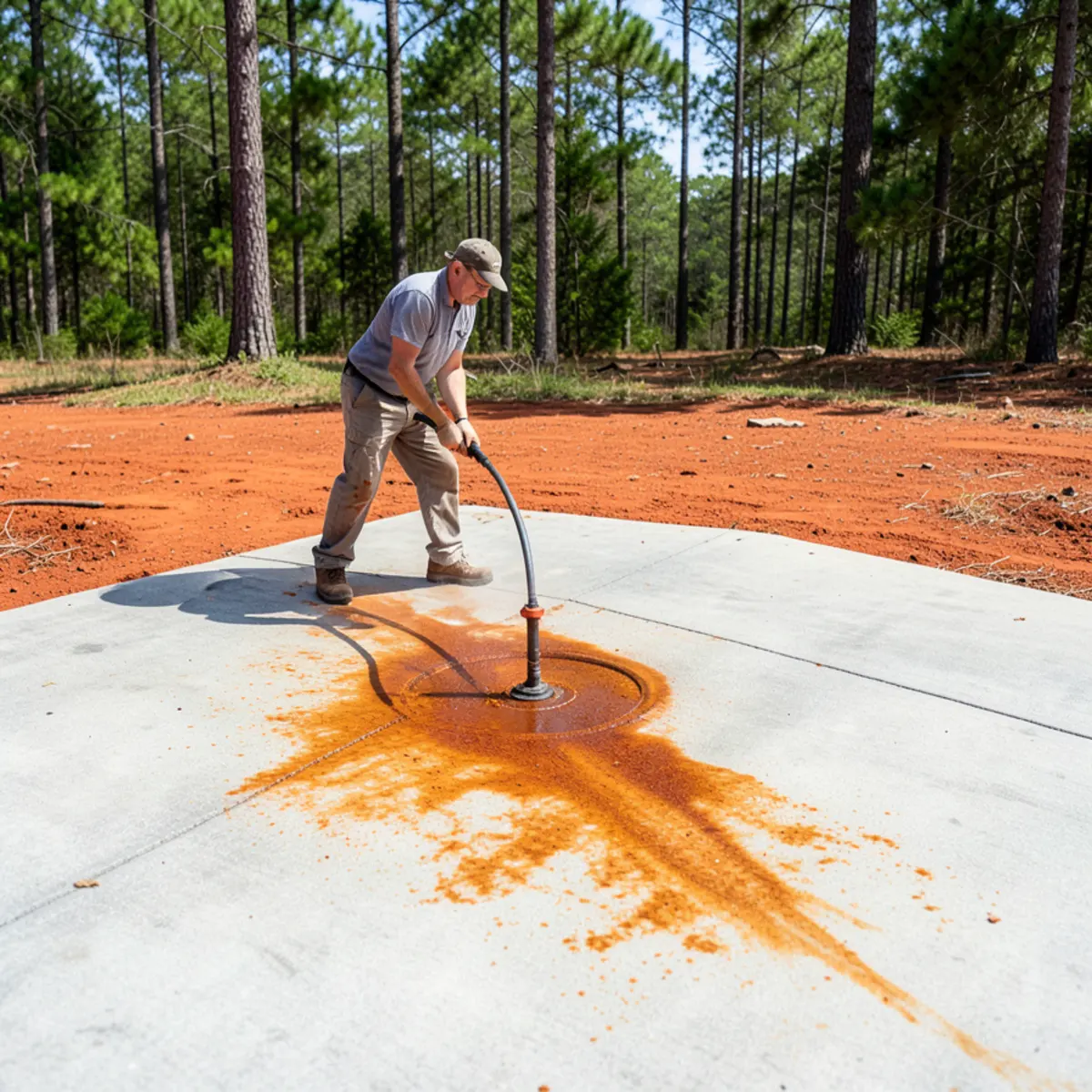
Rust stains on concrete come from a surprising number of sources around here — well water, fertilizer, metal furniture, even the red clay itself. They don't rinse off, but the right treatment lifts most of them. Here's the breakdown.
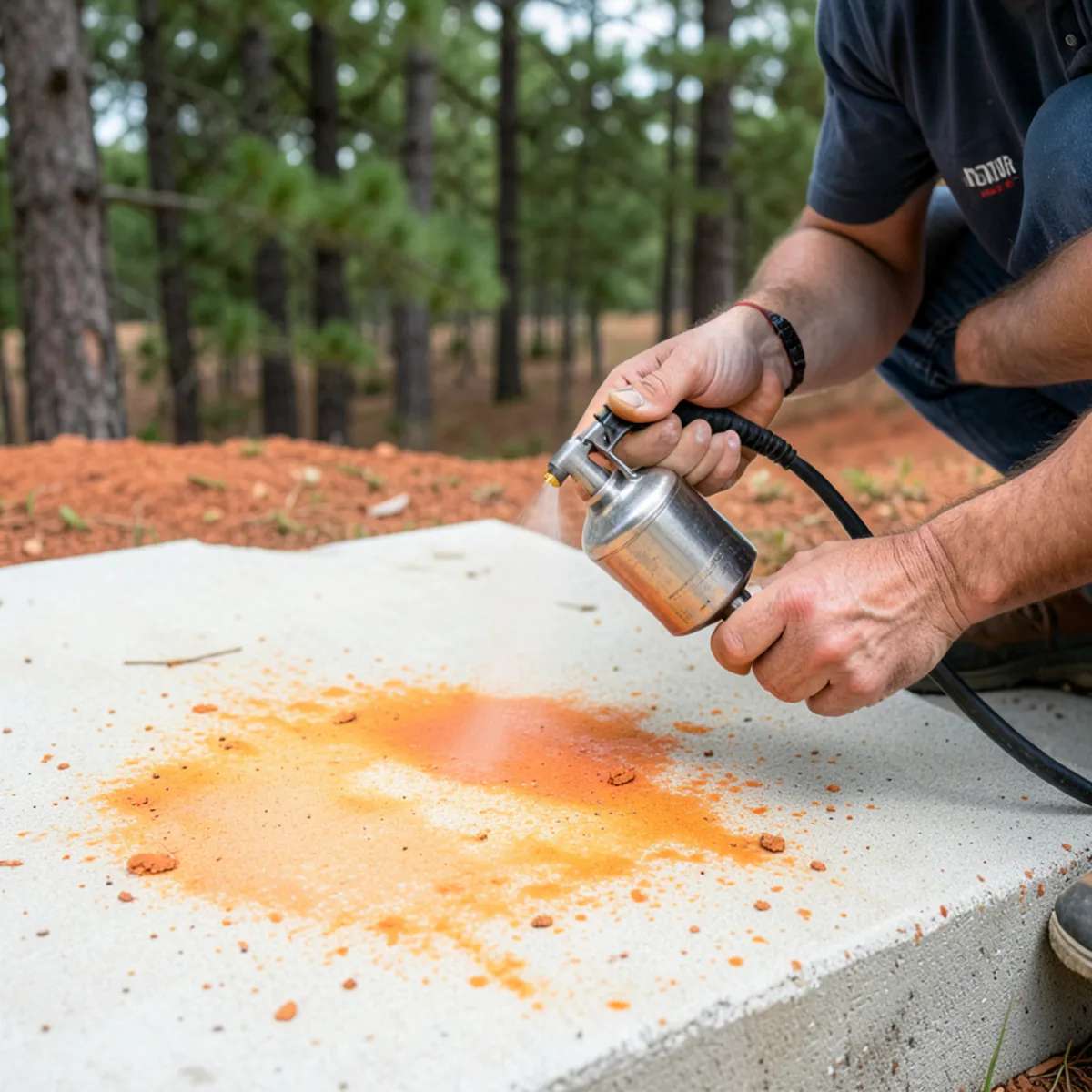
You pressure wash the driveway, everything comes clean — except that orange-brown stain by the garage, the streaks under the downspout, or the rings where the patio furniture sits. Rust stains are one of the most stubborn marks on concrete because they aren't sitting on the surface like dirt. They're a chemical reaction bonded into the pores of the concrete, and no amount of pressure or ordinary soap will lift them. The good news: match the right treatment to the source, and most rust comes out.
Where Rust on Concrete Comes From
Around Lincoln County, rust shows up from more sources than people expect:
Well water and irrigation. This is the big one locally. A lot of rural properties here run on wells, and well water is often high in iron. Every time a sprinkler, hose, or irrigation head throws that water across concrete, it leaves a little iron behind — and over a season those faint orange fans and streaks build into real stains. If you see rust radiating out in arcs from a sprinkler head, that's your culprit.
Fertilizer. Many lawn fertilizers contain iron to green up the grass. Broadcast it across a driveway or walkway, or let it wash off the lawn, and you get orange-brown spotting wherever the granules landed.
Metal in contact with concrete. Patio furniture feet, metal planters, railings, rebar too close to the surface, and even a forgotten tool left out in the rain all bleed rust rings into concrete.
Red clay and natural iron. Our Piedmont red clay is itself iron oxide, so heavy clay staining and rust staining are cousins — and sometimes what looks like one is partly the other.
Why Pressure Washing Alone Fails
A pressure washer moves water fast, but rust isn't a surface deposit — it's iron that has chemically bonded with the minerals in the concrete and soaked into the pores. Blasting it does two unhelpful things: it can drive the stain deeper as water carries iron further into the concrete, and enough pressure in one spot etches the surface, leaving a permanent rough mark that's worse than the stain. Rust is a chemistry problem, and it needs a chemistry solution.
The Right Way to Remove It
Rust removal is about using the correct product for the source and letting it dwell — not about more force:
- Identify the source. Well water, fertilizer, and furniture rust generally respond to an oxalic-acid-based rust remover; some heavy industrial stains need a specialized product. Matching the treatment to the stain matters.
- Pre-wet and apply. The concrete is pre-wet and the rust remover applied directly to the stain.
- Let it dwell. The product needs time to break the iron's bond with the concrete — this dwell time does the real work.
- Agitate and rinse. A gentle scrub and a controlled rinse lift the dissolved stain without blasting the surface.
- Repeat if needed. Deep stains sometimes take a second pass.
This is part of how we approach tough concrete cleaning and driveway jobs — the pressure washing handles the general grime, and targeted treatment handles the rust.
What to Expect (an Honest Word)
Fresh, light rust staining usually comes out almost completely. Old, deep stains that have sat for years — especially on porous or already-etched concrete — may lighten dramatically but leave a faint shadow. Any honest crew will tell you that up front rather than promising a perfect result and leaving you disappointed. We'll look at your specific stains and tell you realistically what will lift and what might linger.
Keeping Rust From Coming Back
A few habits help once the concrete is clean: aim irrigation heads so they don't spray concrete (or add an iron filter if your well water is heavily stained), sweep fertilizer granules off hard surfaces instead of leaving them, and put felt pads or coasters under metal furniture feet. For driveways that stain repeatedly, a sealer adds a layer of protection and makes future cleaning easier.
If rust has your concrete looking older than it is, we can usually bring it back. We serve Lincolnton, Denver, Iron Station, Vale, and all of Lincoln County — a lot of it on well water, so this is a stain we treat often. Reach out for a free estimate.
Written by the Hydro Jet PW Crew
Led by Caleb, a local Lincoln County firefighter who started Hydro Jet in 2015. We soft wash, protect your property, and treat your home like our own.
Frequently Asked Questions
Because rust isn't sitting on top of the concrete — it's iron that has chemically bonded with the concrete and soaked into the pores. Pressure moves water, but it doesn't break that chemical bond, and too much pressure can drive the stain deeper or etch the surface. Rust needs the right remover and dwell time, not more force.
The most common hidden source in our area is well water. Many Lincoln County properties irrigate with iron-rich well water, and every pass of a sprinkler leaves a little iron on the concrete that builds into orange streaks. Iron-containing fertilizer is the other big one. Red clay, which is itself iron oxide, can add to it.
Fresh, light stains usually come out almost completely. Old, deep stains that have sat for years on porous concrete may lighten a lot but leave a faint shadow. We'll look at your specific stains and tell you honestly what will fully lift and what might linger, rather than overpromising.
Aim irrigation heads away from concrete (or add an iron filter if your well water stains heavily), keep iron-containing fertilizer off hard surfaces, and use pads under metal furniture. For driveways that stain over and over, sealing the concrete adds protection and makes future cleaning easier.
Got a stain you can't beat?
Let a local crew handle it. Free estimates, fast scheduling.
Call +1 (351) 242-0666