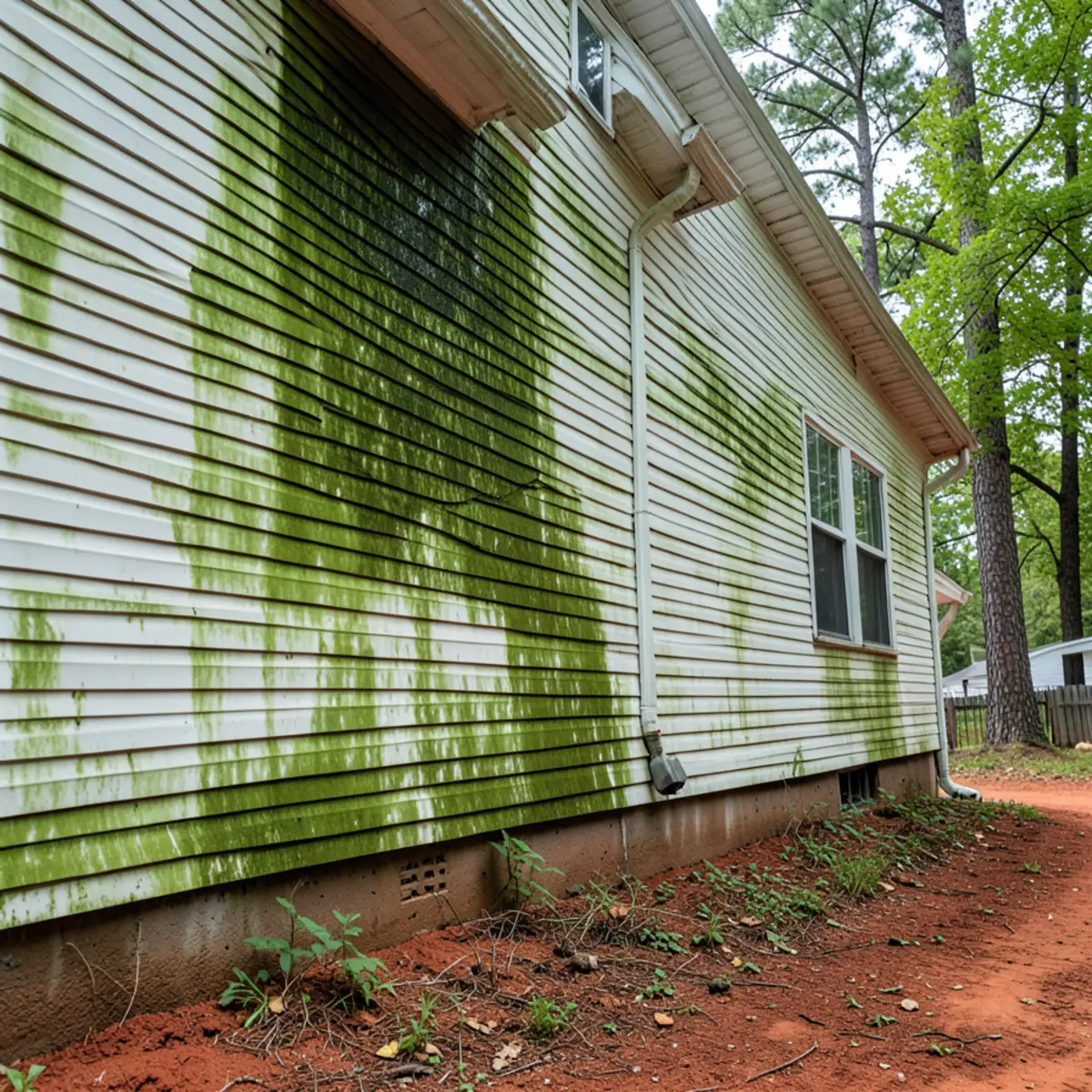
Chalky white on brick and cloudy spots on windows look similar but have different causes. Here's how to tell efflorescence from hard water staining, and how each is safely removed.
Two different white stains show up on homes around Lincoln County, and people often mix them up. One is a chalky haze that appears on brick, block, and stone. The other is the cloudy spotting that builds up on windows, glass doors, and siding wherever a sprinkler or well water hits. They look similar, but they come from completely different places — and the fix for one does nothing for the other.
Here is how to tell them apart and how each is actually removed.
Efflorescence: The Chalky White Haze on Brick
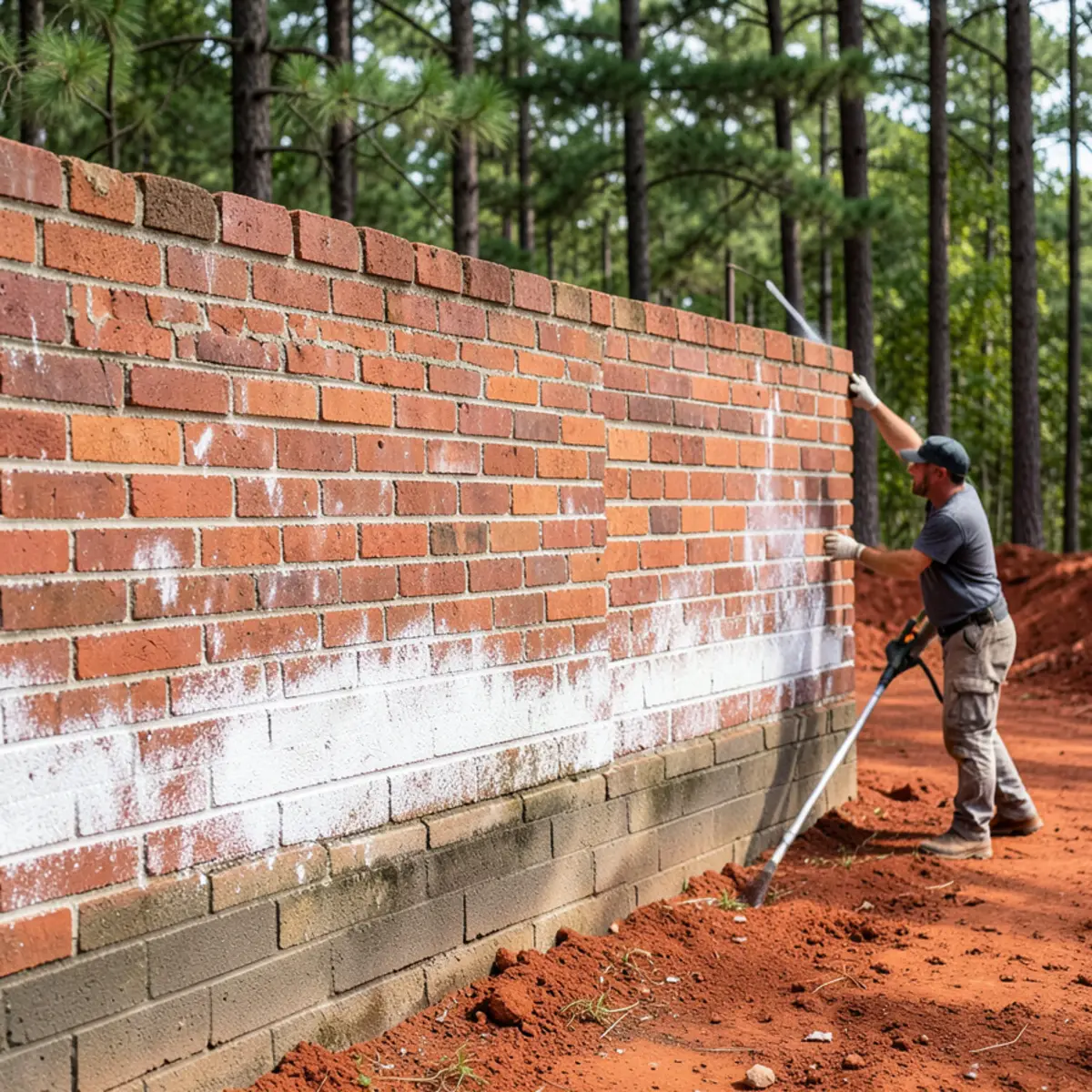
If your brick, block retaining wall, or stone foundation has a powdery white film that almost looks like a dusting of chalk, that is efflorescence. It is not something that landed on the surface from outside — it comes from inside the masonry.
Here is the cycle: water works its way into the brick or mortar, dissolves the natural mineral salts inside, and then carries them to the surface as it evaporates. The water leaves; the salts stay behind as a white crust. It is extremely common on newer masonry and on any wall that stays damp — north-facing walls, foundations, and anything near grade where red clay soil holds moisture.
Because the salt is being pushed out from within, scrubbing the surface with plain water often just dissolves it and lets it re-deposit as it dries. Efflorescence needs the right cleaning solution to break down and lift the mineral crust, applied and rinsed in a controlled way so it carries off the wall instead of soaking back in.
Hard Water Stains: The Cloudy Spots on Glass and Siding
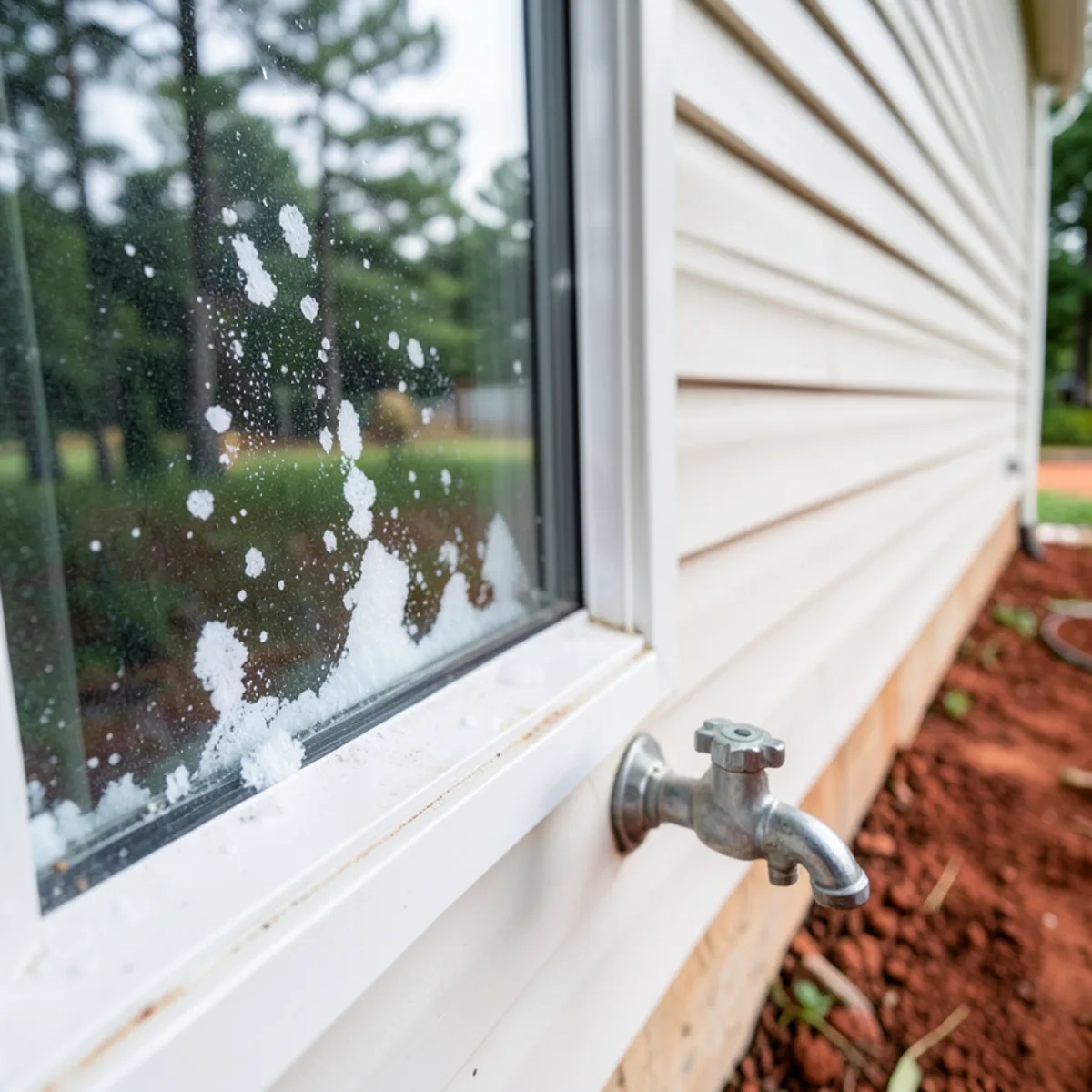
The other white stain is different. If your windows, glass doors, or the siding below a spigot have cloudy, crusty spots or streaks, that is almost always hard water staining. Our area has a lot of homes on well water, and well water is often high in dissolved minerals like calcium and iron. Municipal water can be hard too.
When that water sprays onto glass or siding from a sprinkler, a hose, or runoff and then dries in the sun, the water evaporates and the minerals stay welded to the surface as a spot. Do it day after day through a Carolina summer and the spots layer into a stubborn haze. It is the same mineral problem behind the rust stains well water leaves on concrete, just on a different surface.
Hard water deposits do not come off with a normal wash. They need a cleaner formulated to dissolve the mineral scale, worked gently so the glass or siding is not scratched.
Why High Pressure Alone Does Not Fix Either One
It is tempting to think more pressure will blast a mineral stain off. It will not, and it can make things worse:
- On brick and mortar, high pressure erodes the soft mortar joints and can drive more water into the wall — which feeds more efflorescence later.
- On glass and siding, pressure does nothing to a bonded mineral deposit and risks etching or scratching the surface.
Both of these are chemistry problems, not force problems. The deposit has to be dissolved and lifted, then rinsed at a pressure the surface can take. That is the core idea behind every soft wash we do.
The Right Way to Remove Each Stain
For efflorescence on brick or block, the surface is treated with a cleaner that breaks down the mineral salts, then rinsed in a controlled way so the dissolved salt runs off the wall rather than back into it. Because moisture is the root cause, it also helps to address why the wall is staying wet — a clogged gutter, splashback from soil, or a downspout dumping against the foundation. Our gutter cleaning work often ties in here.
For hard water staining on glass and siding, a mineral-dissolving cleaner is applied and worked gently to lift the scale without scratching, then rinsed clean. On a whole-home scale, this is part of a careful house washing rather than a quick blast.
Either way, the pattern is the same one that runs through all of our work: match the cleaner and the pressure to the surface and the stain. Guess wrong and you spread the problem; get it right and the white comes off for good.
Written by the Hydro Jet PW Crew
Led by Caleb, a local Lincoln County firefighter who started Hydro Jet in 2015. We soft wash, protect your property, and treat your home like our own.
Frequently Asked Questions
That is efflorescence — mineral salts that moisture carries out of the brick or mortar and leaves on the surface as the water evaporates. It comes from inside the masonry, not from something that landed on it, which is why scrubbing with plain water often just redissolves it and lets it come back.
Hard water spots are bonded mineral deposits, usually from sprinklers or well water, so they do not come off with a normal wash or with more pressure. They need a cleaner formulated to dissolve the mineral scale, worked gently so the glass or siding is not scratched, then rinsed clean.
No. They look similar but have different causes. Efflorescence is mineral salt pushed out from inside brick or masonry by moisture. Hard water staining is minerals left on glass or siding from water that sprayed on and dried. Because the causes differ, the correct fix for one will not remove the other.
Newer masonry still has plenty of free mineral salt to release, and any wall that stays damp keeps pushing it to the surface. Around Lincoln County, red clay soil holds moisture against foundations and north-facing walls, which keeps the cycle going until the wall is allowed to dry out.
Got a stain you can't beat?
Let a local crew handle it. Free estimates, fast scheduling.
Call +1 (351) 242-0666